



MPE “SR Orion” was established for the development, manufacturing, and sale of new types of industrial and specialized equipment, as well as for programming artificial intelligence systems and digital sensors.
DEVELOPMENT DESCRIPTION
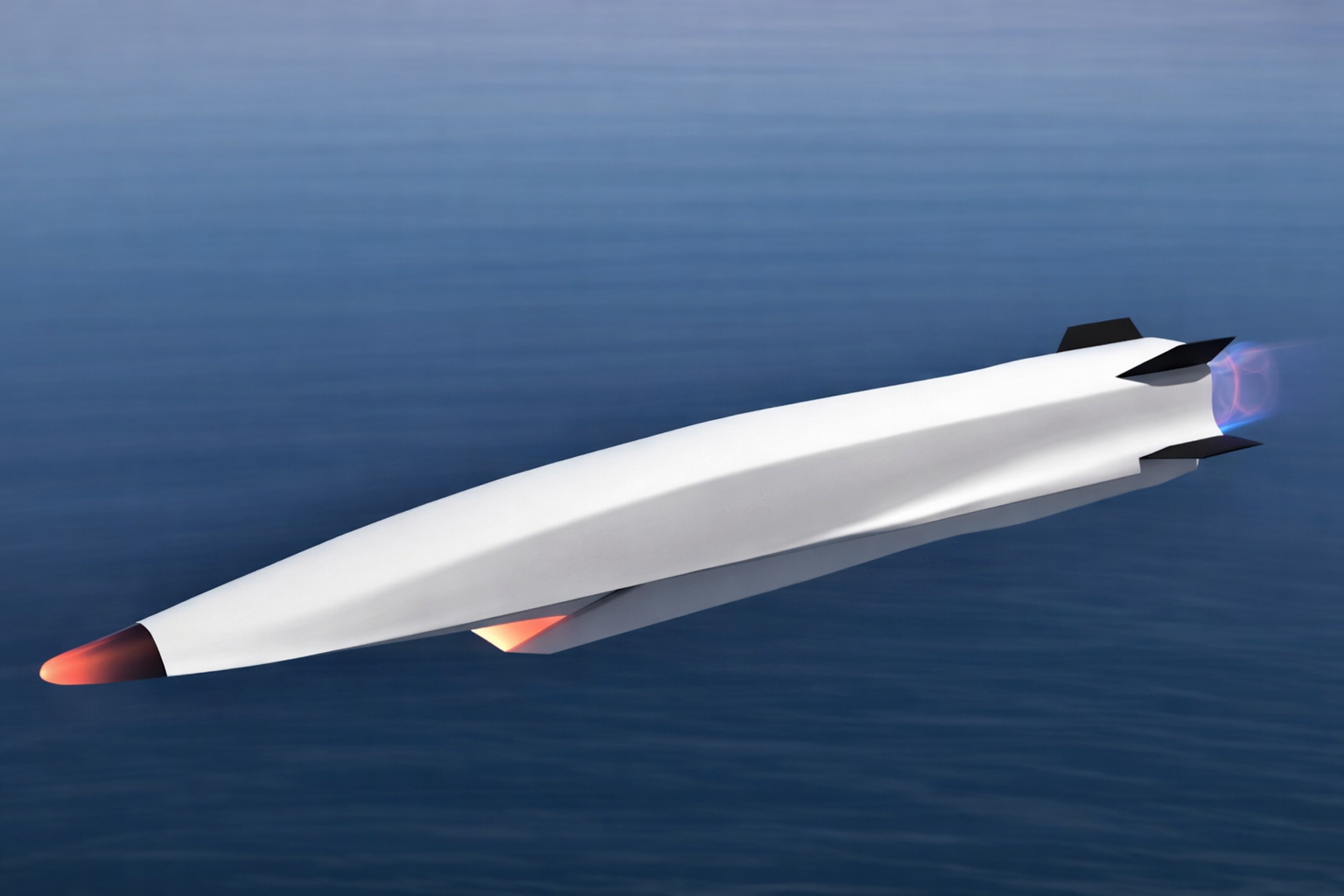
The company “Special Developments Orion” is developing the “Nika” cruise missile, designed for hypersonic flight using a rotating detonation engine (RDE) and a ramjet engine, combined within a unified rocket propulsion cycle and utilizing hydrogen as fuel.
Target engagement is achieved through the missile’s payload and kinetic energy.
Capable of maneuvering in a high-altitude hypersonic regime, the missile can penetrate advanced air defense systems to strike critical targets at hypersonic speed or lower, depending on mission requirements.
The missile can be launched either from ground platforms or from an aircraft. The RDE provides initial thrust, altitude gain, and acceleration, after which the missile continues flight using the ramjet engine at altitudes between 20 and 50 km.
The engines are integrated into the missile structure in a Waverider configuration, reducing aerodynamic drag and radar visibility.
The missile body is made of heat-resistant composite materials produced using 3D-printing technology.
The Nika missile is designed according to a modular architecture, allowing the use of various guidance and navigation sensors as well as different payload configurations.
Such a design significantly reduces development costs and, with more efficient engines, increases both range and payload capacity. The project is being developed in a fully digital format, ensuring reproducibility and enabling a rapid transition to mass production.
READINESS LEVEL
1. Laboratory tests have been conducted in simulators of critical subsystems, including:
- CFD modeling of propulsion systems;
- control systems;
- aerodynamic performance.
Analysis and comparison with analytical predictions for critical subsystems have been completed.
2. Component and subsystem tests have been conducted, documented, and preserved.
NIKA MISSILE PROPULSION SYSTEM
The propulsion system of the Nika missile consists of two engines combined in a unified propulsion cycle:
- Rotating Detonation Engine (RDE)
- Ramjet Engine
This propulsion configuration provides a high specific impulse and high thrust-to-weight ratio. The RDE provides takeoff and the altitude and speed necessary to initiate the ramjet engine. Once this phase is completed, the RDE shuts down and the ramjet engine takes over, enabling cruise flight at 8,680 km/h. Hydrogen is used as the fuel for the propulsion system.
Detailed engine specifications are available upon request.
MARKET AND COMPETITORS
According to Allied Market Research, the global missile systems market is expected to grow by $60 billion by 2030.
Comparison of technical characteristics between the Nika project and Barracuda-500 by Anduril Industries
|
Parameter |
Nika (project) |
Barracuda-500 |
|
|
Range for air launch – up to 1,800 km. |
Air launch range – up to 900 km. |
|
Propulsion / Fuel |
Combined cycle propulsion: Rotating Detonation Engine + Ramjet; fuel – hydrogen. |
Air-breathing cruise missile, not hypersonic; modular architecture. |
|
Maneuverability / Speed |
Designed for high-altitude hypersonic maneuvering. |
Declared maneuverability up to 5G. |
|
Payload |
Modular architecture enabling different payload configurations. |
Warhead weight 45 kg. |
|
Comparative Advantages |
|
|
