
Ukraine’s largest mobile operator, Kyivstar, is preparing its second deal in the renewable energy segment. According to Forbes Ukraine, the Antimonopoly Committee has received applications from the company to acquire control over six renewable energy producers in Lviv region. The asset package is linked to developer Ivan Torskyi and the Trofymenko family, co-owners of the Multiplex cinema chain.
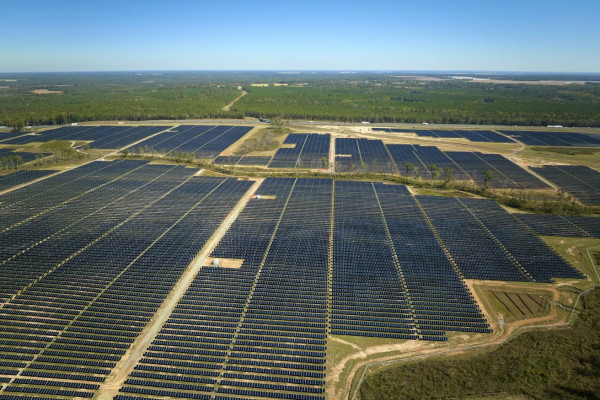
These are the same assets that France’s Total Eren was already evaluating in 2021. The agenda of the Antimonopoly Committee dated July 1, 2021 included Total Eren’s applications to acquire more than 50% stakes in Energy Space LLC, Ternovytsia Solar Plus LLC, Sunlight Generation LLC, Ternovytsia Solar LLC, Energopostach-Plus LLC, and Lightful LLC. Open-source data indicates that the combined installed capacity of this portfolio stood at about 103.9 MW, making it one of the largest ready-made solar generation clusters that could be acquired by a strategic corporate buyer.
For Kyivstar, this is a continuation of its already launched strategy of entering the energy sector. On December 16, 2025, the company officially announced the acquisition of 100% of the corporate rights in SUNVIN 11 LLC, the owner of an operating 12.947 MW solar power plant, for UAH 347.57 million. At the time, the company said the plant could generate an amount of electricity equivalent to about 4% of Kyivstar’s annual consumption, while the deal was expected to reduce operating risks and partially hedge electricity price volatility. In its FY2025 results presentation, the group also directly described the purchase of SUNVIN 11 as a hedge against rising energy costs.
The scale of the potential Lviv deal already appears much larger. According to a Forbes Ukraine source, older plants of this type could be valued at around $400,000 per 1 MW, given equipment wear and tear, implying an indicative value of about $41.6 million, or roughly UAH 1.7 billion for the entire portfolio, provided the capacity has remained at 103.9 MW. This is not a price confirmed by the parties, but it is the range currently giving the market an initial sense of the scale of the potential transaction.
Within Kyivstar’s corporate logic, such a deal appears consistent. The company served about 22.5 million mobile subscribers and more than 1.2 million fixed-line subscribers as of September 30, 2025, and together with VEON it has committed $1 billion in investments into the development of telecom and digital infrastructure in Ukraine in 2023–2027. Against this backdrop, interest in a large solar portfolio can be viewed as an attempt to secure a long-term infrastructure hedge against energy risks, rather than simply a financial bet on the green segment.
The market backdrop is also supportive of such decisions. According to the Solar Energy Association of Ukraine, about 1.5 GW of new solar capacity was commissioned in Ukraine in 2025, taking the market’s total installed capacity above 8.5 GW. The fastest growth was seen in the commercial and industrial and utility-scale segments, especially in combination with BESS, amid strong business demand for energy autonomy and protection against electricity shortages. In addition, in February 2026 parliament updated the renewable energy market rules, extending the green auction model through 2034 and placing greater emphasis on PV-plus-storage projects.
At the same time, older industrial solar plants built in 2017–2019 are now entering a phase of revaluation. The Forbes article notes that the support mechanism currently applicable to them is set to expire at the end of 2029, while daytime market prices remain under pressure due to the high concentration of solar generation. That is why large corporate buyers such as Kyivstar may see such assets less as yield instruments and more as a way to secure cheaper access to their own electricity supply. Among the possible scenarios, Forbes sources also mentioned the further transition of some of the plants to direct contracts with the company’s own facilities, including those in Lviv region.
If the deal is closed, it will send an important signal to two markets at once. For the energy sector, it will show that package M&A deals involving operating solar power plants are becoming liquid again even after the sector’s pricing reset. For telecom and digital infrastructure, it will signal that major operators in Ukraine are beginning to acquire generation not only as backup in case of blackouts, but as a long-term element of their operating model. And the fact that this same portfolio was once reviewed by Total Eren, and is now being targeted by Kyivstar, underscores that high-quality operating renewable energy assets in Ukraine’s western regions remain of interest to both international and domestic strategic capital.