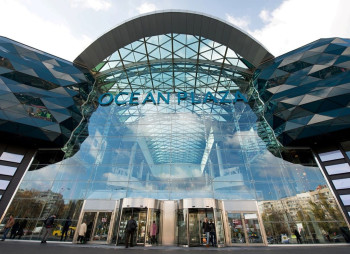
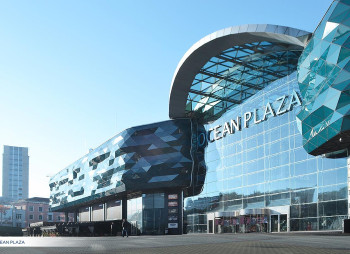
In an interview with Forbes Ukraine, Dmytro Natalukha, Head of the State Property Fund of Ukraine (SPFU), outlined the major assets scheduled for privatization over the next six months. At least four landmark assets are expected to be offered: Odesa Port Plant (OPZ), the Ocean Plaza shopping and entertainment center in Kyiv, Demurinsky Mining and Processing Plant, and Mykolaiv Alumina Plant. According to Natalukha, all of these assets are complex from a sale perspective but carry significant symbolic and economic importance.
Particular attention was given to Odesa Port Plant. Natalukha stated that the main factor deterring potential investors is not so much the company’s debt to entities associated with Dmytro Firtash (approximately $193 million), but rather wartime risks linked to the plant’s location in Odesa region. Security considerations currently play a decisive role in investment decision-making.
According to the SPFU head, enterprises such as OPZ or Mykolaiv Alumina Plant have only conditional standalone value. They were originally created as components of an integrated production chain during the Soviet era and were designed to operate within a large industrial system. Therefore, their further development is feasible only as part of a major industrial group capable of securing raw materials, logistics, and sales markets. In the case of OPZ, access to competitively priced natural gas and the ability to finance its transportation are key factors, as fertilizer production is directly dependent on energy costs.
Natalukha emphasized the need to attract strategic external investors for such assets. A key criterion is not only the financial capacity to acquire the enterprise but also the ability to partially mitigate wartime risks — for example, through the political weight of the investor’s country of origin. He cited the United States and India as examples of countries whose companies might feel more confident operating under current conditions.
Regarding Kyiv’s Ocean Plaza shopping mall, Natalukha suggested that competition is likely to emerge primarily among domestic investors, particularly those who already hold stakes in the asset.
Odesa Port Plant is Ukraine’s largest state-owned chemical enterprise, specializing in the production of ammonia, urea, and liquid nitrogen. In September 2021, the plant suspended production due to a sharp increase in gas prices. In August 2024, there was an attempt to partially resume ammonia production; however, the project was not implemented due to security risks. During the war, the plant’s infrastructure has been used for transshipment of grain cargoes. On August 26, the Cabinet of Ministers approved its privatization with a starting price of UAH 4.5 billion (approximately $108 million). This marks the fourth attempt to sell the enterprise.
Mykolaiv Alumina Plant is one of the largest non-ferrous metallurgy enterprises in Ukraine. Following the start of Russia’s full-scale invasion in 2022, production was halted. In February 2023, a court ruled to nationalize the plant and several related assets.