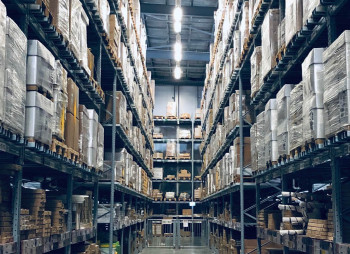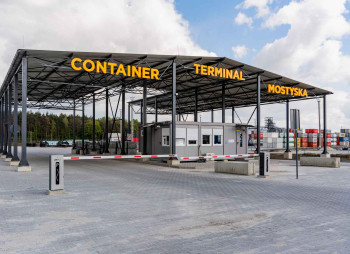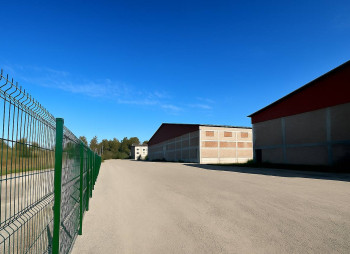

The project, set for completion by 2027, aims to double the company’s storage capacity to 120,000 sq m.
The first facility to be completed is a 25,000 sq m distribution center near Kyiv, now in its final construction phase. Located on a 3-hectare plot, the warehouse will be fully automated with equipment supplied by Austrian manufacturers. Commissioning is scheduled for summer 2026. The complex will replace a leased facility in Stari Petrivtsi, which became redundant after BaDM’s logistics center in Irpin was destroyed early in the war.
According to company co-owner Oleksandr Sukhodolsky, the investment is split evenly: $50 million for construction and $50 million for equipment procurement. Funding comes from both internal resources and loans. The Kyiv-region complex will employ 400–500 people, with part of the space designated for a conference hall.
In addition to the Kyiv facility, BaDM is also developing new warehouses in Poltava, Vinnytsia, Ivano-Frankivsk, and Odesa. The first two are expected to be completed in 2026, and the remaining ones in 2027, though timelines may shift due to a shortage of construction workers, Sukhodolsky noted.
The company has already lost two facilities—in Irpin and Poltava—covering a total of 13,000 sq m. Losses from destroyed inventory are estimated at UAH 1.5 billion, excluding property damage. “Our partners helped us recover by offering discounts and product support,” Sukhodolsky added.
Experts emphasize that BaDM’s expansion is significant not only for the pharmaceutical market but also for Ukraine’s broader economy. “Building five warehouse complexes during wartime is a strong signal of confidence in the future,” said Viktor Shevchenko, CEO of the Zammler logistics group.
According to Expandia, pharmaceutical companies account for 10–15% of all warehouse space in Ukraine, and demand for specialized pharma storage continues to grow. The average construction cost for such facilities in 2025 is $600–650 per sq m, with pharmaceutical warehouses costing 20–30% more due to temperature control requirements and complex engineering systems.
The market remains highly competitive. A recent Russian strike that destroyed Optima-Pharm’s central warehouse—causing losses exceeding $100 million—has reshaped the competitive landscape. Analysts believe BaDM is well-positioned to strengthen its market standing and move closer to leadership in its segment.
BaDM’s 2024 revenue reached UAH 68 billion, just UAH 2 billion less than Optima-Pharm. In the first half of 2025, both companies reported comparable results—UAH 35.2 billion for BaDM versus UAH 35.5 billion for its rival.
The new facilities will allow BaDM to expand its product range from 15,000 to 20,000 SKUs and accelerate order fulfillment. The distributor currently serves 18,000 pharmacies and hospitals daily, dispatching up to 100 trucks per day and processing around 500,000 orders per month.
“We ship millions of packages every day—our success depends on the efficiency of these processes,” Sukhodolsky said.
At the same time, experts caution that despite the sector’s growth and ongoing investments, logistics remains one of the most vulnerable industries under wartime conditions. The main challenges include labor shortages, attack risks, and intense competition. Nevertheless, BaDM believes that expanding its infrastructure and investing in automation will provide the company with a sustainable competitive advantage and long-term market leadership.