Restrictions on seaport operations, rising logistics costs, and dependence on raw commodity exports are increasing the need for structural transformation in Ukraine's agricultural sector. Innovative facilities specializing in the advanced processing of grains and oilseeds, particularly the production of high-protein feed ingredients for domestic and international markets, are emerging as one of the most promising areas for investment.
Logistics Disruptions Are Reshaping the Economics of Ukraine's Agricultural Exports
For decades, Ukraine's agricultural sector has followed a business model centered on large-scale production and exports of agricultural commodities. Fertile farmland, competitive production costs, and access to Black Sea ports have enabled Ukraine to establish a strong position in global grain and oilseed markets.
However, the full-scale war has exposed the vulnerabilities of this economic model. Dependence on maritime logistics has become one of the key risks facing Ukrainian agribusiness.
The situation deteriorated significantly in the second half of 2026 as Russian attacks targeted port and transport infrastructure. Restrictions on Black Sea port operations forced exporters to rely more heavily on Danube routes, rail transport, and road corridors through European Union countries.
According to Ukraine's Ministry of Agrarian Policy, the country exported only 2.4 million tonnes of agricultural products in September 2026, equivalent to 46% of the potentially required volume. Grain exports totaled 1.4 million tonnes, representing just 38% of potential export capacity.
At the same time, the ministry estimated that alternative logistics costs had increased by at least $50 per tonne.
For agricultural producers, this translates into weaker export parity prices, downward pressure on domestic procurement prices, and reduced profitability. A portion of the value of each harvest is effectively absorbed by the additional costs of overcoming logistical constraints.
These challenges are particularly acute for producers of bulk agricultural commodities with relatively low value per tonne.
Under these circumstances, Ukraine's agricultural sector faces a strategic question: should it continue to focus primarily on exporting millions of tonnes of raw commodities, or should it increasingly invest in processing facilities capable of generating substantially more added value within the country?
From Export Volumes to the Value of Finished Products
Limited export infrastructure capacity is changing the underlying economics of international agricultural trade.
Previously, one of the main competitive advantages was the ability to transport large volumes of grain to ports at low cost. Today, the relationship between product value and transportation costs is becoming increasingly important.
When logistics costs per tonne are comparable, a higher-value processed product can potentially retain a greater proportion of its value after delivery to the buyer. Naturally, this depends on processing costs, production yields, market prices, and sales conditions.
This is why the transition from exporting raw agricultural commodities to producing specialized food ingredients, protein concentrates, and other processed products is gaining new economic significance.
This does not mean that Ukraine should abandon grain exports. Grain production and international grain trading will remain important components of the national economy.
Rather, the objective is to diversify agricultural business models and create additional channels for generating value from raw materials.
Notably, on October 15, 2026, Ukraine's Ministry of Agrarian Policy explicitly expressed support for prioritizing exports of value-added products amid limited logistics capacity.
As a result, the development of agricultural processing is gradually shifting from a long-term strategic objective to an immediate economic priority.
Ukraine Must Transition from a Commodity-Based to an Innovation-Driven Agricultural Economy
Ukraine's economy needs not only to increase agricultural processing volumes but also to develop a more sophisticated industrial production structure.
Traditional processing industries — including vegetable oil, flour, cereals, sugar, and conventional compound feed production — have already established a substantial industrial base.
The next stage of development involves producing more sophisticated products that require advanced technologies, specialized equipment, quality control, and proprietary technological expertise.
Key areas include:
-
high-protein feed concentrates derived from sunflower, soybean, and other oilseed crops;
-
specialized feed ingredients for poultry, swine, aquaculture, and other livestock segments;
-
plant-based proteins and functional ingredients for the food industry;
-
starch, gluten, amino acid-based products, and other advanced grain derivatives;
-
biotechnology-based products derived from agricultural raw materials and processing by-products.
The fundamental distinction of these businesses is that their competitiveness depends on more than access to inexpensive raw materials.
Technologies, formulations, consistent product specifications, laboratory quality control, certification, and the ability to meet the requirements of industrial customers are becoming increasingly important.
It is precisely this innovation-driven approach that enables Ukrainian agribusiness to gradually move beyond price-based competition in raw commodities toward competition based on quality, specialization, and the technological value of finished products.
Feed Ingredient Production: A Promising Segment of Advanced Agricultural Processing
The production of high-protein feed ingredients is particularly attractive in this context.
Ukraine benefits from an extensive grain and oilseed supply base, a well-developed oilseed crushing industry, and significant production volumes of sunflower and soybean meal.
However, the potential for further processing these products remains far from fully utilized.
One promising segment is the production of high-protein concentrates from sunflower meal. Specialized processing technologies make it possible to produce ingredients with higher protein content and lower fiber content compared with conventional sunflower meal.
Such ingredients can be used in feed production for poultry, pigs, cattle, fish, and other animals.
For compound feed manufacturers, their value lies in the ability to optimize feed formulations, manage production costs, and diversify sources of plant-based protein. The effectiveness of a particular ingredient depends on its amino acid profile, digestibility, energy value, and the overall economics of the finished feed formulation.
For Ukraine, developing this industry means generating additional value from existing agricultural raw materials without requiring a proportional expansion of cultivated land.
Moreover, modern processing technologies can support the comprehensive utilization of raw materials. For example, sunflower husks can be converted into fuel pellets, creating an additional marketable product.
InVenture previously examined the technological and economic characteristics of this segment in its article, “Sunflower Protein as a New Direction for Advanced Agricultural Processing in Ukraine.”
Domestic Demand as a Foundation, Exports as a Growth Opportunity
One of the key advantages of innovative agricultural processing is the ability to combine domestic demand with export sales.
Ukrainian feed manufacturers, poultry producers, and pig farming operations require reliable supplies of protein ingredients with consistent quality specifications.
Local production of these ingredients can shorten the distance between raw material suppliers, processors, and end users, reducing dependence on international logistics routes.
At the same time, the market opportunities extend well beyond Ukraine.
The global animal feed industry generates demand for standardized plant-based protein ingredients, particularly for use in balanced animal nutrition formulations. This creates opportunities for Ukrainian manufacturers to supply products to the European Union and other international markets.
Importantly, these opportunities are not merely theoretical. Ukraine already has operating facilities specializing in the advanced processing of sunflower-based raw materials that supply domestic customers and export their products internationally.
A proven export track record is particularly valuable from an investor's perspective. It demonstrates that the business model can operate beyond the domestic market, although further expansion requires a separate assessment of demand, certification requirements, and international distribution economics.
Over time, Ukrainian companies could develop into specialized manufacturing partners for international animal feed producers and agribusiness groups.
The Most Promising Businesses Combine Technology, Manufacturing, and Established Sales Channels
According to InVenture, operating companies with a strong technological and innovation component may represent particularly attractive investment opportunities in the advanced agricultural processing sector.
Unlike conventional primary processing, the production of specialized protein ingredients has not yet become a widespread segment of Ukraine's agricultural industry. The number of companies possessing the necessary technological expertise, established production processes, and commercial track records remains relatively limited.
Establishing such a business from scratch requires more than capital investment in manufacturing facilities.
Investors must also address process optimization, consistent product quality, reliable raw material sourcing, team development, and product approval procedures with prospective industrial customers.
For these reasons, acquiring an existing operating company may offer a more attractive alternative to developing a new production facility.
For a strategic buyer, the investment rationale may include integrating the asset into an existing production chain, gaining access to technological expertise, or expanding market presence in specialized animal feed ingredients.
Another important consideration is that modern value-added manufacturing can potentially remain competitive even under challenging logistics conditions. However, actual profitability, product quality, supply reliability, and sustainable customer demand remain the decisive factors.
Investment in Processing as a Foundation for Ukraine's Structural Economic Transformation
The gradual development of agricultural processing is already reflected in the composition of Ukraine's exports.
According to estimates by the Institute of Agrarian Economics of the National Academy of Agrarian Sciences of Ukraine, exports of processed agricultural products generated $4.4 billion in 2025, accounting for almost 20% of total agricultural exports. Nevertheless, most of the agricultural sector's export potential remains associated with raw commodities.
These figures highlight substantial room for further structural transformation.
The development of innovative agricultural processing can generate broader economic benefits, including the creation of skilled jobs, adoption of new technologies, higher tax revenues, development of industrial infrastructure, and increased foreign currency earnings from exports of finished products.
For agricultural producers, this offers an opportunity to diversify revenue streams and reduce exposure to fluctuations in global commodity prices and transportation costs.
For international investors, it provides access to Ukraine's agricultural raw material base, industrial capabilities, and opportunities for integration into global supply chains.
However, structural transformation should not be limited to simply increasing the number of processing plants. The priority should be to develop manufacturing facilities capable of producing goods that are competitive in both domestic and international markets.
In the long term, the most successful agricultural companies may not necessarily be those producing the largest volumes of grain, but those capable of generating the greatest economic value from each tonne of raw material.
This is why investment in technologically advanced, export-oriented agricultural processing could become one of the key drivers of Ukraine's agribusiness development, both during the war and throughout the country's post-war recovery.
Investment Opportunities in Innovative Agricultural Processing
Sunflower Protein as a New Direction for Advanced Agricultural Processing in Ukraine
Confidential Investment Opportunity — InVenture M&A Advisors
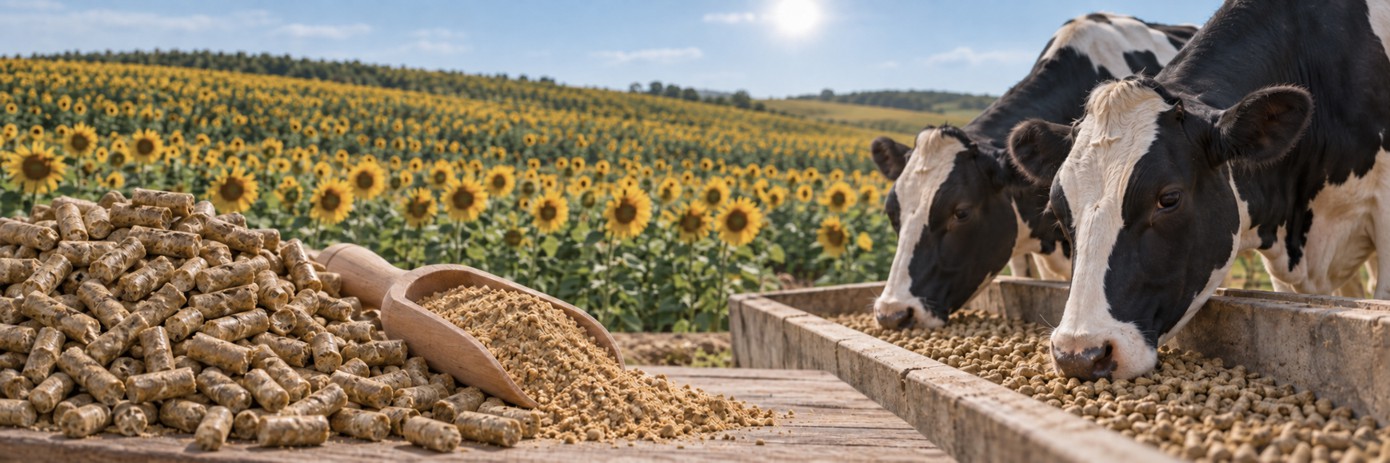
InVenture M&A Advisors considers advanced agricultural processing a promising sector for strategic investment and M&A transactions in Ukraine.
In particular, the company represents the owners of an operating Ukrainian business specializing in the production of high-protein animal feed ingredients derived from sunflower-based raw materials. The owners are considering the sale of the business to a strategic investor.
The company operates established manufacturing facilities equipped with modern processing technology, maintains long-standing commercial relationships, and has experience supplying products to both domestic and international markets.
This investment opportunity may be of interest to international animal feed and feed ingredient manufacturers, agribusiness groups, oilseed processing companies, and investors seeking to acquire operating industrial assets in Ukraine.
For further information, please contact us: +380 67 713 65 71
A brief investment teaser is available to prospective investors following qualification by the InVenture team. Additional information will be disclosed upon execution of a non-disclosure agreement (NDA).