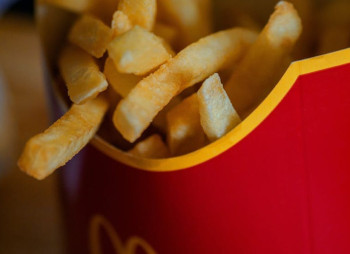
A large-scale food processing facility will be established in the Biosens industrial park in Cherkasy region, designed to produce up to 60,000 tons of French fries annually—three times the size of Ukraine’s current market, which is fully dependent on imports.
Construction began in July 2025. At present, Potato Agro is preparing the foundation and building access roads, with wall erection planned for autumn. Full production capacity is expected by 2027, when the plant will employ around 300 people. The launch will be phased: the first stage, a $11 million line for producing 6,000 tons of potato flour and flakes, is scheduled to open in early 2026. Most of the funding is provided by Mais Group, with the remainder covered by a bank loan.
According to Tereshchuk, Ukraine currently does not grow potato varieties suitable for French fries. Cultivation requires specific breeds, such as Challenger, and irrigation systems, as these crops are sensitive to high temperatures. Potato Agro’s agronomists have been working for a decade on selecting and adapting seed material, including propagating imported varieties. Raw materials will be sourced from the company’s own and leased land as well as from farmers within a 300 km radius.
Serhii Tereshchuk is the founder of Mais Group, a leading corn seed producer, co-founder of Seed Corps, and a former member of parliament. Starting his career as a tractor driver, he later advanced to senior management roles. He emphasizes that the project is viable thanks to a skilled team and the support of the industrial park, which offers a 10-year corporate tax exemption, infrastructure cost compensation, and simplified equipment imports.
The project is designed with a seven-year payback period, and Tereshchuk is seeking investors to finalize financing, noting that partnership selection is deliberate: “Partnership is like marriage.”
Ukraine consumes about 20,000 tons of French fries annually, entirely imported. The company plans to supply national retail chains, restaurants, and potentially McDonald’s. To meet international quality standards, Potato Agro is investing in workforce training and technology development to ensure consistent quality and reliable supply.
By leveraging lower logistics costs and domestic production, the enterprise will compete with imported French fries. Representatives of McDonald’s Ukraine confirmed interest in local suppliers, though switching partners would require time to verify quality and stability of deliveries.
Thus, the Potato Agro project is more than an industrial venture—it is an ambitious step toward building a fully local French fries production industry in Ukraine, substituting imports and strengthening the supply of high-quality ingredients for restaurants and fast-food chains.