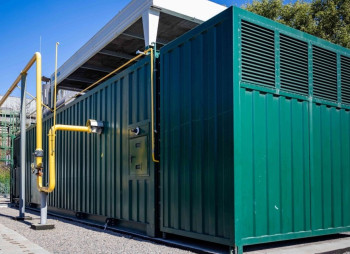
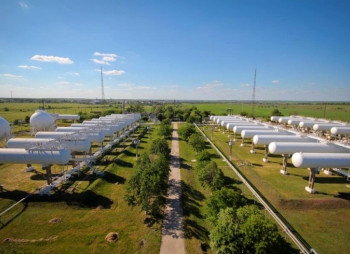
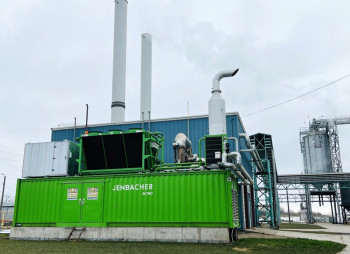
As of early February 2026, Ukraine has commissioned 1.4 GW of distributed gas-fired generation capacity, of which 1.1 GW has been connected to the national power grid, while 0.3 GW has been installed for the internal needs of enterprises and institutions, the Ministry of Energy of Ukraine reported.
These capacities have been built since the start of the full-scale invasion in 2022 in response to significant damage to the centralized energy system caused by Russian attacks. In January 2026 alone, 192 MW of new gas-fired capacity was added to the energy system.
According to the Ministry, nearly 60% of all commissioned capacity was constructed by private investors, while the remainder was delivered by state-owned and municipal enterprises using their own funds or with support from international donors.
Within the framework of the Energy Support Fund for Communities, including frontline regions, projects with a total capacity of 196 MW have already been implemented.
The Ministry also stated that approximately 3 GW of new generation capacity is currently at various stages of development. The primary objective for 2026 is to fully cover the needs of critical infrastructure with distributed generation across all regions of the country.
In newly prepared amendments to the Distributed Generation Development Strategy through 2035, the Ministry identified the need for an additional 2.2–2.7 GW of guaranteed generation capacity distributed across regions.
- Distributed generation has become a key element of Ukraine’s energy security following the loss of a significant share of centralized capacity after the full-scale war.
- The deployment of gas cogeneration units and other small-scale power sources has been expanding, particularly to ensure electricity and heat supply during outages.
- This model not only enhances the resilience of the energy system but also enables the attraction of private investment, which has already accounted for the majority of newly installed capacity.
According to official data, the government is also developing measures to support power generation under wartime conditions, including simplified procedures for connecting backup sources and the creation of incentives for investment in distributed capacity.
In the longer term, the development of distributed generation is viewed not only as a tool to address electricity shortages but also as an integral component of the country’s future energy strategy, balancing centralized and local generation while ensuring the needs of critical infrastructure and overall energy security.