This was stated by Tomas Fiala, founder and CEO of Dragon Capital, during a discussion organized by the Center for Economic Strategy focused on key economic trends.
According to Fiala, during the first two years of the full-scale war the group’s main priorities were preserving the business, recovering from the sharp downturn in 2022, and completing capital investments launched before the outbreak of hostilities. Over the past two years, the strategy has shifted from survival to active expansion. Fiala emphasized that postponing investment decisions “until after the war” is no longer feasible, as prolonged waiting constrains business development.
In 2026, Dragon Capital plans to further scale up its investment activity. This expansion will be driven by two new private equity funds — the Rebuild Ukraine Fund (REBUF) and the Amber Dragon Ukraine Infrastructure Fund I, being established jointly with UK-based Amber Infrastructure. The company worked on launching these funds for approximately a year and a half. The target size of REBUF is $250 million, while the infrastructure fund is expected to reach $350 million. Dragon Capital will commit $20 million to each fund.
The first close of the Rebuild Ukraine Fund, amounting to $102.5 million, took place on Friday. An announcement of the first significant close of the Amber Dragon Ukraine Infrastructure Fund I is expected next week.
In addition, Dragon Capital, together with Amber Infrastructure, was selected as the winner of the tender to manage the EU Flagship Fund for Reconstruction of Ukraine, with a stated size of €220 million. Twelve applicants participated in the competition, with four reaching the final stage.
Fiala said Dragon Capital is prepared to invest €40 million of its own capital into this fund. As with the two other funds, the remaining investors are expected to include five European international financial institutions (IFIs) and development finance institutions (DFIs). The fund is currently undergoing due diligence, with investments scheduled to begin in mid-2026. Fiala stressed that none of these funds impose restrictions on investments in physical assets.
Commenting on the key challenges of 2025, the head of Dragon Capital noted that they were largely consistent with previous years, with security risks remaining the primary concern. During the summer, risks related to the rule of law intensified: amid pressure on anti-corruption institutions, the company suspended all investments for approximately three weeks.
According to Fiala, this created a sense of a return to the era of Yanukovych and authoritarian governance. Investment activity resumed only after the Verkhovna Rada and the president addressed the situation and the government appointed a head of the Bureau of Economic Security.
Other challenges cited included cyberattacks on the company and an acute labor shortage. Dragon Capital estimates the workforce deficit in the economy at around 20%, or approximately 2 million people. Wages are increasing by 20–25% annually and, in foreign currency terms, already exceed pre-war levels.
At the same time, revenues for most businesses are growing faster than inflation — by 10–20% or more — while costs are also rising rapidly. This makes it difficult to maintain the margins achieved over the past two years when preparing budgets for 2026.
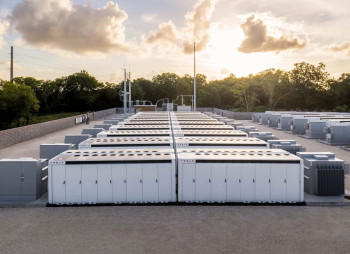
Electricity supply remains another serious issue. Dragon Capital has already invested more than €10 million in energy autonomy, purchasing around 70 generators, batteries, and inverters, and installing solar panels at nearly all of its shopping centers, warehouses, and production facilities.
Summing up, Fiala noted that in 2025 most of the group’s businesses delivered solid results, provided they were not located near the front line and had not suffered direct destruction. Conditions remain particularly favorable in western Ukraine, where Dragon Capital is investing more actively and where demand conditions for business are better than before the war. According to his forecast, the same challenges and trends will persist into 2026.
Dragon Capital is one of Ukraine’s largest investment groups in the investment and financial services sector, offering a full range of investment banking and brokerage services, private equity, and asset management. Founded in Kyiv in 2000, the group’s portfolio includes around 50 companies and real estate projects. Between 2015 and 2021, Dragon Capital invested approximately $700 million in Ukraine, excluding reinvestments.