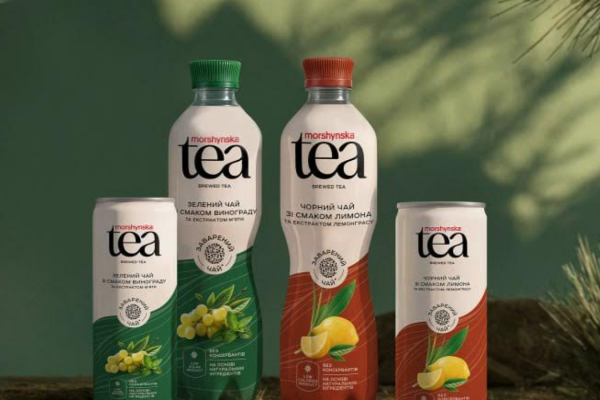

IDS Ukraine, best known as the producer of Morshynska mineral water, has announced its entry into a new market segment — ready-to-drink (RTD) iced tea. To support the launch, the company introduced a new product line under the Morshynska Tea brand and invested UAH 438 million in the installation of a modern aseptic filling line. The technology allows the beverage to maintain its quality without preservatives while also extending shelf life.
The company says one of the product’s defining features is its production approach: unlike most competitors, which use dried tea extracts, IDS Ukraine uses a natural fresh tea infusion. This is expected to become one of the brand’s key competitive advantages and reinforce the drink’s more natural market positioning.
The product will be available in two packaging formats — 0.5-liter plastic bottles and 0.33-liter aluminum cans. At the first stage of sales, Morshynska Tea will be launched through Fozzy Group retail chains as well as filling stations operated by major networks including OKKO, WOG, and SOCAR, ensuring broad distribution and a rapid market entry.
IDS Ukraine has operated in Ukraine since 1996 and is one of the leaders in the bottled water market, controlling more than 40% of the segment. Its portfolio includes well-known brands such as Morshynska, Myrhorodska, Alaska, and Aqua Life, while its total workforce exceeds 3,000 employees.
At the same time, the company remains in the focus of state authorities. In December 2025, Ukraine’s Asset Recovery and Management Agency (ARMA) took over the management of IDS Ukraine’s corporate rights as part of criminal proceedings involving the assets of sanctioned Russian beneficiaries, including Mikhail Fridman. In the near term, ARMA plans to hold a tender to select an independent appraiser for these assets.
Despite this, the company’s business continues to grow. At the end of 2025, IDS Ukraine’s consolidated revenue reached UAH 7.4 billion, up from UAH 6.9 billion in 2024. In January 2026, water sales increased by a further 12% year-on-year. The company attributes this dynamic to cold weather and the aftermath of missile strikes, which affected demand for bottled water.