DTEK is Ukraine’s largest private investor in the energy sector (more than €12 billion invested since 2005). Following the full-scale invasion in 2022, the company reshaped its strategy around restoring the power system and accelerating the “green” transformation. According to DTEK CEO Maksym Timchenko, “despite the war and limited access to international capital markets, we continue to invest in Ukraine—not only to rebuild damaged infrastructure, but also to construct new facilities in line with our long-term strategy.” This underscores that DTEK’s operations strengthen the country’s energy security in critical times.
Before/after 2022: Prior to the war, DTEK systematically implemented multi-billion-euro projects across all segments (reflected in the €12+ billion invested since 2005). After 2022, the focus shifted toward emergency restoration of damaged infrastructure and the priority development of renewables and energy storage systems as tools to mitigate energy crises. In its reporting and press releases, DTEK has repeatedly emphasized how the war changed the landscape: 90% of the group’s thermal generation capacity has been damaged or destroyed, and large-scale strikes have made ongoing investment in recovery essential.
Thermal Generation and Restoration of TPPs
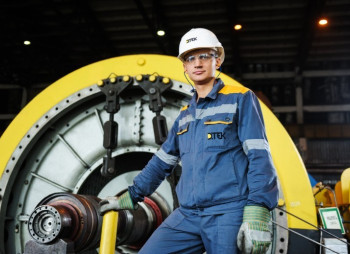
More than 190 enemy attacks since the start of the full-scale invasion have damaged or destroyed approximately 90% of DTEK’s thermal generation. In response, DTEK Energo has allocated significant resources to repairs and reconstruction of thermal power plants. By the end of 2024, DTEK Energo’s total investments in restoring TPPs and mines amounted to around UAH 11 billion. Of this, more than UAH 3 billion was directed specifically to restoring the destroyed capacity of the power plants themselves. This enabled the company to restore more than half of the damaged capacity before the start of the 2024/25 heating season. In October 2024, over just 10 months, the company invested UAH 2.6 billion in TPP repairs (with ~UAH 3.8 billion expected for full-year 2024). As CEO Oleksandr Fomenko noted, DTEK Energo “is directing every possible resource to ensure that thermal generation and Ukraine’s energy system can operate stably amid enemy attacks.”
Beyond repairs, modernization and replacement of equipment at TPPs continues. For example, in 2024–2025, Ukrainian machine-building companies produced more than a million parts and new mining combines for DTEK Energo to support the operation of mines and TPPs even under shelling. Investments in domestic coal production and mining operations totaled around UAH 7.5 billion in 2024, helping secure critical fuel reserves for thermal power plants. Overall, DTEK is investing its own funds (nearly UAH 11 billion in 2024) to strengthen the “energy front” and gradually rebuild generation capacity.
Renewable Energy
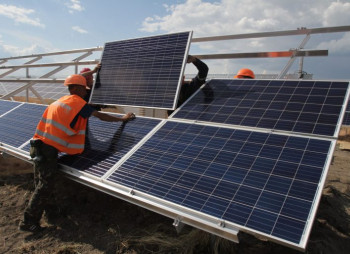
DTEK is actively increasing investments in renewables both in Ukraine and across the EU. The most illustrative project is the expansion of its wind and solar footprint. The Tyligulska project (Mykolaiv region, on the Black Sea coast) is the world’s first wind farm built during wartime. The first phase (19 wind turbines of 6 MW each, total 114 MW) was commissioned in May 2023, with costs of €200 million. The second phase expands the wind farm to 500 MW (from 19 to 83 turbines) and is described as the largest investment in the history of Ukraine’s independent power sector (about €450 million). Financing: banks are providing a €370 million loan backed by Denmark’s export credit agency (EIFO), while DTEK invests the remainder. By the end of 2026, Tyligulska-2 is expected to generate around 1.7 TWh per year—enough to power 900,000 households.
Beyond Tyligulska, DTEK is planning another major wind project—650 MW in Poltava region—as part of its strategy to scale its renewables portfolio in Ukraine to 2 GW by 2030. In addition, 200 MW of battery energy storage is expected to come online by 2025 to smooth excess generation and support grid stability.
DTEK’s international renewables projects: through its European platform DRI (DTEK Renewables International), the company is executing a range of acquisitions and greenfield developments abroad. These include the acquisition of the Glodeni I solar plant (49.38 MW) in Romania (a project developed by Finland’s Finas Invest) in 2023, and the development of the second phase, Glodeni II (60 MW), expected to be commissioned in 2025 (already financed jointly with Romania’s Finas Group). In Romania, DTEK has also acquired the 126 MW Vacaresti solar project and commissioned the 60 MW Ruginoasa wind farm.
DRI is developing projects in other countries as well. In July 2024, it completed the acquisition of stakes in three battery projects in Poland (total 133 MW; the Trzebinia project became the largest in Poland). In January 2025, DRI announced the construction of a 120 MW onshore wind farm, Ljubovo, in Croatia. DTEK has also announced plans in Italy, aiming to build up to 2 GW of solar and storage capacity (including talks on projects in Sardinia). As a result, DRI’s portfolio across “priority markets” already totals around 1.4 GW at various stages of development.
Overall, DTEK’s priority in renewables in 2022–2025 has been large-scale wind and solar projects. The 3.5x expansion of Tyligulska to 500 MW and the 650 MW Poltava project, combined with multiple European investments, are positioned to become among the largest capital deployments into Ukraine’s clean energy sector in recent years.
Grids and Digitalization
DTEK is also investing heavily in the development and modernization of the grid segment—critical in both wartime and post-war recovery. In November 2024, DTEK Grids presented the global “Grids of the Future” plan at the Rebuild Ukraine conference (Warsaw 2024). The plan focuses on transitioning distribution networks to Smart Grid technologies: substation digitalization, digital twins of networks, and other innovations. Under the program, next-generation infrastructure will be implemented in key regions (Kyiv city and region, Odesa region, and Dnipropetrovsk region), increasing reliability, reducing losses, and enabling additional renewable connections. At the event, DTEK showcased a “digital twin” of a 110/35 kV substation in Kyiv region—a virtual replica of the real network—which has already demonstrated a 7x reduction in average outage duration (SAIDI) after implementing optimization measures.
DTEK is also working with international partners to improve grid resilience. In March 2025, DTEK received an €11 million grant from the Government of France (the “Fund for Ukraine” program) to build Ukraine’s first digital transformer substation. In partnership with GE Vernova, the total cost of the new substation is €15 million (€11 million grant plus €4 million invested by DTEK). The facility, equipped with remote monitoring and smart automation, will supply power to more than 65,000 households and businesses in affected areas. This is part of the “Grid of the Future” initiative—DTEK’s long-term program to digitalize Ukraine’s distribution networks.
In parallel with technology upgrades, DTEK Grids continues daily emergency repairs after Russian strikes: for example, DTEK’s Dnipro and Kyiv regional grid operators restored power to millions of consumers after the New Year attacks (January 2026). In this way, DTEK combines rapid restoration work with system modernization to deliver resilient service.
Hydrogen Energy
DTEK is actively exploring “green” hydrogen as a diversification and decarbonization pathway. Even before 2022, the company built innovation teams focused on hydrogen solutions. In 2020–2024, DTEK participated in German-Ukrainian and Ukrainian conferences and became the first Ukrainian industrial member of the European Hydrogen Association. In 2020, Chief Innovation Officer Emanuele Volpe announced plans to launch a hydrogen pilot project as a catalyst for sector development. In 2024, Innovation Manager Andrii Bondar stated that DTEK has been researching hydrogen technologies for four years and had already prepared several pilot projects (temporarily suspended due to the war). According to DTEK’s estimates, to replace traditional energy resources with hydrogen at Ukraine’s 2020 level would require nearly 60 GW of renewable generation and 20 GW of electrolyzers. Company representatives note that hydrogen has strong potential for industries such as fertilizers, steel, and synthetic fuels. Large-scale investments in the sector remain preliminary due to the capital intensity of building major renewable and electrolysis capacity. However, hydrogen remains on DTEK’s radar as a long-term decarbonization and energy security opportunity.
Exports and Integration with Europe
DTEK remains the only major private power producer able to export electricity to the EU. DTEK Zakhidenergo operates the Burshtyn TPP and related assets (the “energy island” in western Ukraine), synchronized with the European ENTSO-E grid. This allows exports of up to 645 MW. However, due to shelling and rising demand, the infrastructure has remained vulnerable, so since early 2023 DTEK has also started importing electricity from Europe (around 0.5 billion kWh per month) to cover deficits. This approach is intended to support Ukraine’s power system during critical winter periods when demand increases. A government framework also supports uninterrupted supply to industrial consumers—DTEK’s partners importing power from the EU.
In addition to direct cross-border electricity flows, DTEK is developing a service platform: D.Trading (energy trading) operates in domestic and external markets and acts as a counterparty for cross-border transactions. Given the loss of significant domestic capacity, export potential is currently limited, making imports a priority during peak-load periods.
M&A Deals
Even during the war, DTEK has continued M&A activity, mainly in renewables abroad. In 2023–2024, DTEK Renewables acquired several projects and operational assets: for example, the 49.38 MW solar plant in Romania (Finas Invest) and the 60 MW Glodeni II project (with Finas Group). In 2024, DTEK acquired 133 MW of battery storage projects in Poland (the first large BESS project in the country). In spring 2025, DRI acquired or began construction of the 120 MW Ljubovo wind farm in Croatia. Overall, DTEK’s M&A strategy is focused on building a larger European renewables portfolio, which now totals roughly 1–1.4 GW of projects at various stages.
In Ukraine, no major wartime M&A transactions have been publicly announced—DTEK’s focus remains on existing assets and projects, modernization of its own capacities, and supporting national recovery efforts together with the state.
Funding Sources for Investments
To deliver large-scale projects, DTEK uses a blended financing model: its own funds, bank loans, and international grants. For example, for the Tyligulska WPP expansion (500 MW, €450 million), most of the debt package (€370 million) is provided by leading banks with support from Denmark’s export credit agency (EIFO), while DTEK invests the remainder. For battery storage development (200 MW), DTEK combines internal funding with credit facilities. A key example of international support is the €11 million French grant for the first digital substation (total cost €15 million).
Another example: in June 2025, a consortium of Ukrainian banks (Oschadbank, PUMB, and Ukrgasbank) extended a loan of approximately UAH 3 billion (over €67 million) to DTEK for the construction of energy storage facilities with a total capacity of 180 MW (part of the planned 200 MW). The deal was led by Oschadbank, and DTEK will also finance part of the costs. This domestic banking consortium became a notable precedent, as banks joined forces to support critical infrastructure in wartime conditions.
Overall, DTEK relies on a combination of equity and external borrowing. Investment instruments include loans backed by export credit agencies (Denmark, France, etc.), preferential grant programs from partners (EU and governments), and partnership financing. The company also highlights cooperation with international donor funds; for example, within grid digitalization, Ukraine and the European Commission maintain relevant grant frameworks.
Investments During Blackouts and Infrastructure Damage
Russian strikes on energy assets caused recurring nationwide outages (blackouts). This materially reshaped DTEK’s investment logic. Instead of simply accumulating projects, the company prioritized decentralization and system resilience:
Modernization and smart grids. The “Grids of the Future” program and the digital substation (with the French grant) directly address the vulnerabilities of centralized infrastructure. Smart solutions—digital twins and automation—help identify failures faster and reduce outage durations; the Kyiv region digital twin showed a 7x reduction in average outage time (SAIDI).
Energy storage. During blackouts, balancing supply and demand becomes critical. That is why DTEK is building 200 MW of battery storage across Ukraine by autumn 2025 (investing €140 million). Storage can absorb excess generation and discharge during peaks, supporting grid stability.
Own generation. Large-scale investments in wind and solar during wartime are also part of the crisis response strategy. Tyligulska (500 MW) and other projects add stable capacity and help reduce structural deficits in generation (especially in summer).
Local reserves and imports. DTEK provides backup power solutions for critical facilities (hospitals, schools, etc.) and, via the Burshtyn island, imports electricity from the EU (≈0.5 TWh/month). This reduces pressure on damaged infrastructure and helps keep supply more reliable.
Rapid restoration. DTEK’s Dnipro and Kyiv grid operators restore power daily after attacks. For example, in December 2025 alone, DTEK restored electricity to more than 5 million homes. Meanwhile, major overhauls continue at TPPs; even after recent attacks, plants were repeatedly brought back online, including more than 20 “from-zero” restarts in 2024.
In sum, during blackouts DTEK intensified investments aimed at flexibility and reliability. The company is not only restoring damaged capacity, but also building long-term defenses against attacks—through smart technologies, storage, distributed generation, and diversified supply routes.
Conclusions
In 2022–2026, DTEK executed a series of landmark investments and transactions, adapting its strategy to wartime realities. New facilities were commissioned (for example, the 114 MW first phase of Tyligulska in 2023), large-scale construction programs were launched (expansion to 500 MW, the 650 MW Poltava wind project, battery storage, etc.), and multiple international M&A deals were completed (49 MW solar in Romania, 133 MW in Poland, 120 MW wind in Croatia, and others). To finance this, DTEK combined equity with Ukrainian bank loans (a ~UAH 3 billion consortium facility) and international support (an €11 million French grant and Danish export credit-backed loans).
DTEK’s investments have enabled not only rapid restoration of thermal capacity after damage (more than half of the damaged TPP capacity restored in 2024), but also the foundations of a modernized energy system. Digital substations and smart grids support deeper integration with Europe, while wind and solar projects strengthen Ukraine’s energy independence. Ultimately, DTEK is turning the challenge of wartime destruction into acceleration of clean energy development—demonstrating that, even in war, investment can serve as a pillar of national resilience.