Introduction: the scale of the problem
Following Russia’s full-scale invasion, Ukraine has become one of the most heavily mined countries in the world. According to government and international estimates, more than 30% of the country’s territory may be contaminated with mines and unexploded ordnance (UXO). This poses a critical threat to civilians, agriculture, infrastructure, and economic recovery.
According to the Accounting Chamber of Ukraine, contamination by explosive hazards has rendered 9.85 million hectares of agricultural land across ten regions unsafe for use—nearly a quarter of all agricultural land in the country. From 2022 through July 2025, only 7,750 hectares were cleared in line with national humanitarian demining standards and returned to use—just 0.08% of contaminated farmland. An additional 403,000 hectares were returned to cultivation under simplified procedures.
At the current pace, fully clearing Ukraine’s agricultural land of explosive hazards and properly returning it to use would take approximately 83 years.
Solving the humanitarian demining challenge requires not only government action and international donor support, but also private investment—opening a new market with sustained demand for decades.
Demand in the humanitarian demining market
Agriculture. Ukraine is losing millions of hectares of fertile land that cannot be cultivated due to mines. Each hectare returned to use has direct economic value for farmers and the state.
Infrastructure projects. Rebuilding roads, bridges, energy facilities, and industrial zones is impossible without prior clearance of explosive hazards.
Civilian safety. Thousands of civilians are killed or injured by unexploded ordnance. Public demand for rapid land clearance is extremely high.
Investment opportunities
Licensed private demining operators. Commercial operators already operate in Ukraine with official permits. Investors can acquire stakes in existing businesses or establish new ones.
Technology and equipment. Demand is exceptionally high for modern drones, robotic systems, metal detectors, armored vehicles, and mapping software.
Partnerships with international organizations. Many donor programs are ready to co-finance private operators, ensuring a steady pipeline of contracts.
Insurance and financial instruments. Banks and investment funds can develop specialized products to support companies operating in humanitarian demining.
Government and international support
Ukraine has approved a national humanitarian demining strategy that explicitly предусматривает involvement of the private sector.
The EU, the United States, Canada, Japan, and other countries provide hundreds of millions of dollars in grants, equipment, and technical assistance.
International financial institutions (EBRD, World Bank, USAID) are considering financing programs to clear agricultural land and infrastructure.
How the humanitarian demining business operates
Humanitarian demining companies typically function as service operators, receiving contracts from:
-
Government authorities (Ministry of Defense, State Emergency Service, Ministry of Economy, local administrations);
-
International donors (EU, USAID, UNDP, G7, World Bank, EBRD);
-
Private companies (agriholdings, developers, infrastructure companies requiring cleared land to launch operations).
The core service is full clearance of land plots or infrastructure sites from mines and explosive hazards, followed by issuance of an official certificate allowing safe use of the land.
Key elements of the business model
Licensing and accreditation
-
Mandatory registration with the State Emergency Service;
-
Certification under international standards (IMAS).
Investment in personnel
-
Training deminers at certified centers;
-
Team formation (10–20 people per demining unit);
-
Ongoing costs for life and health insurance.
Investment in equipment
-
Metal detectors: USD 2,000–10,000 per unit;
-
Drones with magnetometers: USD 20,000–50,000;
-
Robotic systems: USD 200,000–500,000;
-
Specialized machinery (armored vehicles, ATVs, remotely operated excavators).
Revenue sources
-
Government tenders for land clearance;
-
International grants and donor contracts;
-
Private orders from agribusinesses, developers, and logistics companies.
Scalability
-
Multiple demining teams can operate simultaneously;
-
Outsourcing partners can be engaged in adjacent services (GIS mapping, surveying, machinery).
Financial model: costs and revenues
Initial investment
-
Licensing, accreditation, staff training: USD 200,000–300,000;
-
Base equipment for one team (10–15 people): USD 500,000–700,000;
-
Working capital (salaries, logistics, insurance, office, marketing) for 6–12 months: USD 300,000–400,000.
Minimum entry ticket: USD 1.0–1.5 million.
Sale of a humanitarian demining company
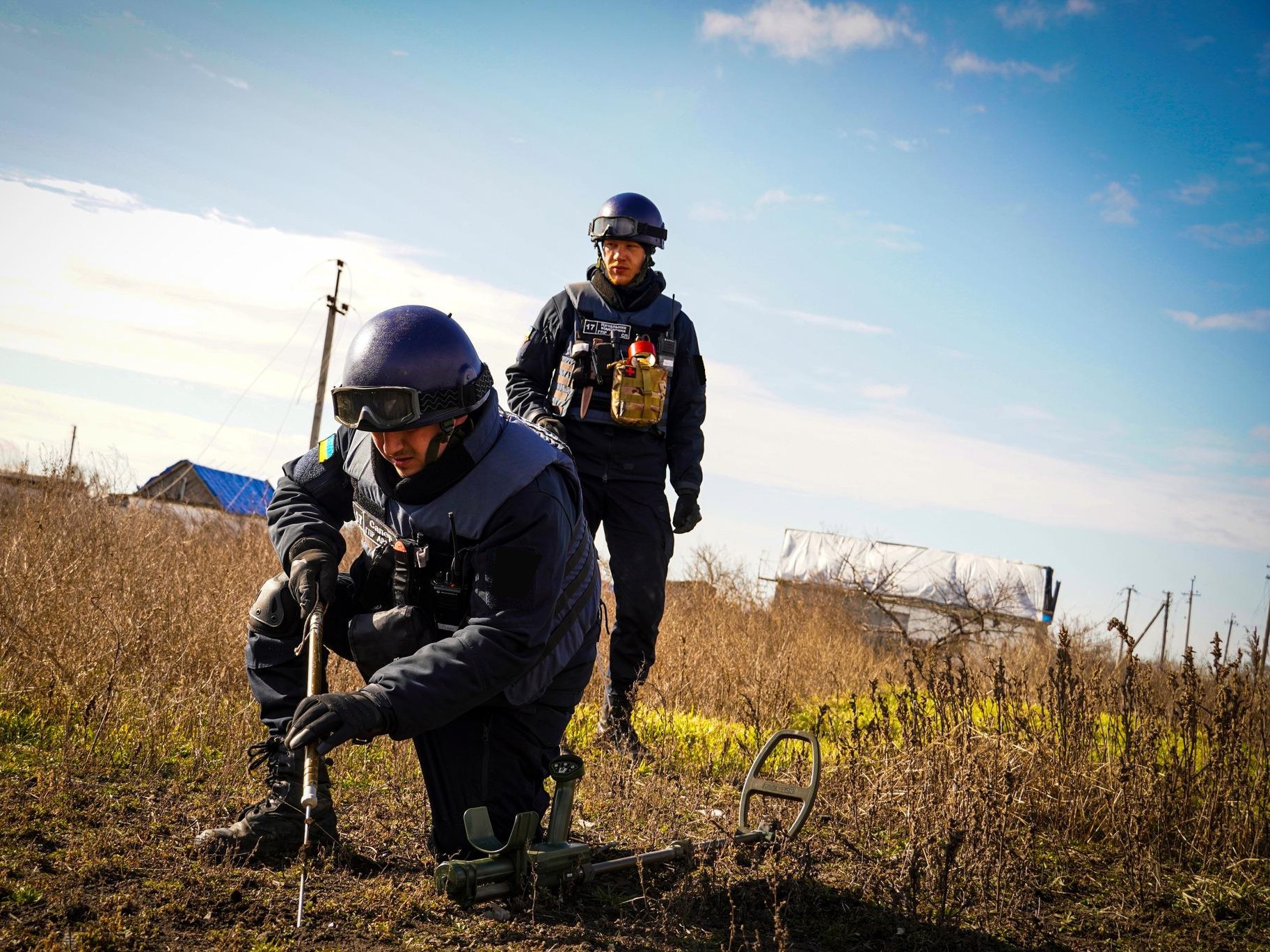
Operating costs
-
Deminer and technician salaries: USD 1,200–2,000 per month per person;
-
Personnel life insurance: USD 500–1,000 per year;
-
Equipment depreciation: USD 50,000–100,000 per team annually;
-
Logistics and equipment maintenance: USD 5,000–10,000 per month.
Revenues
-
Average cost to clear 1 hectare: USD 1,000–5,000 (depending on complexity and region);
-
One team can clear 20–30 hectares per month (in complex cases, 5–10 hectares);
-
Annual revenue per team: USD 500,000–1,000,000.
Payback and profitability
-
ROI (payback period): 2–4 years;
-
Operating margin: 20–35% (driven by sustained demand and donor-backed contracts).
Investment models
Equity partnership.
Investor acquires a stake in a licensed company with existing contracts.
Equipment financing.
Investor purchases equipment used by an operator on contracts and receives a share of profits.
Project-based financing.
Investor finances a specific project (e.g., clearing 500 hectares for an agriholding) and earns a percentage of the contract value.
Risks and challenges
-
Regulatory barriers. Licensing and strict oversight by authorities are mandatory.
-
High upfront costs. Equipment procurement and staff training require significant capital.
-
Security risks. Operations near or within conflict-affected areas pose risks to personnel and assets.
Conclusion
Investing in humanitarian demining in Ukraine combines high social impact with solid economic fundamentals. Given the scale of contamination (over 170,000 sq km) and guaranteed support from the government and international donors, this market will remain relevant for at least the next 10–15 years.
For private investors, humanitarian demining may become one of the most attractive opportunities of the coming decade—uniting a vital social mission with sustainable financial returns.