The blockade of seaports, falling grain prices, working capital shortages, and climate risks are forcing Ukrainian agribusinesses to reassess their investment strategies for 2027. Some agricultural holdings are reducing wheat acreage and shifting toward oilseed crops, while others are maintaining their long-term production plans. Meanwhile, investment in grain storage, logistics, processing, energy independence, and irrigation is becoming increasingly important.
Ukraine's agricultural sector is entering 2027 facing one of the most challenging combinations of financial and operational risks since the beginning of Russia's full-scale invasion.
Following intensified Russian attacks on the Greater Odesa ports in the summer of 2026, Ukraine's export capacity declined significantly. According to estimates by the Ministry of Agrarian Policy, alternative routes via the Danube, railways, and road border crossings can accommodate only about half of the country's required agricultural export volumes.
A prolonged disruption of maritime logistics could result in the accumulation of approximately 24 million tonnes of unsold grain and the loss of more than $5 billion in potential export revenue.
The financial position of agricultural producers is also deteriorating. According to Minister of Agrarian Policy Taras Vysotskyi, farmers had an average of approximately $250 per hectare in available funds to finance production at the beginning of 2026. By October 1, 2026, this figure had fallen to $100 per hectare.
As a result, the agricultural sector's financial reserves have declined by approximately 60%, from $5 billion to $2 billion. Average profitability in crop production could approach zero by the end of 2026.
Under these conditions, agribusiness investment strategies are increasingly determined not by the size of their land banks but by their ability to preserve liquidity, control production costs, and secure sales of harvested crops.
1. Preserving Liquidity Takes Priority Over Business Expansion
For many agricultural producers, the primary challenge in 2027 will be financing ongoing operations and the next production cycle.
Export disruptions have created a situation in which companies hold agricultural commodities in storage but cannot convert them into cash proceeds in a timely manner. Meanwhile, they must continue financing land leases, wages, fuel, seeds, fertilizers, and crop protection products.
Small and medium-sized farms without their own grain elevators or sufficient financial reserves remain particularly vulnerable.
According to Pavlo Koval, Director General of the Ukrainian Agrarian Confederation, delays in grain sales could force producers to reduce spending on fertilizers, crop protection products, and farming operations, potentially leading to lower yields in 2027.
Consequently, agribusiness investment budgets may shift away from large-scale purchases of machinery, farmland, and new production assets toward maintaining working capital.
Bank lending will remain an important source of financing. In August 2026, the Ukrainian government expanded agricultural lending opportunities, including access to loans of up to UAH 90 million for working capital needs and UAH 20.8 billion in portfolio guarantees under the Affordable Loans 5–7–9% program.
Investment trend: Projects with shorter payback periods, predictable cash flows, and minimal additional working capital requirements are likely to receive priority.
2. Rethinking Crop Structures: Focusing on Margins and Export Opportunities
One of the most significant changes is the reassessment of the economics of traditional grain crops.
According to a Barva Invest survey, approximately one in three or four Ukrainian farmers planned to reduce their winter wheat acreage. In Sumy, Kharkiv, and Chernihiv regions, every second producer expressed such intentions.
The main reasons are low domestic purchase prices, high logistics costs, and the risk of accumulating carryover stocks.
At the end of September 2026, milling wheat was trading at approximately $175 per tonne on CPT Odesa terms, while production and delivery costs at some agricultural companies had already exceeded this level.
However, major Ukrainian agricultural holdings are pursuing significantly different strategies.
AGROTRADE Group is reducing winter wheat and barley acreage for the 2027 harvest by nearly one-third. The company planned to sow approximately 5,850 hectares of wheat and 2,400 hectares of barley. Rapeseed acreage was also reduced due to insufficient soil moisture.
HarvEast reduced winter wheat acreage by 20% to 1,600 hectares and rapeseed acreage by 10% to 940 hectares. The company is preparing for a scenario involving prolonged restrictions on maritime exports and is shifting its focus toward oilseed crops.
HarvEast CEO Dmytro Skorniakov explained in comments to Latifundist.com that the company is preparing even for a scenario in which exports through Odesa remain unavailable for an entire year. Under such conditions, soybeans, sunflower, and rapeseed appear more attractive than grain crops.
Meanwhile, TAS Agro has adopted a different approach. For the 2027 harvest, the company increased its planned wheat acreage by 23% to 24,700 hectares and rapeseed acreage by 13% to 14,180 hectares.
TAS Agro CEO Oleh Zapletniuk emphasizes the importance of long-term crop rotation and the risks of making short-term changes to production models in response to current market prices.
Continental Farmers Group is pursuing a similar strategy, planning to increase winter wheat acreage by approximately 41% to 49,900 hectares.
NIBULON demonstrates another approach. The company is maintaining approximately 11,000 hectares of winter wheat but changing its varietal structure. In southern Ukraine, more than 80% of its wheat acreage is expected to be planted with durum wheat, which is in demand in EU and African markets.
Therefore, there is no universal strategy for Ukrainian agricultural producers. Crop investment decisions increasingly depend on land bank geography, farming technologies, sales contracts, and access to logistics infrastructure.
3. Investment in Agricultural Processing: Moving from Raw Commodities to Value-Added Products
Restricted export opportunities are strengthening the economic case for developing agricultural processing.
When transportation capacity is limited, the value of products per unit of cargo transported becomes particularly important.
This creates opportunities for investments in oilseed processing, food manufacturing, feed production, and other higher-value-added segments.
In October 2026, the Ukrainian government introduced temporary priority arrangements for the transportation and export of Ukrainian sunflower, soybean, and rapeseed oils by rail and through seaports.
According to Stepan Kapshuk, Director General of the Ukroliyaprom association, exporting vegetable oil generates higher foreign currency revenue per tonne of cargo than exporting unprocessed agricultural commodities.
However, owning processing facilities does not eliminate logistics risks.
For example, Kernel sold 165,000 tonnes of vegetable oil in July–September 2026, representing a 48% decline compared with the same period of the previous year. The main reason was disruption to maritime shipments.
Therefore, investments in new processing facilities in 2027 will require not only an assessment of production margins but also a thorough evaluation of raw material availability, sales markets, energy costs, and finished-product logistics.
Investment trend: Opportunities may include not only greenfield processing plants but also the modernization of existing facilities, deeper processing, niche product manufacturing, and integration of processing operations with proprietary raw material supplies.
Investment Opportunity in Innovative Agricultural Processing from InVenture M&A Advisors
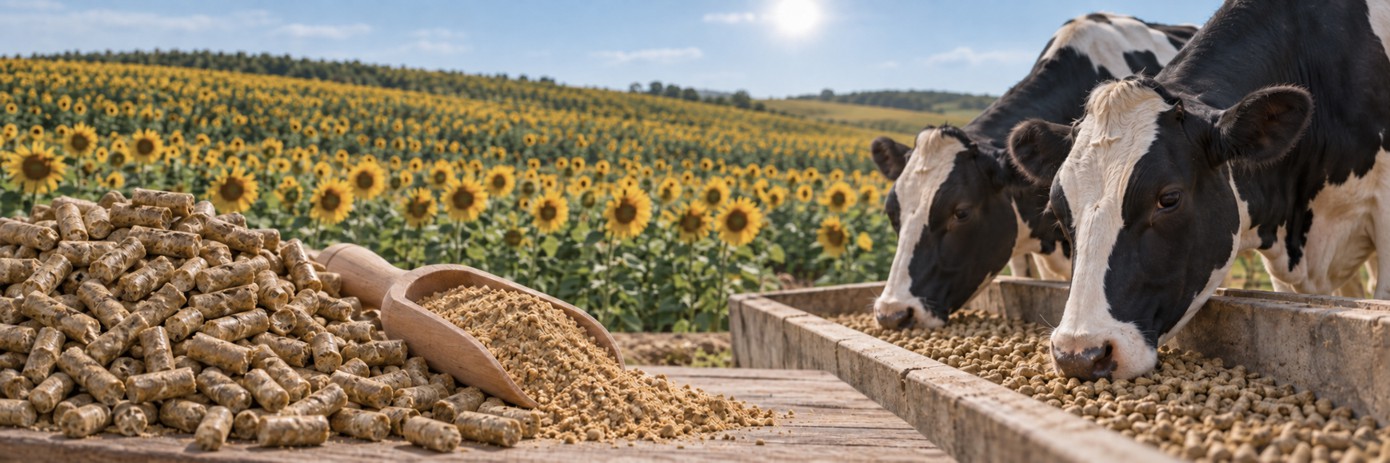
Sunflower Protein: A New Segment of Advanced Agricultural Processing in Ukraine
InVenture M&A Advisors considers advanced agricultural processing a promising segment for strategic investment and M&A transactions in Ukraine.
In particular, the company represents the owners of an operating Ukrainian enterprise producing high-protein feed ingredients from sunflower-based raw materials. The owners are considering attracting a strategic investor.
The enterprise has established production infrastructure, modern technological equipment, developed commercial relationships, and experience selling its products in domestic and international markets.
This investment opportunity may be of interest to international animal feed and feed ingredient manufacturers, agribusiness groups, oilseed processing companies, and investors considering the acquisition of established industrial assets in Ukraine.
For further information, contact us: +38 067 713 65 71.
4. Grain Elevators, Storage Facilities, and Alternative Logistics Are Becoming Strategically Important
Export disruptions are transforming access to infrastructure from an operational advantage into a key factor in agribusiness competitiveness.
According to an UkrAgroConsult assessment dated October 28, 2026, if monthly agricultural exports remain at 2–3 million tonnes, Ukraine could face a storage capacity shortage of 5–8 million tonnes in early 2027.
As of October 1, grain and oilseed inventories in Ukraine were estimated at 42–43 million tonnes, approximately 23% higher than a year earlier.
For agricultural producers, owning a grain elevator or having guaranteed access to storage capacity allows them to avoid being forced to sell grain immediately after harvesting at unfavorable prices.
However, grain storage also requires financing. Companies incur costs for drying, electricity, inventory holding, and debt servicing.
Therefore, the investment feasibility of building a new grain elevator will depend on its location, operating costs, grain turnover, and access to alternative sales channels.
Cross-border logistics is also becoming increasingly important.
One example is Grain Alliance, which continues developing its grain terminal in Slovakia. Following expansion, the terminal has a storage capacity of approximately 40,000 tonnes.
Nevertheless, alternative export routes remain more expensive than traditional maritime logistics, limiting their economic efficiency for bulk grain commodities.
Investment trend: Local grain elevators, grain drying facilities, railway infrastructure, border transshipment terminals, and logistics assets with access to multiple transportation routes.
5. Energy Independence and Reducing Production Costs
Rising energy prices and the risk of electricity supply disruptions are encouraging agricultural companies to invest in energy independence.
These solutions are particularly relevant for grain elevators, drying facilities, processing plants, and livestock operations.
Promising investment areas include solar power plants, battery energy storage systems, alternative fuels for grain dryers, biogas facilities, and backup power generation.
For example, Grain Alliance plans to increase the share of its grain elevator capacity operating on alternative fuels to 100% during the 2026/27 marketing season.
Company Vice President and Commercial Director Tair Musaiev previously reported that this figure had exceeded 80%. The company is installing additional heat generators while retaining natural gas as a backup energy source.
Other agricultural holdings are also implementing autonomous energy supply projects. For example, selected Agroprosperis grain elevators already use solar power plants, energy storage systems, and generators.
For such investments, the key performance indicator is becoming not only the payback period but also the ability to maintain uninterrupted operations during electricity supply restrictions.
6. Irrigation, Precision Agriculture, and Resource-Efficient Technologies
Climate-related risks are gradually becoming as important as market risks.
Droughts, uneven rainfall, and changing temperature patterns are forcing agricultural producers to reassess cultivation technologies and capital expenditure priorities.
Significant differences in corn yields can now be observed even between neighboring farms. Yields in some fields reached approximately 5.5 tonnes per hectare, while farms located only a few dozen kilometers away achieved more than 10 tonnes per hectare.
This is increasing interest in precision agriculture, variable-rate fertilizer application, soil moisture monitoring systems, and technologies that reduce the number of machinery passes across fields.
For example, AGROTRADE applied strip-till technology to approximately 70% of its winter rapeseed acreage in 2026. This approach helps reduce mechanical soil disturbance, fuel consumption, and soil moisture loss.
Another long-term investment area is the restoration and development of irrigation infrastructure.
A.G.R. Group is working to restore irrigation systems in Mykolaiv region. According to the company's plans, irrigated acreage was expected to increase to 6,000 hectares in 2026, with further infrastructure restoration continuing in 2027.
According to market participants, developing a new irrigation system typically requires approximately $3,000–3,600 per hectare, while complex infrastructure projects may cost up to $6,000 per hectare.
However, such investments are long-term in nature and require careful assessment of water availability, energy costs, payback periods, and security risks.
7. M&A and Agricultural Land Assets: From Expanding Land Banks to Portfolio Optimization
In 2027, the agricultural asset market may see an increase in selective acquisitions and divestments.
Declining profitability, financing needs, and geographic risks are encouraging some owners to reassess the structure of their land banks.
A notable example is the US-backed Agroprosperis Group, which has been gradually reducing its presence in selected agricultural clusters in recent years.
The total land bank of farming businesses that the group has sold or is preparing to sell since 2023 amounts to approximately 35,000 hectares.
Transactions include the sale of Latagroinvest, with a 6,050-hectare land bank in Vinnytsia and Cherkasy regions, and a change of control at Orativlatininvest, which cultivates approximately 3,200 hectares.
Volodymyr Nahornyi, Head of Agricultural Projects at Fortior / LandMan, suggests that such decisions may be driven by geographically dispersed land plots, insufficient land consolidation, high rental costs, and war-related risks.
However, divesting individual farming businesses does not necessarily mean that an investor is exiting the Ukrainian market. It may instead form part of an asset optimization strategy aimed at concentrating resources in more efficient agricultural production clusters.
For agricultural business buyers, this creates opportunities to consolidate land near existing operations, acquire complementary infrastructure, and improve operational efficiency.
Investment trend: Rather than simply acquiring the largest possible number of hectares, investors will increasingly evaluate land bank quality, lease agreement terms, geographic concentration, logistics, production infrastructure, and actual company EBITDA.
Read InVenture's separate analysis of agricultural investments in Ukraine in 2025–2026: M&A transactions in the crop production sector, market trends, and prospects for the development of agricultural companies' land banks.
8. Business Model Diversification and Scenario-Based Investment Planning
Uncertainty surrounding the operation of seaports, global agricultural commodity prices, and the duration of the war is complicating long-term financial planning.
Under these conditions, agricultural companies increasingly need to develop multiple business scenarios rather than rely on a single production budget.
Three basic scenarios should be considered for 2027.
Optimistic scenario — restoration of stable maritime exports. Lower logistics costs and faster inventory sales would create conditions for recovering profitability and gradually resuming growth-oriented investments.
Base-case scenario — limited seaport operations. Agricultural producers maintain conservative investment budgets, optimize crop structures, expand alternative logistics, and focus on projects with shorter payback periods.
Pessimistic scenario — prolonged export blockade. Accumulating inventories, falling domestic prices, and working capital shortages could force some producers to reduce cultivated acreage, postpone capital investments, and sell non-core assets.
Under each scenario, financial discipline, cash flow stress testing, and diversification of sales channels become particularly important.
Which Investments Will Be Priorities for Ukrainian Agribusinesses in 2027?
An analysis of market trends and strategies pursued by Ukrainian agricultural companies highlights several areas likely to shape capital expenditure priorities in 2027.
| Investment Area | Primary Objective |
|---|---|
| Working capital | Financing planting operations and preserving liquidity |
| Crop rotation optimization | Improving production margins |
| Agricultural processing | Creating added value and diversifying sales |
| Grain elevators and storage | Reducing exposure to seasonal prices and logistics constraints |
| Alternative logistics | Maintaining access to export markets |
| Energy projects | Reducing costs and ensuring energy independence |
| Irrigation and agricultural technologies | Stabilizing yields and optimizing resource use |
| M&A and asset consolidation | Improving the operational efficiency of land banks |
However, the potential of each investment area varies significantly depending on location, farm size, financial structure, and access to export infrastructure.
Conclusions: Ukrainian Agribusinesses Will Prioritize Efficiency and Resilience in 2027
Ukraine's agricultural sector is gradually moving away from a growth model based on expanding land banks and increasing gross output toward a more selective investment strategy.
Amid uncertainty, the key performance indicator is no longer maximum crop yield or the number of hectares cultivated, but rather a company's ability to generate positive cash flow, service financial obligations, and maintain competitiveness under different market scenarios.
In 2027, the most resilient agricultural companies may be those with access to alternative logistics routes, sufficient storage capacity, diversified production structures, and adequate financial reserves.
For investors and buyers of agricultural assets, this period may create opportunities to acquire farming businesses, land banks, and production infrastructure as existing owners reassess risks and optimize their portfolios.
However, capitalizing on these opportunities will require more thorough financial, legal, and operational due diligence.
The fundamental shift in the investment strategy of Ukraine's agricultural sector in 2027 is a transition from expansion for its own sake toward investments in liquidity, efficiency, technological independence, and risk management.