1. Context: The War in Ukraine as a Driver of Structural Transformation in the Metalworking Industry
The full-scale war has radically changed the demand structure and production geography of Ukrainian industry. Part of the large metallurgical enterprises has been destroyed or lost, logistics chains have been transformed, and the export model has been revised. At the same time, the metalworking sector (production of metal structures, components, machinery, military-technical parts, and engineering solutions) has gained new development momentum.
While traditional metallurgy is capital-intensive and dependent on global markets, metalworking is a flexible, high–value-added segment oriented toward both domestic demand (defense, energy, construction) and exports to the EU.
During wartime, investments in this sector represent not only an economic opportunity but also a component of Ukraine’s reconstruction and integration into European manufacturing value chains.
2. Structure of the Metalworking Sector: Where Value Added Is Created
Metalworking in Ukraine is not merely “metal processing,” but a multi-level ecosystem with varying depths of value creation. In wartime conditions, this flexibility and diversification have allowed the sector to adapt faster than traditional metallurgy.
Metalworking in Ukraine includes several key segments:
1. Production of Steel Structures (bridges and overpasses, hangars and warehouses, logistics centers, frames for shopping malls, factories, agricultural facilities, military and critical infrastructure objects)
Value added is generated not only in manufacturing metal elements but also in: engineering (design, BIM modeling), installation,
anti-corrosion protection, logistics of oversized structures.
During the war, demand shifted from commercial real estate toward: fortification structures, restoration of destroyed bridges,
mobile logistics facilities.
Margins in this segment depend on the level of engineering integration: a “steel-only” producer operates at lower margins than a company delivering turnkey integrated solutions.
2. Sheet Metal Processing (laser and plasma cutting, CNC press braking, turning and milling, welding, powder coating)
High value added is generated through: precision, production speed, small-batch manufacturing, complexity of components.
Companies that invested in modern equipment (fiber lasers, robotic systems) gained a competitive advantage in working with defense contracts and export orders.
This segment is particularly attractive for investors due to: a relatively low entry threshold (compared to metallurgy), fast order turnover, the ability to serve multiple industries simultaneously.
3. Mechanical Engineering Components (gearboxes, frames, housings, mechanical assemblies, metal parts for agricultural machinery, mining equipment components)
Value creation here is driven by: technical complexity, certification requirements, integration into global supply chains.
During wartime, some enterprises shifted from civilian mechanical engineering to defense-related orders, increasing production capacity utilization.
4. Defense Industry Components Manufacturing (UAV housings and related parts, frames and chassis elements, armored panels and protection components, mechanical assemblies for specialized vehicles, artillery system components, high-precision parts)
Key characteristics of this segment include: short production cycles, high precision, confidential contracts, enhanced quality control requirements.
Investment in modern equipment (CNC machines, laser systems, robotic lines) enables small and medium enterprises to integrate into defense supply chains.
An investor entering this segment benefits from: stable demand, potential foreign currency revenue through defense exports,
high EBITDA margins (driven by specialization).
5. Energy Segment (power transmission line towers, substation steel frames, transformer housings, frames for gas engine power plants, structures for solar power stations)
The development of distributed generation has created new niche demand — smaller but recurring orders for local energy projects.
3. Integration with the EU: Reshoring and Nearshoring in Metalworking
Structural Reconfiguration of Production Chains After 2022
After 2022, European industrial companies intensified the revision of global supply chains. The pandemic, geopolitical tensions, logistics disruptions, and rising transportation costs from Asia exposed the vulnerability of the “remote manufacturing” model.
As a result, two major trends emerged:
-
reshoring — bringing part of production back to the EU;
-
nearshoring — relocating production to neighboring or nearby countries.
Within this process, Ukrainian metalworking has become a natural candidate for hosting medium-complexity operations and small-batch manufacturing.
Metalworking possesses several characteristics that make it suitable for rapid integration into European supply chains:
-
flexible production processes;
-
ability to work with small and medium batches;
-
relatively low entry threshold (compared to a full metallurgical cycle);
-
strong engineering and technological component.
European заказчики increasingly seek partners capable of ensuring:
-
short production cycles;
-
rapid prototyping;
-
adaptation to specific technical requirements;
-
compliance with ISO and CE standards.
These requirements align with the profile of modern Ukrainian metalworking enterprises, particularly in the western and central regions.
Key Competitive Advantages of Ukraine
Cost Competitiveness. Labor and production infrastructure costs remain lower than in Poland, the Czech Republic, or Germany. At the same time, the workforce skill level enables quality comparable to Central European manufacturers.
Engineering Capacity. Ukraine has preserved a strong technical tradition in mechanics, mechanical engineering, and materials science. Companies actively implement CAD/CAM systems, digital modeling, and automated production management systems.
Logistical Proximity. Road delivery to Poland or Germany takes from several hours to 1–2 days, significantly reducing contract execution time compared to shipments from Asia.
Trade Preferences. The duty-free trade regime with the EU has allowed Ukrainian manufacturers to compete without tariff barriers, facilitating integration into long-term contracts.
Integration Models in European Supply Chains
Integration of Ukrainian metalworking companies takes place under several models:
Tier-2 / Tier-3 suppliers. Ukrainian producers supply assemblies, blanks, and metal components to Polish and German companies in mechanical engineering, agriculture, and construction.
Contract manufacturing. A European company retains R&D and commercial functions while relocating part of production operations to Ukraine.
Joint ventures. Establishing JVs with local manufacturers allows combining European capital and sales markets with Ukraine’s production base.
Defense Cooperation as a New Integration Vector
The growth of defense budgets in Europe and the expansion of military-industrial cooperation programs open a new segment for Ukrainian metalworking.
This includes:
-
manufacturing components for military equipment;
-
cooperation in armored systems production;
-
participation in joint industrial projects.
Practical experience gained under wartime economic conditions enhances the competitiveness of Ukrainian enterprises in this segment.
Despite positive dynamics, integration is accompanied by several constraints:
-
the need for certification under European standards;
-
lack of long-term financing for scaling;
-
cross-border infrastructure bottlenecks;
-
contract insurance risks.
For investors, these barriers create entry opportunities — through financing modernization, supporting certification, and building export infrastructure.
4. Investment Economics in Metalworking: CAPEX, Margins, Payback
In the metalworking sector, investment economics largely depend on scale, level of automation, and customer structure. Below are three typical entry models for investors: from a small production workshop to a scalable industrial enterprise.
Model 1. Small Workshop (Local Market / Subcontracting)
Objective: small-batch production, subcontracting for larger players, local orders (construction, agriculture, Tier-2/3 defense contractors).
CAPEX Structure: $300,000 – $800,000
-
entry-level fiber laser;
-
press brake;
-
guillotine shear;
-
welding stations;
-
basic ventilation system;
-
generator;
-
minimal warehouse infrastructure;
-
working capital (2–3 months).
Financial Benchmarks:
Revenue: $0.8 – 1.5 million per year
EBITDA margin: 15–22%
EBITDA: $150,000 – 300,000
Payback period: 2.5 – 4 years
Key Features:
-
high dependence on equipment utilization;
-
sensitivity to downtime;
-
flexibility in changing production profile.
Margin upside: cooperation with defense industry or export contracts can increase EBITDA margin to 25%.
Model 2. Medium-Sized Enterprise (Export / Defense Cooperation)
Objective: integration into EU supply chains or direct defense contracts.
CAPEX Structure: $1.5 – 5 million
-
2–3 modern fiber lasers;
-
high-precision CNC press brakes;
-
turning and milling group;
-
robotic welding systems;
-
powder coating line;
-
energy autonomy (diesel + solar power);
-
warehouse space 1,000–3,000 m²;
-
working capital (3–4 months).
Financial Benchmarks:
Revenue: $4 – 10 million per year
EBITDA margin: 20–30%
EBITDA: $1 – 2.5 million
Payback period: 2 – 3 years
Profitability Drivers:
-
long-term export contracts;
-
defense orders;
-
engineering value-add (not just cutting, but production of complex assemblies).
During wartime, such enterprises demonstrate the most attractive risk/return ratio.
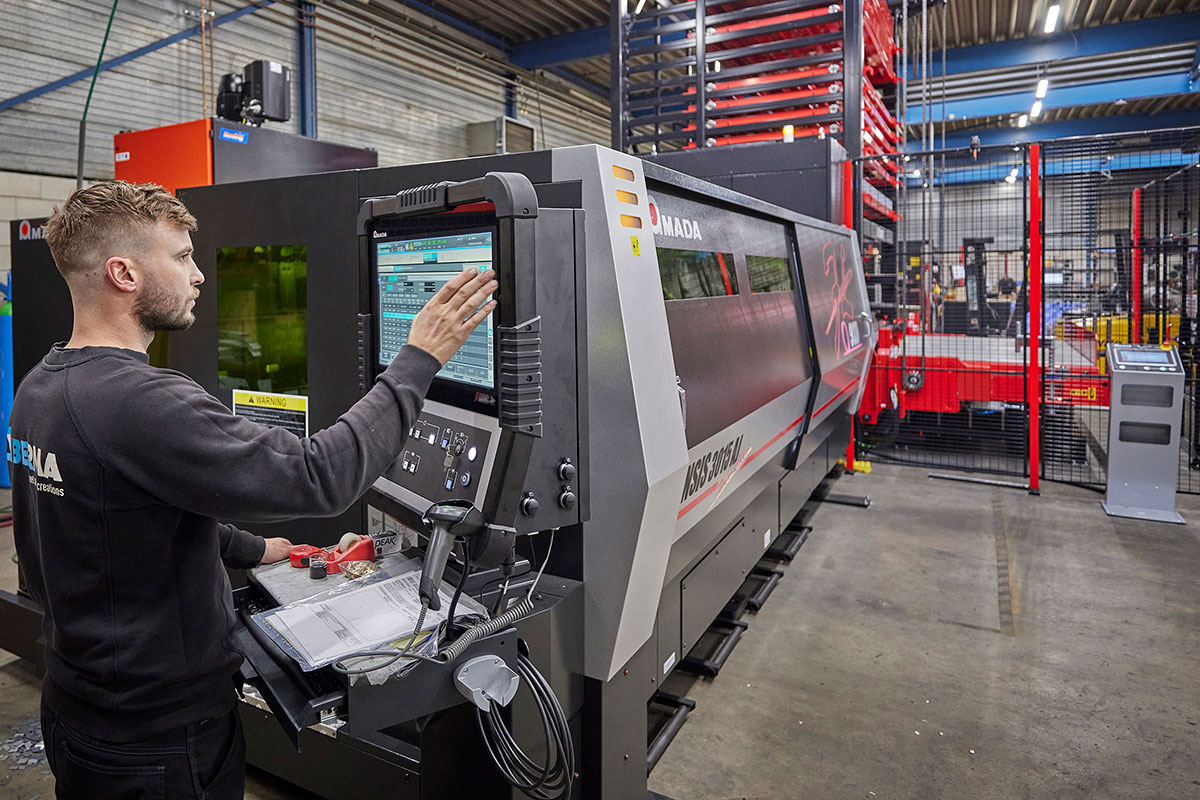
Metalworking Business in Kyiv, Ukraine for sale
Model 3. Industrial Hub (Cluster / Strategic Asset)
Objective: large-scale integration into international manufacturing chains, contract manufacturing, defense industrialization.
CAPEX Structure: $7 – 20+ million
-
full CNC equipment park;
-
automated production lines;
-
R&D center;
-
quality control systems (3D scanners, laboratory);
-
large production facilities (5,000–15,000 m²);
-
autonomous power generation;
-
ERP/MES systems;
-
substantial working capital.
Financial Benchmarks:
Revenue: $15 – 40 million per year
EBITDA margin: 18–28%
EBITDA: $3 – 8 million
Payback period: 3 – 5 years
Key Features:
-
lower baseline margins but higher stability;
-
consolidation potential of smaller players;
-
higher exit valuation (5–8× EBITDA multiple).
Such assets may become attractive targets for strategic EU investors once the security situation stabilizes.
Companies with defense contracts, foreign currency revenue, autonomous power generation, and a diversified client portfolio demonstrate higher resilience and faster payback.
During wartime, metalworking is transforming from a traditional “manufacturing industry” into a strategic sector with enhanced capitalization potential.
5. Investor Entry Formats in the Metalworking Sector
An investment strategy in metalworking largely depends on the investment horizon, risk appetite, available capital, and the level of operational involvement of the investor. During wartime, several entry formats have emerged as the most relevant.
1. Greenfield: Building a Production Facility “from Scratch”
Model essence: construction of a new enterprise tailored to a specific contract or niche (for example, defense components, exports to the EU, or highly specialized mechanical engineering parts).
When appropriate:
-
a guaranteed anchor contract is secured;
-
the investor aims to implement modern technologies without the “legacy” of outdated equipment;
-
access to land or an industrial park is available;
-
the strategy предусматривает long-term presence.
Advantages:
-
optimal production configuration;
-
modern automation;
-
higher productivity;
-
better energy efficiency.
Risks:
-
longer launch period (6–18 months);
-
need to build a team from scratch;
-
higher initial CAPEX.
During wartime, greenfield projects are more frequently implemented in western regions of Ukraine or within industrial parks.
2. Acquisition of an Operating Enterprise (M&A)
Model essence: acquisition of an established business with equipment, workforce, and contracts.
This is the most common format during wartime because:
-
some owners are seeking partners or an exit;
-
assets are valued below pre-war multiples;
-
the production base and client portfolio are preserved.
Advantages:
-
rapid market entry;
-
existing cash flows;
-
established team;
-
shorter payback period.
Risks:
-
technical depreciation of equipment;
-
dependence on key customers;
-
need for modernization.
Under current conditions, valuations of such enterprises typically range between 3–6× EBITDA (depending on contract stability).
3. Acquisition of a Stake in an Existing SME (Growth Capital)
Model essence: the investor acquires an equity stake in an operating small or medium-sized enterprise to scale the business.
This format предполагает:
-
expansion of production capacity;
-
acquisition of additional equipment;
-
entry into export markets;
-
integration into defense cooperation.
Advantages:
-
lower CAPEX;
-
shared operational risk;
-
leverage of the founder’s experience;
-
rapid scaling potential.
Typical structure:
-
20–49% equity stake;
-
profit-sharing agreement;
-
buyout option (call/put option).
This format is particularly attractive for investors who do not intend to engage in operational management but seek high returns.
6. Conclusion for the Investor
Investments in Ukraine’s metalworking sector during wartime are not a speculative strategy, but a structural bet on:
-
high value-added production;
-
integration into the defense-industrial complex;
-
participation in European manufacturing supply chains;
-
relatively short payback cycles;
-
potential for multiple-driven capitalization growth after stabilization.
For a strategic investor, the sector combines:
-
manageable operational risk (with proper contract diversification);
-
high adaptability;
-
market consolidation opportunities;
-
socio-economic impact through participation in national reconstruction.
Under current conditions, metalworking is one of the few sectors where the wartime economy does not reduce investment attractiveness but instead creates a new growth trajectory.
Investments in metalworking Ukraine. Metalworking in Ukraine. Metalworking business. Steel structure manufacturing Ukraine. Manufacturing business during wartime. Buy a metalworking enterprise. Laser metal cutting business. Metalworking profitability. Metalworking CAPEX. Metal production EBITDA. Defense manufacturing orders. Contract manufacturing for the EU. European metal component suppliers. Is it worth investing in metalworking during the war? How much does it cost to open a laser cutting workshop? Payback period of a metalworking business in Ukraine. Export of steel structures to the EU. Laser metal cutting. CNC equipment. Steel structures, welding works, powder coating.