Investor profile
Company name: FM Logistic — https://www.fmlogistic.com
Ukrainian operations: FM Logistic Ukraine — https://www.fmlogistic.com.ua
Business activity: Logistics services
Founded: 1967
Headquarters: Phalsbourg, France
Global presence: 3 continents, 14 countries
FM Logistic’s global operating figures (2020):
-
Revenue: €1.4 billion.
-
Employees worldwide: 27,500.
-
180 warehouses with a total floor area of 4 million sq m.
FM Logistic in Ukraine:
-
Entered the Ukrainian market in 1996.
-
FM Logistic Ukraine is one of Ukraine’s five largest logistics operators, managing operations across more than 60,000 sq m of Class A warehouse space.
-
Assets in Ukraine: a logistics complex in the village of Dudarkiv, Boryspil district, Kyiv region.
-
FM Logistic’s investment in Ukraine: $50 million.
-
Employment: 900 people.
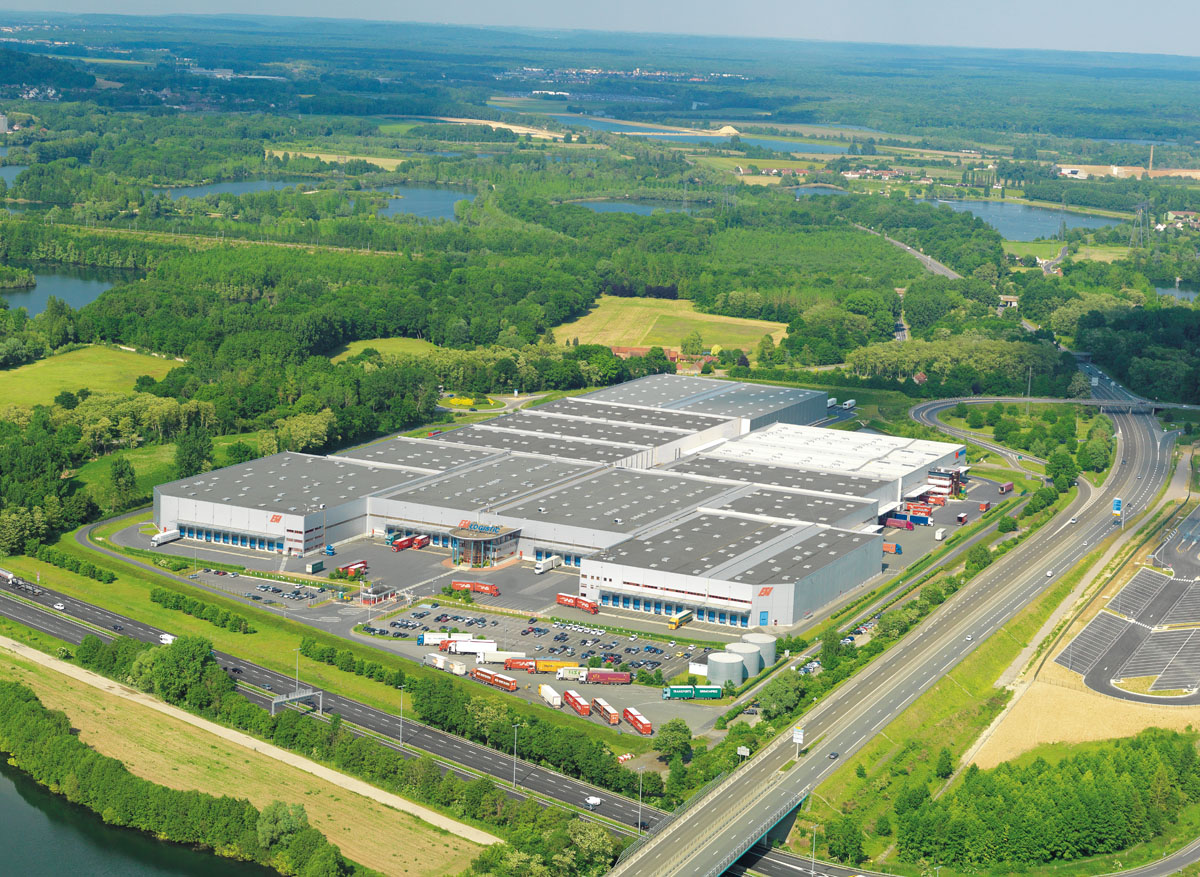
— The eighth stage of FM Logistic Ukraine’s logistics complex in Dudarkiv, Kyiv region, has opened. How much has been invested overall, and what are your development plans for the site?
— Over 25 years in Ukraine, we have invested $50 million. In total, we have built 60,000 sq m of warehouse space and created around 900 jobs. We invested $13 million in the fourth phase of the complex, comprising two warehouse sections, B7 and B8, and an office building, with a combined floor area of 18,000 sq m.
As for occupancy, 54,000 of the 60,000 sq m has been leased. A preliminary agreement is in place for another 2,000 sq m. That leaves 4,000 sq m currently available.
We own the land in Dudarkiv, which allows us to build another 32,000 sq m of modern logistics space, including 20,000 sq m planned for the next few years. We hope to obtain the construction permits fairly quickly. Building and equipping these facilities will require $25–30 million in investment.
— Can you give a construction timeline?
— Our approach is to build as the company grows. We are both the developer and the logistics operator. Expansion comes into consideration in two situations. The first is when an existing client grows its business and needs more space, in which case we continue building to meet its requirements. The second is when we attract new clients. Based on our growth projections, we expect to complete development of the site and reach full occupancy within four years.
— Are you planning to build cold-storage warehouses?
— We provide services to one of our Ukrainian clients at its own warehouse, handling fresh food, fruit and vegetables, dairy, meat and fish products. As for our own warehouses in Ukraine, we try to make them versatile so they can easily be adapted to clients’ needs. We have cold-storage experience across our global network, but we have not yet decided to invest in dedicated facilities in Ukraine.
— What are your plans once this site is fully developed?
— Our shareholder is considering buying land for a new project.
— In which regions are you looking for suitable sites?
— We primarily see growth opportunities in the Kyiv metropolitan area. In other major regions, we are exploring expansion by leasing existing facilities. We are also developing cargo transshipment sites there. In particular, we lease a small warehouse in Dnipropetrovsk region and have a presence through partners in Kharkiv, Odesa and Lviv.
We decide whether to work with partners or lease facilities as the business expands. In Dnipro, for example, we initially worked through partners. Then our transport volumes grew to the point where we needed to lease a warehouse.
— Are you considering building your own complex there?
— We currently have no construction plans for Dnipro.
— What are your requirements for leased facilities?
— We take responsibility for storing our clients’ goods. We consider Class A warehouses that meet a range of requirements for both security and automation.
— What are your requirements for land plots?
— Proximity to a major city, meaning a centre of consumption. Proximity to a highway with substantial freight traffic, ideally at the intersection of major highways.
— How large does a site need to be to meet your operational needs and allow for growth?
— When looking closer to a city centre, we consider smaller plots of a few hectares. For interregional facilities, we look at sites of at least 10 hectares. Our current facility in Dudarkiv occupies a 20-hectare site.
— You said that your main clients are based in the capital. Are you already considering a site in Kyiv to maximise last-mile efficiency?
— Similar projects are already being implemented in Spain and France, where e-commerce is growing rapidly and dark-store projects are expanding. In Ukraine, we are still studying the market.
— Would you be willing to participate in dark-store projects in Ukraine?
— We are discussing this with our clients, but I cannot say when those discussions will lead to implementation.
— Changes in consumer behaviour, particularly the shift towards omnichannel retail, are driving logistics real estate development. How much has demand for online shopping grown in Ukraine in recent years?
— E-commerce accounts for around 20% of deliveries across Europe, while 60% of new contracts last year were related to e-commerce. The figures in Ukraine are approximately the same.
Over the past year and a half, we have seen many clients change direction and accelerate the rollout of omnichannel projects. What they had planned to do over five years was accomplished in six months. Several of our clients have restructured their business models, and we are supporting them through that process. At the same time, we have attracted several new e-commerce clients.
All our retail clients now operate on an omnichannel basis to some extent. Some manufacturers do not yet do so; it depends on the type of product.
Urban logistics is another promising area. It covers everything related to the last mile: delivery directly to a business, shop, restaurant or office, as well as urban warehouses, dark stores and other formats located close to the end consumer.
In February this year, we established urban logistics as a separate business line. We have several clients and already make several hundred deliveries a week.
This sector is still relatively underdeveloped in Ukraine, but it is growing rapidly. In Spain, for example, it already accounts for 50% of our business.
All logistics trends reflect changes in the world and in consumer behaviour. Urbanisation is increasing, while people do not want to travel to shop or spend time doing so. Everyone wants what they need delivered to their door. This drives the business. Companies then compete over which services to offer and who can deliver them more efficiently, including in environmental terms, and so on.
FM Logistic aims to double its global business over ten years, from €1.4 billion in 2020 to €3 billion in 2030. In Ukraine, we expect to double our business sooner — in around four years.