

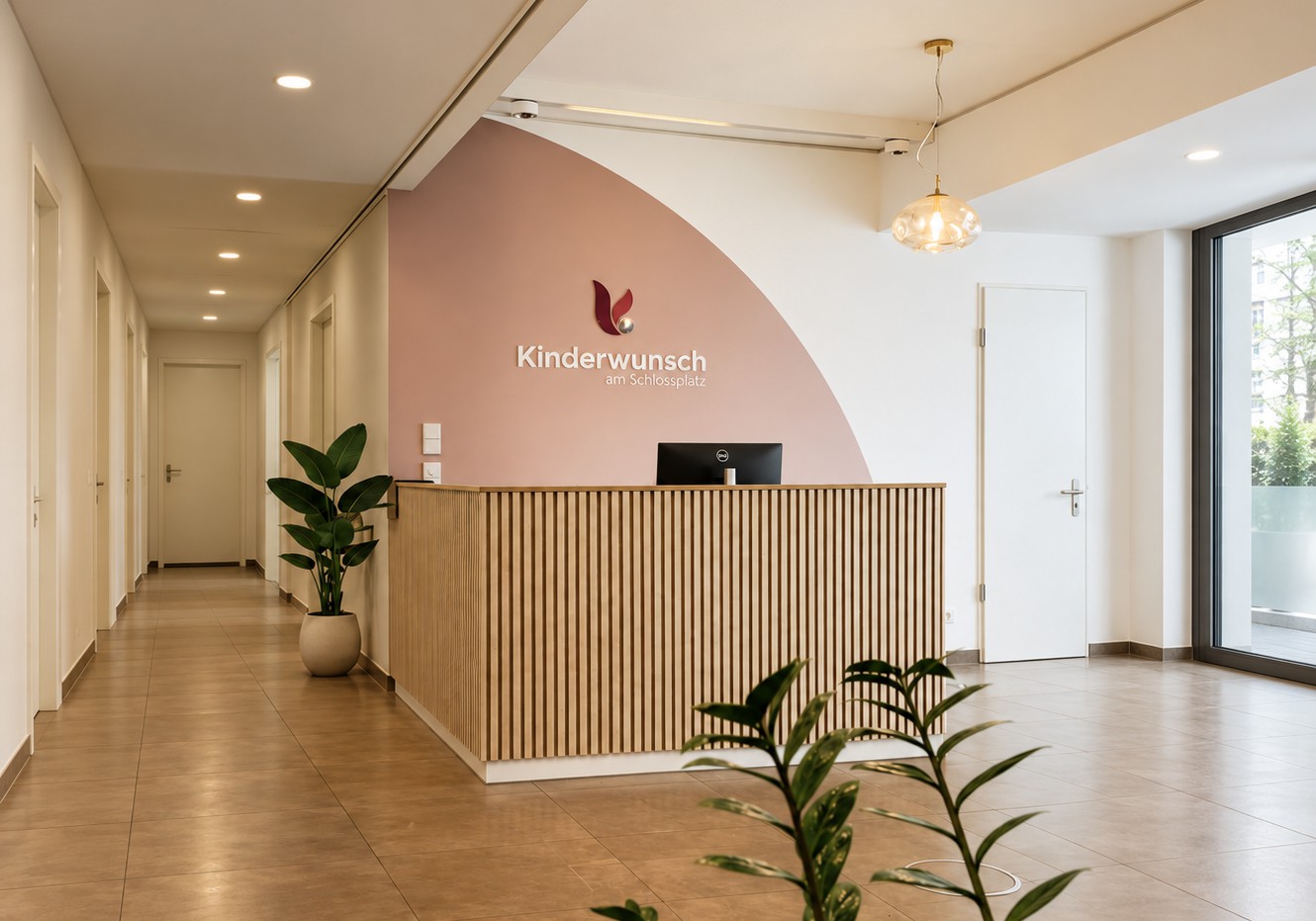


A venture investment in an already profitable clinic model: the company’s first clinic in Stuttgart reached break-even in its 6th month of operation and has been self-financing since spring 2026. The round proceeds are intended to scale a proven model rather than validate a hypothesis.
Regional focus of the project: Germany (Stuttgart, followed by Cologne and Berlin; another 12 cities have already been identified), followed by Switzerland, Austria and other European markets.
Market challenge
Demand for fertility treatment in Germany is growing significantly faster than the number of clinics:
- The number of IVF cycles in Germany has increased by 73% since 2013, while the number of clinics has grown by only 12%. Demand is growing approximately 6 times faster than supply.
- 1 in 6 couples experiences infertility.
- Germany has only one-third of the clinic density seen in mature EU markets.
- New licences to operate under statutory health insurance have virtually not been issued for 20–30 years, while existing clinics effectively control access for new market entrants.
- For younger doctors, opening their own practice without such a licence is economically unattractive due to the high level of risk, so most choose salaried employment.
The market is fragmented: 92% of Germany’s 130 fertility centres are owned by physician-owners, while in Spain, the United Kingdom and Scandinavia, 50–70% of the market has already been consolidated by clinic networks. The company views Germany as the last major unconsolidated market in Europe.
Solution and product
PatientFirst Fertility combines three elements in one model: patient acquisition, proprietary software and owned clinics.
- Patient acquisition (Fertilly): Germany’s largest digital patient acquisition channel in reproductive medicine, with 60,000 enquiries since launch. As a result, a new mid-sized clinic can be filled from day one. Customer lifetime value to customer acquisition cost ratio (CLTV/CAC) exceeds 9x.
- PatientFirst OS: the company’s proprietary AI-powered clinic operating system. 100% paperless workflow from appointment booking to payment, 50% fewer administrative staff per physician, 30% more patients per physician, and 44 minutes from consultation to treatment plan.
- Private clinics under §30 GewO: the first fertility clinic in Germany with this status. It does not require a statutory health insurance licence and serves only privately insured and self-paying patients. Margins on this type of treatment are approximately 3.5 times higher.
- In-house physician training: the clinic is authorised to train specialised physicians, allowing the company to address the shortage of doctors through its own internal talent pipeline.
Brief market overview
- Demand for fertility treatment is growing by 10.6% annually.
- Statutory health insurers are covering less and less fertility treatment, resulting in more patients moving into the private-pay segment targeted by the company.
- The market is being actively consolidated by private equity funds and strategic players. Sector transactions include: Eugin / Fresenius Helios (2020, €430 million, 13.9x EBITDA), CARE Fertility / Nordic Capital (2022, £300 million, 15.7x EBITDA), European IVF Group / PE (2022, 16x EBITDA), IVIRMA / KKR (2022, €3 billion, 25x EBITDA), Eugin / IVI RMA + GED (2023, up to €500 million), ART Fertility / IVIRMA (2025).
- Entry at a €15 million pre-money valuation, while sector transactions in 2020–2022 were completed at 14–25x EBITDA.
- Potential buyers: private equity funds and large European fertility clinic networks already acquiring market participants (KKR, Nordic Capital, IVIRMA, Fresenius and others).
Tangible and intangible assets
Each new clinic receives six ready-to-use assets that reduce the time, cost and risks associated with opening:
- Regulatory expertise under §30: licensing does not delay clinic opening.
- Ready-made construction and compliance concept: solutions for hygiene, ventilation, fire safety and clean rooms tested in Stuttgart.
- Fertilly patient acquisition system: 60,000 enquiries over 5 years; demand data helps select locations for new clinics; CLTV/CAC above 9x.
- PatientFirst OS: each clinic launches on one unified system with fully paperless operations.
- In-house specialist training: authorisation to train physicians turns the shortage of medical staff into an internal talent pipeline.
- Employer brand: 9 people were hired in Stuttgart without any recruitment costs; candidates for Cologne and Berlin are already in negotiations.
- Patient trust: 34 Google reviews, all rated 5 stars; none of the reviews have been moderated or removed.
Current project development and achievements
The Stuttgart clinic (Kinderwunsch am Schlossplatz) has been operating since October 2025:
- Reached break-even in month 6, 4 months ahead of plan.
- Revenue in July 2026 — €155,000, equivalent to approximately €1.9 million on an annualised basis.
- Clinic EBITDA margin — 32% in the 9th month of operation; similar results were achieved in August.
- The clinic has been self-financing since spring 2026 and already covers a significant portion of head office expenses.
- The clinic is fully utilised.
Next clinics:
- Cologne: ready to sign the agreement immediately after the round closes (a “clinic-in-clinic” format with a local partner).
- Berlin: negotiations for premises are at the final stage.
Funding round and financing
- The company is raising €5 million in equity and plans €4 million in bank debt for the Cologne and Berlin clinics: €3 million at a €15 million pre-money valuation now, followed by €2 million at a €20 million pre-money valuation in Q1 2027.
- €2.2 million has already been committed; €800,000 remains until the first close.
- Each new clinic requires approximately €3.5 million: approximately €2 million in equity and approximately €1.5 million in bank debt at the clinic level.
- The company’s investors and mentors include founders and executives of successful healthcare companies: Oliver Tamimi (Omnicare), Nicolas Weber (medneo), Julian Lechner (Rex), Thies Harbeck and Heinz Jacqui (ACURA), Simon Bolz (Klara).
Team and personnel
- Christoph Müller-Guntrum — Founder and CEO. Built Fertilly, a leading digital fertility platform in Germany, and the Stuttgart clinic. Former BCG; educated at Harvard Business School.
- Francesca Sacchi — COO.
- Ryan Kollat — VP Growth.
- Verena Peuten and Dr Maximilian Groß — fertility physicians at the Stuttgart clinic.
- Dr Andreas Tandler-Schneider — Advisor. Chairman of the German IVF Registry (D-I-R), Head of Fertility Center Berlin.
- Oliver Tamimi — Board Member. Built and sold Omnicare, a nationwide oncology platform with annual revenue of €750 million.
- Simon Bolz — Board Member. Co-founded and sold Klara Health, a patient communication platform for medical practices.
Key current and target project metrics
Current metrics (Stuttgart clinic):
- Approximately €1.9 million in annualised revenue (July 2026).
- Clinic EBITDA margin — at least 32%.
- Break-even in the 6th month of operation.
- 60,000 patient enquiries through Fertilly, CLTV/CAC above 9x.
Target metrics:
- Two new physicians in Stuttgart are expected to double the clinic’s revenue in 2027 and increase its EBITDA margin to 39%.
- Opening of clinics in Cologne and Berlin in 2027–2028, followed by 2 new clinics per year.
- Mature clinic: approximately €4.3 million in annual revenue and approximately €1.8 million in annual EBITDA (39% margin), break-even in month 9.
- Group operating break-even — in 2029.
- By 2037: 18 clinics, approximately €88 million in revenue and approximately €32 million in EBITDA.
All target metrics are management forecasts.
Investor proposition
A venture-type investment model in which returns are generated exclusively through growth in the company’s valuation and the subsequent sale of the ICLUB stake, with no dividend payments.
- Minimum ticket: $5,000; participation through an SPV (First Layer); venture model (returns through valuation growth).
- Valuation: €15 million pre-money.
- Timing: deadline 01.11.2026.
Exit opportunities
- 2028: 5 clinics, approximately €6 million in revenue, operating break-even. Company valuation of approximately €50 million — approximately 3.1x higher than today.
- 2030: 9 clinics, approximately €21 million in revenue. Valuation of approximately €118 million (16x next-twelve-month EBITDA) — approximately 7.9x higher than today.
- 2037: 18 clinics, approximately €88.5 million in revenue, approximately €32.1 million in EBITDA. Valuation of €437–565 million (12–16x EBITDA) — 29–38x higher than today.
- Base case for the investor: 19.9x invested capital and 29.7% IRR upon exit in 2037 at a 12x EBITDA multiple.
- Even if EBITDA is 30% below plan and the exit multiple is only 8x, the projected result is 10.5x invested capital and 22.7% IRR.
- Potential buyers include private equity funds and large clinic networks that are already consolidating the market: transactions in 2020–2022 were completed at 14–25x EBITDA.
Potential multiple: entry at a €15 million valuation into a company with an already profitable clinic, while sector transactions have been completed at 14–25x EBITDA. Even under a conservative scenario, the company’s calculations indicate a buffer in the event of lower multiples and slower execution of the plan.
Additional information about the project is available after registration in the app via the link or QR code.
Join the private Telegram chat to learn about other current investment opportunities: https://t.me/+qNeq1Ir3irZhMTBi
