

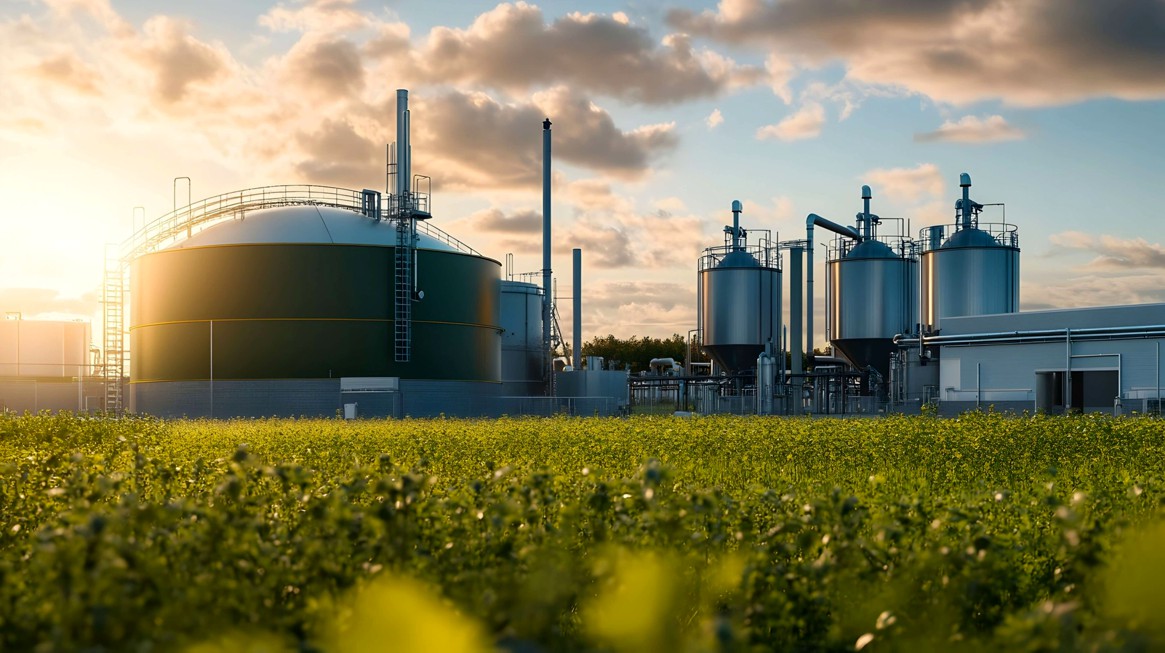


The owner of an operating modernized alcohol plant in Lviv Region is considering attracting a strategic investor to develop the enterprise and gradually reposition it into a multi-product biorefinery complex. The core focus of the project is the establishment of fuel-grade bioethanol production, followed by expansion of the product portfolio through feed-grade DDGS, fermentation CO₂ capture, industrial alcohol fractions and energy integration solutions.
The project is not a greenfield development: the investor is offered the opportunity to implement it on the basis of an operating production asset with existing buildings, equipment, engineering utilities, a laboratory, automation systems, logistics infrastructure and a professional team.
Current Status of the Enterprise
The plant was established in 1891. A major modernization program was carried out starting in June 2021, and the upgraded production facility was commissioned in March 2022. The enterprise is located in Sheptytskyi District, Lviv Region, close to the borders and key markets of the European Union.
- stated production capacity — up to 2,200 dal per day;
- team — 65 professionals; one production shift requires approximately 8 employees;
- production is automated; the control system is based on Siemens frequency converters;
- the enterprise has its own capabilities for road and rail transportation of products;
- an in-house laboratory is available for technical and chemical control of raw materials, intermediate process streams and finished products.
Current Product Portfolio
- rectified undenatured ethyl alcohol;
- KES — ester-fusel concentrate;
- fusel oil;
- DDGS — dried distillers grains with solubles with a stated protein content of 33%.
Investment Project Objective
The objective of the project is to utilize the plant’s existing technological core to create a modern bioethanol complex focused on the Ukrainian domestic market and potential exports to the EU. This approach allows the time to market to be reduced compared with greenfield construction while preserving the value of the already modernized equipment.
The relevance of the project is further supported by the introduction in Ukraine, effective July 1, 2026, of mandatory bioethanol blending in automotive gasoline, as well as by EU policy aimed at increasing the share of renewable fuels in transport. To access the European market, the enterprise is expected to prepare for certification of raw material sustainability and the supply chain.
Development Concept
Phase 1 — Fuel-Grade Bioethanol
The first phase envisages equipping the existing alcohol production facility with the equipment and systems required for fuel-grade bioethanol production. The final equipment configuration and CAPEX requirement will be determined following a technical audit and selection of the target product standards.
- alcohol dehydration module to meet fuel-grade specifications;
- denaturing and commercial metering unit;
- dedicated storage tanks, pipelines and loading system;
- modernization of laboratory control;
- certification of raw material sustainability and the supply chain;
- working capital provision for raw material procurement and production launch.
Phase 2 — Monetization of By-Products
- pelletizing, packaging and standardization of DDGS for the feed market;
- capture, purification and potential liquefaction of fermentation CO₂;
- contract production of industrial or denatured ethanol;
- increasing the commercial value of KES and fusel fractions through targeted contracts.
Phase 3 — Energy Integration
- assessment of the feasibility of a biogas plant for organic production streams;
- use of biogas in the plant’s own boiler house or in cogeneration;
- potential upgrading of biogas to biomethane subject to sufficient feedstock availability;
- additional heat recovery and reduction of specific natural gas consumption.
Production Infrastructure
Grain Reception and Preparation
- modern grain receiving pit;
- raw material storage facility with a capacity of 2,500 tonnes, providing up to 40 days of grain inventory under the stated operating regime;
- two grain cleaning machines for coarse cleaning and one for fine cleaning;
- two hammer mills for milling preparation.
Fermentation and Rectification
- automated mash preparation tank;
- fermentation system and fermentation vessels;
- distillation and rectification unit for the production of high-quality “Lux” grade alcohol;
- new beer column and cyclic rectification column;
- finished alcohol storage facility with a capacity of approximately 400,000 liters.
Deep Processing of Stillage
The enterprise has a complete stillage processing line comprising:
- mechanical separation using OGSh-321 centrifuges;
- separation of suspended solids using high-speed Flottweg equipment;
- ultrafiltration;
- nanofiltration;
- blending of concentrates and drying to produce DDGS.
Energy and Engineering Infrastructure
- two independent power supply lines of 500 kW each;
- two transformers and an automatic switching system between the power lines;
- generator for autonomous backup operation of the enterprise;
- new gas line, steam boilers and upgraded steam and water utilities;
- automatic water softening system;
- spiral heat exchanger and process heat recovery;
- UMKA-BIO wastewater treatment facilities for industrial and domestic effluents;
- cooling tower for recirculating water systems.
Competitive Advantages of the Project
- operating asset instead of greenfield construction;
- location in western Ukraine close to EU markets;
- full-cycle grain processing and production of marketable DDGS;
- major equipment modernization and process automation;
- existing power, gas, water and wastewater treatment capacities;
- experienced professional team and in-house laboratory;
- possibility of phased investment and revenue diversification;
- potential integration with the investor’s grain, fuel, feed or energy business.
Target Investors and Partners
- fuel market producers and operators, oil traders, fuel depots and filling station networks;
- agricultural holdings and grain traders interested in deep grain processing;
- feed producers, livestock and poultry companies;
- industrial ethanol producers, chemical, cosmetics and pharmaceutical companies;
- producers or consumers of food-grade and industrial CO₂;
- financial and infrastructure investors considering equity or project finance.
Financial and Economic Indicators
Total financing requirement: $14–18 million
Alcohol plant value: $9.8 million
2. Estimated CAPEX: $4–7 million for the base investment project to convert the enterprise into a multi-product bioethanol complex.
- technical audit, engineering, permitting procedures and certification — $0.2–0.4 million;
- alcohol dehydration unit to 99.5%+ — $0.8–1.6 million;
- denaturing, commercial metering, automation and integration — $0.3–0.7 million;
- modernization of the tank farm, loading facilities, fire protection and explosion-proof infrastructure — $0.4–0.8 million;
- DDGS pelletizing, cooling and packaging — $0.4–0.9 million;
- capture, purification and liquefaction of fermentation CO₂ — $1.2–2.3 million;
- installation, commissioning and contingency reserve — $0.6–1.0 million.
Working capital: $0.8–1.5 million
Expected EBITDA after reaching design capacity: approximately $1.2–2.5 million per year, depending on plant utilization, grain prices, bioethanol prices and energy costs.
Estimated payback period: 6–13 years depending on the project configuration and market scenario.
Financial indicators are subject to refinement following analysis of actual gas consumption, alcohol yield per tonne of feedstock, DDGS production cost and commercial terms for bioethanol sales.
Partnership Format
The owner is prepared to consider various cooperation models depending on the strategic partner’s expertise and contribution:
- sale of the asset (preferred option);
- establishment of a joint venture or investor entry into the company’s equity (terms to be discussed individually).
