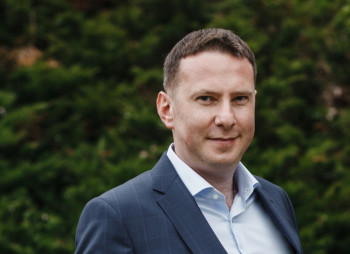
Ukrainian entrepreneur Mykola Kmit, who was behind the creation of the Morshynska mineral water brand and now develops businesses in bottled water production, hospitality, and cheesemaking, shared his investment philosophy and approach to business management.
In an interview with Andriy Fedoriv for FEDORIV VLOG, the entrepreneur explained how an initial investment of just tens of thousands of dollars can grow into a large manufacturing business, why investing in distribution can sometimes be more profitable than building new factories, and how a hotel project with an initial investment of approximately $10 million can generate $3 million in annual operating profit.
Particular attention was paid to the development of the Truskavetska mineral water brand, the Plai, Marble Palace, and St. Charbel hotel complexes, as well as investments in goat cheese production.
InVenture has selected the key insights from the conversation, focusing on investments, business economics, and strategic capital allocation.
From $40,000 to a Large-Scale Manufacturing Business
— How did the Morshynska business begin, and how much capital was needed to get started?
The story of Morshynska began with a relatively modest investment. The initial capital amounted to approximately $35,000–40,000, raised primarily from relatives.
The first production line, with a capacity of around 300 bottles per hour, was purchased in Hungary for $7,000.
In its early stages, the company operated with limited financing in a bottled water market that was still taking shape. Ukrainian consumers were not accustomed to drinking still water from small bottles, while distributors were skeptical about the product's prospects.
One important commercial decision was to enter the five-liter bottled water segment and position the product as high-quality natural water.
However, the company's real expansion came from a fundamental change in its investment approach.
— Why did you decide to invest in your own distribution network instead of expanding production capacity?
The main challenge was not so much manufacturing the product as getting it to consumers.
Rather than concentrating investments exclusively on production facilities, the company began building its own distribution system. As a result, it established a network of 28 branches across Ukraine, employing approximately 3,000 people in distribution operations.
This significantly accelerated sales growth. During certain periods, the company's annual growth rate reached 300%.
The key principle behind this approach is that capital should not necessarily be directed toward the most obvious asset, but rather toward the part of the business that is limiting further growth.
How to Raise Financing Using Brand Value as Collateral
— What role did bank financing play in scaling Morshynska?
Supporting the company's rapid expansion required substantial working capital.
One unconventional financial solution was to use the company's trademark as collateral for a bank loan.
The company secured approximately $3 million in debt financing backed by the brand.
At the time, this was an unusual approach in the Ukrainian market, where banks traditionally focused on tangible assets such as real estate, equipment, and other physical collateral.
This experience demonstrated that a company's investment value is not determined solely by its production facilities. A strong brand, market position, and established sales network can also represent valuable economic assets.
Truskavetska: Business Growth and Investments in New Production Facilities
— How is your current mineral water business developing?
One of the main business areas remains the production and sale of mineral water, particularly under the Truskavetska and Polyana Kvasova brands.
According to the entrepreneur, the bottled water business has grown by 400% over the past four years.
Annual sales of Truskavetska have reached approximately 80 million bottles.
At this stage, the company has encountered a new constraint: existing production capacity is no longer sufficient to fully meet potential demand.
As a result, the next stage of development involves building a new production facility.
This illustrates a clear sequence of investment decisions: first, the business develops its distribution channels and builds demand. Only then does it expand production, once existing capacity becomes the limiting factor.
Investments in Hotel Real Estate: Revenue Exceeding UAH 1 Billion
— Why did you decide to invest in hospitality, and how profitable is this business?
Hotel real estate has become one of the key areas of business diversification.
The portfolio includes the Plai, Marble Palace, and St. Charbel resort and hotel complexes, with a combined capacity of approximately 500 rooms.
Despite the war, several properties have demonstrated substantial financial growth.
For example, during the first seven months of 2026, the Plai complex generated approximately UAH 330 million in revenue, compared with around UAH 200 million for the entire previous year.
Meanwhile, Marble Palace generated approximately UAH 85 million in revenue during the period referenced in the interview.
According to figures provided by the entrepreneur, annual revenue from the hospitality business exceeds UAH 1 billion.
The business model is based on developing an integrated resort offering that combines accommodation, spa services, wellness facilities, restaurants, and supporting infrastructure.
A $10 Million Hotel Generating $3 Million in Annual Operating Profit
— Which of your hotel projects best demonstrates investment efficiency?
One illustrative example is the St. Charbel hotel and wellness complex in Morshyn.
Initially, the construction site was not considered particularly attractive because of its proximity to railway infrastructure.
However, instead of abandoning the project, the decision was made to create a comprehensive resort offering with high service standards, extensive spa facilities, and carefully planned infrastructure.
The initial investment in the project amounted to approximately $10 million.
According to the figures cited in the interview:
-
Number of rooms: 94, with potential for expansion.
-
Initial investment: approximately $10 million.
-
Annual operating profit: around $3 million.
-
Average annual occupancy: approximately 96%.
-
Ratio of annual operating profit to initial investment: approximately 30%.
The last figure indicates the operating return on invested capital but should not be confused with an investor's net return or internal rate of return (IRR).
An important factor behind the project's success was not simply the real estate itself, but the creation of a complete hospitality experience.
Investments were directed toward infrastructure elements that enhance guest comfort, strengthen customer loyalty, and help maintain high occupancy rates.
Why Hotel Profitability Depends on More Than Cost Reduction
— Which management decisions have the greatest impact on hotel economics?
One common mistake is trying to increase profitability exclusively by cutting costs.
In the hospitality industry, this approach can lead to declining service quality, customer losses, and lower average revenue per guest.
An alternative strategy is to create a product that customers are willing to pay more for and want to return to.
Therefore, investments in comfort, spa facilities, interior design, service quality, and convenient infrastructure may generate a greater economic impact than reducing relatively minor operating expenses.
For investors, this means that hotel projects should be evaluated not only on construction costs per square meter or per room, but also on their potential to generate operating profit.
Cheesemaking: Investing in a Niche Product with a Long Payback Period
— Why invest in a cheese business that remained unprofitable for many years?
Goat cheese production became an example of investment in a niche that was relatively new to the Ukrainian market.
The idea emerged after studying European models of artisanal cheese production.
At the outset, the project required substantial capital expenditure, including establishing a farm, purchasing livestock, constructing processing facilities, acquiring equipment, and developing a market for the product.
The business operated at a loss for its first six years. Total investments in its development were estimated at approximately $1.5–3 million.
Financing was provided primarily through profits generated by other business divisions.
Despite the lengthy investment cycle, the company continued to develop production, focusing on creating a new consumer market segment.
According to the estimates cited, the enterprise captured approximately 70% of Ukraine's goat cheese market.
— What scale has production reached, and what are its financial results?
The farm currently has approximately 2,000 goats.
Starting with the processing of around one tonne of milk per day, the business expanded its processing capacity to 30 tonnes daily.
The long-term target is to reach 100 tonnes of milk processing per day.
Financial indicators cited in the interview overview include:
-
Monthly revenue: approximately UAH 32 million.
-
Annualized revenue based on the monthly figure: more than UAH 380 million.
-
EBITDA margin: approximately 12–14%.
-
Value of products simultaneously held in cheese-aging facilities: approximately $2 million.
A distinctive feature of the cheese business is the need to finance substantial inventories. Some products require extended aging periods, during which invested capital remains effectively tied up.
Consequently, developing such a business requires not only investments in farming and processing equipment but also sufficient working capital.
At the same time, substantial inventories and positive EBITDA do not necessarily translate into a short payback period for the initial investment.
The Core Investment Principle: Identify the Bottleneck
— What is the foundation of your approach to investing and business development?
One of Mykola Kmit's key management principles is identifying the constraints that limit business growth.
This approach is associated with the Theory of Constraints developed by Eliyahu Goldratt.
Every company has a process or resource that determines the maximum productivity of the entire system.
If capital is invested in other parts of the business without addressing its primary constraint, additional investment may fail to produce the expected results.
This principle can be observed across the entrepreneur's different business ventures.
At Morshynska, distribution was the bottleneck, so investments were directed toward building an in-house sales and distribution network.
In the current bottled water business, production capacity became the limiting factor after demand increased, creating the need for a new factory.
In the hospitality business, the key drivers of financial performance were service quality, the comprehensiveness of the offering, and room occupancy rates.
In cheesemaking, the priorities were production development, demand creation, and sufficient working capital to support a lengthy production cycle.
Accordingly, an investment strategy should begin by identifying which factor is currently limiting a company's profitability.
How to Manage a Portfolio of Businesses Across Different Industries
— How do you manage to develop bottled water production, hotel real estate, and agricultural processing simultaneously?
Managing businesses across different industries requires a strategic approach above all.
The owner's role is not to personally supervise every operation, but to establish the right development priorities, build an effective team, and allocate resources to the most important objectives.
Particular importance is placed on selecting managers and employees whose characteristics match the specific needs of each business.
The entrepreneur pays attention to candidates' psychological profiles, ways of thinking, results orientation, and ability to work effectively within a team.
For investors managing multiple assets simultaneously, it is important to establish a management system that allows each business to operate without constant owner involvement in day-to-day operations.
What Investors Can Learn from Mykola Kmit's Experience
The entrepreneur's experience illustrates several different investment models.
The story of Morshynska demonstrates how relatively modest initial capital, combined with an effective scaling strategy, can provide the foundation for a major business.
The development of Truskavetska highlights the benefits of expanding production capacity after sufficient market demand has been established.
The hotel complexes demonstrate the potential of investments in resort real estate, where much of the added value comes not only from physical buildings but also from service quality, infrastructure, and the underlying business model.
The cheesemaking business provides an example of long-term investment in a niche product that may require years of financing before achieving stable financial performance.
All these businesses share one central investment principle: profitability depends not only on the amount of capital invested but also on identifying where that investment can create the greatest added value.
This article was prepared by InVenture based on Mykola Kmit's interview with Andriy Fedoriv for FEDORIV VLOG. The questions and answers have been shortened and editorially adapted to focus on investment strategies, financial performance, and business development. The financial figures presented are based on the entrepreneur's public statements and media summaries and have not been independently audited.