Rebuilding Ukraine’s market economy and supporting its private sector during a prolonged war remain key priorities for international institutions.
One of the principal vehicles for financing these efforts and attracting US capital is the Ukraine-Moldova American Enterprise Fund (UMAEF, formerly WNISEF). The fund has operated in Ukraine and Moldova for more than 30 years. During that time, it has invested $190 million in 143 companies, helping mobilise approximately $3 billion in total capital across both markets.
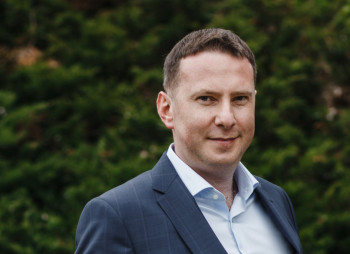
Jaroslawa Johnson leads an institution that helped establish Ukraine’s private capital market in the 1990s. Its strategy is now evolving: drawing on extensive experience as a donor, UMAEF is once again expanding its traditional investment activities. In 2026, the fund is launching u.capital, a $50 million direct investment programme offering investments of $2–5 million, with a focus on export-oriented businesses, manufacturing, and food processing. The fund also promotes Ukrainian entrepreneurs internationally, supporting a business fair for 80 companies at the Ukraine Recovery Conference in Gdańsk.
What are the main messages and investment success stories your fund is bringing to this year’s Ukraine Recovery Conference? Is the priority to attract new partners and donors, or to demonstrate the success of projects you have already financed as proof that private capital can and should be invested in Ukraine now?
Our fund has operated in Ukraine and Moldova for more than 30 years. From the outset, our mission, confirmed by US legislation, has been to rebuild market economies in Ukraine and Moldova. We went through a period when we focused more on donor activities, and now we are returning to investment. It is clear that without a strong private sector, no country can withstand a war or even recover afterwards. That is why our focus has gradually changed over the past five years: we work not only as a donor, but also as an investment partner helping businesses grow, scale, and attract additional capital.
Historically, the fund has invested $190 million in 143 Ukrainian and Moldovan companies. This has helped mobilise approximately $3 billion in total capital for the two markets. That means every dollar we invested generated roughly 30 times as much benefit for Ukraine. What matters particularly now is that we are expanding our investment during the war, rather than reducing it. We have u.capital, a direct investment programme for small and medium-sized enterprises. It focuses on manufacturing, food processing, fast-moving consumer goods, and export-oriented businesses — sectors that create jobs and strengthen Ukraine’s economy.
So you will be persuading investors, or simply demonstrating that investing in Ukraine is possible now. Is that right?
Yes, that has been our position from the beginning. We know the risks during the war are substantial, but we see Ukrainian businesses performing at a high level. More investors need to come in without being afraid of this market, because that is very important for Ukraine’s economy. We also have u.ventures, our venture capital fund investing in Ukrainian technology companies. During the war, technology businesses have remained global and competitive. They are attracting international funding and scaling. So the key question for us is not only how to help Ukraine, but also how to help Ukrainian companies become stronger and more resilient during and after the war.
You lead an institution that helped establish Ukraine’s private capital market in the 1990s. Looking back and comparing this war with the crises of 2008 and 2014, what impresses you most about Ukrainian businesses today, and what has been their main defence against another collapse?
Ukrainians are very flexible and know how to adapt to new circumstances. That is a defining feature of Ukrainian business: it keeps operating and demonstrating that it can function under these conditions. Over the past 30 years, we have seen Ukraine’s economy go through all kinds of phases. In some years we moved forward, in others backwards, and sometimes we stood still. But we saw that Ukraine had opportunities, and Ukrainian businesses kept adapting and changing. Ukraine has never experienced a complete economic collapse in which the state ceased to function. The companies we are looking at demonstrate that today: they have withstood the risks of war, continue to operate, and see opportunities for Ukraine in the years ahead. We support them because this is the only way Ukraine can endure wartime conditions and move towards recovery.
There is much discussion about foreign private capital still being reluctant to enter Ukraine because of obvious war risks. Yet your fund is not simply staying — it is expanding its programmes. Which concerns among Western investors do you consider objectively justified, and which are myths?
Investors see the risks. An investor wants a stable environment in which to invest. It is therefore important for us, as an international investment fund, to help develop new models that can reduce those risks. We must take an active role in investment. No private investor will enter Ukraine alone because conditions are very difficult at present. But they can invest alongside an international fund when we assume part of the risk. We help them develop Ukrainian companies and generate economic benefits for themselves and for the country. The role of an international fund is important because we can absorb those risks to some extent. In my view, we now need to move beyond the idea that our funds exist solely to help Ukraine and recognise that we are also investors who help other investors enter and participate in the Ukrainian economy.
Your fund has operated under its new brand for two years. Strategically, how do you now distinguish between traditional equity investment and technical assistance or grant programmes? Have non-repayable grants become a de-risking tool for your core investments in Ukrainian businesses?
We have expanded our investment activities because attracting more investors is the most important task at this stage of Ukraine’s economic history. But we have not abandoned donor activities altogether. Investors need the right conditions to enter Ukraine or Moldova. Donor work can help create those conditions. We must develop these markets and encourage investors. So our role is now more investment-focused, but donor activities remain very important. Investors come when they see that a city or region is ready to welcome them, that they can reach an understanding with the mayor, and that the state will ensure the rule of law and necessary reforms. Investors will not create those conditions themselves. Donor work must help establish them so that the investment ecosystem is suitable.
Your fund has historically covered two markets: Ukraine and Moldova. With logistical constraints and the challenges of a prolonged war, how does the synergy between the two countries work? Do you see Moldova as a strategic logistics and investment hub that helps Ukrainian portfolio companies integrate into European and other new markets?
Ukraine and Moldova were brought together under our mandate in the early 1990s. The US government believed that this combination would work well. There is strong synergy between Ukraine and Moldova because Moldova understands that it is also under threat. Although the attacks are currently directed at Ukraine, Russian propaganda is also very active in Moldova. But Moldova’s government supports Ukraine. The country immediately welcomed refugees and readily helped Ukrainians in the first days of the full-scale war.
Moldova now sees a significant role for itself in Ukraine’s future reconstruction. Ukraine will rebuild cities, villages, and housing — areas that will attract less interest from international donors, but in which Moldova can participate actively. Moldova also produces construction materials that are difficult to transport from Europe or America. They can easily be transported from Moldova to Odesa and distributed across Ukraine. We also work well with the Moldovan government and the prime minister, who began his career at our fund 20 years ago. Moldova’s president also supports Ukraine. This is a very important partnership between two countries pursuing a common objective.
Security and infrastructure risks often reduce Ukrainian businesses’ planning horizons to weeks, whereas you focus on development over five to seven years. The energy crisis has imposed substantial costs on companies, with some businesses entirely dependent on generators. Do you include energy self-sufficiency among your criteria when assessing potential investments?
When we assess a company, we conduct comprehensive due diligence. We examine everything: where its raw materials come from, how processing is organised, and where its markets are. We look at how the company operates today and how it will operate in the future. We understand that energy is important in some sectors and that raw materials often have to be imported through parts of Ukraine that are under threat. We understand that the war will end eventually, but we do not know when. Risks will continue to increase. We also examine the near term: what will happen in a year or two.
There are some companies we will not be able to work with because the risks are too high even for us. But most companies understand the situation, know their markets and production supply sources, and we support them. Energy is a critical issue in Ukraine. The energy sector is constantly under Russian attack — there is no doubt about that. It will currently be difficult to invest in companies that are entirely dependent on energy supply. It is easier to invest in those with lower energy requirements and significant potential in international markets. But we assess everything realistically, based on the facts presented to us.
Regarding Ukrainian government programmes such as “5–7–9,” under which the state subsidises loan interest, where do you believe the state remains an effective partner, and where do donors have to take on all the risk? What is the main mistake you currently see in the government’s approach to supporting business, and what would you advise the Cabinet of Ministers?
In the current wartime economy, the old models in which the state, international partners, and businesses operate separately no longer work. They must all cooperate. The state’s role is to ensure continued reforms, regulatory predictability, and the rule of law. That is critical. International partners should help reduce risks, create financial support mechanisms, and attract private capital. Businesses should invest, create jobs, scale production, and drive economic recovery. There is a considerable need for co-financing mechanisms, and our funds can help with that. Ukraine clearly needs not only to rebuild destroyed facilities, but also to develop a new model for decentralised energy. That will take time, and there are significant opportunities for further cooperation between the government and the private sector. Without it, neither Ukrainian businesses nor the state will be able to benefit from those opportunities.
Your fund has been an anchor investor for many years. Would you consider partnering with smaller local or foreign funds that have stronger expertise in working with small and medium-sized businesses?
Our goal has always been to rebuild the SME sector. The companies we invested in were small, and they have since become much larger and stronger. We have traditionally invested directly in businesses, rather than in other funds. Each fund has its own needs, and we cannot be certain how the money would be used. When we invest in a company, we conduct comprehensive due diligence and know where the money is going. That is why our fund has never pursued investments in other funds. Sometimes, however, we co-invest directly in the same company alongside other funds.
Could that include a small business if it already has a working business model?
Yes. Our u.capital and u.ventures programmes invest in such companies. Horizon Capital and other funds invest in large businesses, while our target investment is typically $2–5 million, potentially more in certain cases. We want Ukraine’s SME sector to develop. That has been our objective from the outset, and we remain committed to it. No country can function solely on the basis of large enterprises. A successful economy needs many small and medium-sized businesses — in some countries they account for 60–70% of the economic base. Ukraine has lost a great deal because of the war. We need to rebuild this sector so that Ukraine can stand independently and attract investment. Over time, these small businesses will grow, open branches abroad, and demonstrate that they are competitive in global markets.
Together with legal advisers, your fund launched a $50 million direct investment programme for Ukrainian SMEs, with investments of $2–5 million. How much of that capital has actually been allocated to companies, and what difficulties are businesses facing?
So far, we have not invested any of that money in a company. Until 2025, we were affiliated with USAID, which imposed restrictions on the use of funds: we could not invest more than a certain amount in a private company. That has now changed, and we are conducting due diligence under u.capital. We plan to have made investments in these sectors by the end of our financial year, which ends in September 2026. We are currently travelling throughout Ukraine and meeting businesses. Previously, we worked with USAID; now we operate under the auspices of the US Department of State. We have a new focus and have adapted to the new environment.
Will you start investing this year?
Yes, we are starting this year. We are looking at companies of various sizes — small but strong. Some need $1–3 million, others $5–6 million. We are considering all of these opportunities and will have results in the coming months.
Recovery is first and foremost about people, but Ukrainian businesses currently face an acute labour shortage. How do you see this crisis being addressed and veterans being reintegrated into the economy? Is the fund creating instruments to support veteran entrepreneurship?
Veteran programmes are central to our work because veterans represent a significant part of the population that can contribute to rebuilding Ukraine. People who have devoted years of their lives to defending Ukraine need help getting back on their feet. Working conditions for veterans are very important. Businesses in Ukraine have reservations about hiring veterans for permanent positions. We want that to change, so that workplaces are accessible to veterans both physically and psychologically. There are currently approximately 400,000 veterans, some with disabilities. We can create conditions that allow them to work from home or from dedicated centres. Without doing this, there is no sense in bringing in workers from other countries. We have our own workforce, and we must treat these people with dignity and provide the support they need.
There are currently difficult domestic political debates in the United States over how to support Ukraine. How does this affect private US investors?
Private investors do not attach much importance to that. They want to invest where they can make money. It is very simple. Whether in FMCG or other manufacturing sectors, they want to enter markets, and Ukraine is a market for them. All investors understand that war brings risks, but they also understand that entering the market now can put them in a strong position after the war. So US investors do not base their decisions on what the government says, except in defence manufacturing, which the government controls. They focus on their own opportunities.
Your fund’s transaction with Fintech-IT Group, the developer of monobank’s software, made it Ukraine’s first fintech unicorn during the war. Is the fund preparing similar large-scale investments?
We do not disclose the details of the Fintech-IT Group transaction. But we are looking at various sectors. Fintech-IT Group is a large company with outstanding products, and monobank is very successful. We continually assess other companies too, conducting preliminary evaluations and due diligence. We remain interested, but I cannot name specific sectors because I do not want to unsettle the market or create expectations that we will take a particular action in the near future.
Beyond military technology, which sectors could drive this economic miracle over the next three to five years?
As far as military technology is concerned, we are not interested. We have neither the relevant expertise nor an interest in it, and US legislation prohibits us from participating in weapons activities. Going forward, we will focus on sectors that create jobs and strengthen existing companies. Ukraine will need everything. We invest in IT, artificial intelligence, and cybersecurity companies. We are still exploring opportunities in other sectors.
Is your fund considering participation in the privatisation of Sense Bank and Ukrgasbank, which the governor of the National Bank of Ukraine has discussed?
I know those two banks, but I do not know their current financial position. So I cannot say whether we are interested. We do not want to be the only investor in the banking sector; there need to be others. Time will tell.
What is your role at the Ukraine Recovery Conference?
Our role at URC is to show international investors that the country welcomes investment. We support a business fair at URC where approximately 80 Ukrainian companies can speak directly with investors and partners. For us, URC is a step towards showing the world that Ukraine is ready for investment, not simply in need of assistance.
Is this a platform where businesses can find investors and act now, rather than wait until the war ends?
URC attracts more than 5,000 participants from around the world. It includes a business fair where investors can meet Ukrainian businesses directly. Ukrainian companies have prepared materials and can explain their position. Investors often need to see things for themselves and meet people in person to understand what a company can offer, rather than simply reviewing documents.