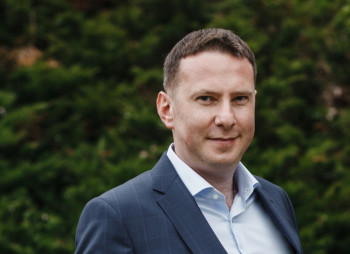
Viktoriya Tigipko has been investing in technology companies for nearly 20 years. According to her, the TA Ventures portfolio includes approximately 300 companies, 21 of which have reached valuations exceeding $1 billion. The fund invests primarily in the United States but is also active in Europe and Asia and supports Ukrainian founders.
In an interview with Anna Khaustova for the YouTube channel "Frankly About Business," Tigipko explained how to identify promising early-stage startups, why private markets are becoming increasingly attractive to private investors, how to diversify an investment portfolio, and which mistakes investors should avoid.
InVenture has selected the key investment insights from the conversation.
Venture Capital, TA Ventures, and Identifying Promising Companies
— You have been investing in technology for nearly 20 years, and the TA Ventures portfolio includes approximately 300 companies. How do you identify future market leaders before other investors?
— We focus primarily on founders and support them before they become widely recognized. We look for underdogs — entrepreneurs whose potential has not yet been fully appreciated by the market.
Previously, we reviewed between 1,000 and 3,000 companies annually. Today, we are more selective, focusing on promising founders and leveraging our international network.
For me, the most important factor is the person. You can change a business model, rethink a market, or improve a product. But you need to understand whether a particular founder or team can actually realize the company's potential.
We look for people with exceptional determination, resilience, obsession with their ideas, and the ability to inspire and persuade others.
I also appreciate founders who have a strong grasp of numbers. That is an important part of our assessment.
After almost 20 years in the industry, we know how to analyze markets, business models, and opportunities across different technology sectors. But the most difficult task is determining whether a particular individual is capable of building a truly great company.
— What do you pay the most attention to when conducting due diligence on startup founders?
— Founders' due diligence is one of the most important parts of our work.
At an early stage, a company may not yet have significant revenue, a fully developed product, or a meaningful financial track record. That makes assessing the founders particularly important.
We examine their previous experience, professional expertise, relationships within the team, ability to work together, and capacity to make difficult decisions.
We want to understand how the co-founders met, whether they worked together before, and how they divide responsibilities.
We speak with people who know the founders, have worked with them, or invested in their previous ventures.
We conduct numerous interviews and test their understanding of financial metrics, business models, strategy, and market dynamics.
At the early investment stage, evaluating the founder's personality and capabilities can sometimes be more important than the company's current financial performance.
— What was the biggest mistake you made when you first started investing?
— When you have extensive entrepreneurial experience yourself, you sometimes look at a startup and think: I know exactly how to build this business.
You understand the model, see what needs to be done, know whom to call, and can imagine how to organize sales, marketing, and business development.
But that is a huge mistake.
The question is not whether you could build the company. The question is whether the founder you are investing in can do it.
A founder may deliver an excellent presentation but lack the skills required to execute the plan.
Today, you can create an impressive presentation in a minute. Determining whether someone can turn that presentation into a successful business is much harder.
That is why we place so much emphasis on founders' due diligence.
Investment Geography: Why TA Ventures Focuses on the United States
— Which countries and technology sectors currently offer the most attractive venture capital opportunities?
— The United States is our primary market. Approximately 60–70% of our investments are in American companies.
I spend a significant part of the year in the United States, where our partners and analysts also operate.
We actively invest in Europe, particularly the United Kingdom and Germany, and work with companies across Asia.
Our investment strategy evolves regularly. We launch new funds approximately every two years and adjust our investment priorities according to technological developments and market conditions.
Right now, we are particularly interested in AI infrastructure and AI agents operating in regulated industries.
Another important area is Digital Health, especially specialized technology solutions for healthcare.
We are also looking at DefenceTech, ResilienceTech, and the infrastructure supporting these sectors.
At the same time, we remain open to promising consumer technology businesses.
We take a broad view of the market while maintaining a clear focus on selected technology verticals.
— Why has the United States become your priority over Europe?
— When we started, most of our investments were in Europe. Approximately 70% of the portfolio consisted of European companies, while 30% was invested in the United States.
Over time, that balance reversed.
Europe's challenge is that it remains a relatively fragmented market. The United Kingdom, Germany, Poland, and other countries have different regulatory environments, business conditions, and consumer markets.
The American market is much more unified.
In addition, the United States is home to an enormous share of global venture capital.
For technology companies seeking rapid international scale, this is extremely important.
I am interested in founders building businesses in the US market. They do not necessarily have to be American-born. Many highly successful American companies have been established by immigrants.
At the same time, approximately 10% of our investments are connected to Ukraine, including Ukrainian companies and internationally oriented businesses founded by Ukrainians.
21 Unicorns: TA Ventures' Investment Performance
— What results have you achieved over nearly 20 years of investing?
— Today, our portfolio includes approximately 300 companies.
During this period, we have invested in more than 20 companies that achieved unicorn status — valuations exceeding $1 billion. Currently, that number stands at 21.
Another 26 companies in which we invested at very early stages are now valued between $100 million and $1 billion.
We initially invested in some of these businesses when their valuations were only $10–20 million.
This is an incredibly exciting business, but it requires constant work.
Every day, we analyze companies, meet founders, study markets, and evaluate new opportunities.
In our first fund, the current valuation of investments represents approximately 15 times the original invested capital. Around five times the initial capital was already returned to investors during the first five years.
We aim to achieve strong results in our subsequent funds as well. Our investment strategy targets an annual return of at least 20%.
However, it is important to remember that these are venture capital investments. A significant portion of the gains may remain unrealized until the companies are sold or another liquidity event occurs.
— Which specific investment cases best illustrate your approach?
— One example is Impress.
When we invested in 2019, the company was valued at approximately $4 million.
The founders presented their business to investors but were unable to convince many of them at the time.
I decided to invest my own money.
Today, the company is valued at approximately $1.5 billion.
It is a good example of how an early investment in a strong team can generate substantial growth in value.
Another example is Adore Me, which was acquired by Victoria's Secret. I was among the company's first investors.
The founder personally found a way to meet me at an exclusive event in New York.
I like entrepreneurs like that. They do not give up when facing obstacles. They look for opportunities and know how to achieve their goals.
Another important case is DeepL, one of my earliest investments.
I made the investment decision back in 2010 and invested in the company in 2011.
At the time, its valuation was approximately $20 million. Today, in my assessment, it is approaching $5 billion.
These examples demonstrate why identifying strong technology companies at an early stage is so important.
Venture Capital Risks: How Many Investments Fail?
— Venture capital is traditionally considered a high-risk asset class. What have the losses been in your portfolio?
— In our first fund, approximately 10% of investments were fully written off.
In the second fund, that figure decreased to 6.5%.
For comparison, the failure rate in the broader early-stage venture capital market can be significantly higher.
I attribute our results primarily to thorough founder due diligence, our proprietary network, and our approach to selecting companies.
Another important factor is that my partners and I invest our own capital in our funds.
The first fund was financed entirely with my money. That made our approach to risk very disciplined from the beginning.
Today, we continue to invest a significant amount of our own capital alongside external investors.
— How do risks differ between early-stage investments and investments in companies that are already growing rapidly?
— These are fundamentally different investment strategies.
At the early stage, when a company is just beginning to develop, the risk is much higher. But the potential increase in valuation can also be enormous.
It is at this stage that investors can enter a company whose valuation may eventually increase tens or even hundreds of times.
At the growth stage, a company already has a product, customers, revenue, some financial history, and more predictable unit economics.
That allows for much more detailed business analysis.
According to our internal statistics, at later stages, the risk of a complete investment write-off falls to approximately 1–2%.
But investors must understand one important point: if they invest in just one company, that particular company could be the one that fails.
That is why diversification is essential.
Private Markets: Why Investors Buy Into Companies Before Their IPOs
— Could you explain the difference between investing in private markets and buying shares on a stock exchange?
— Public markets are where publicly listed companies' shares are traded on stock exchanges.
Today, private investors have access to a wide range of brokerage platforms and investment instruments.
The main advantage of public markets is liquidity. If you need money, you can sell your shares at the prevailing market price.
Private markets involve investments in privately held companies that have not yet listed on a stock exchange.
This is our area of specialization.
We invest in technology startups and rapidly scaling companies.
At an early stage, these companies may be worth $5–20 million, but later achieve valuations of hundreds of millions or even billions of dollars.
Our goal is to identify them before they become widely recognized.
— Why is access to the most promising private companies so limited?
— The best companies often have no difficulty raising capital.
If a founder already has strong investors, raising the next funding round can be relatively straightforward.
There is no need to attract hundreds of small investors.
Founders also want investors who can add strategic value by opening new markets, introducing customers, providing technological expertise, or helping with major business decisions.
That is why investing $5,000–$10,000 directly in a promising American startup is often practically impossible.
Another important trend is that technology companies are staying private for longer.
Previously, a company might have gone public at a valuation of around $1 billion.
Today, some technology leaders enter public markets with valuations in the tens of billions of dollars.
As a result, a significant portion of their value creation takes place before an IPO.
That is precisely why investors are increasingly interested in accessing private markets.
How Ukrainian Investors Can Access Private Technology Companies
— How does iClub enable private investors to access these companies?
— We create opportunities for Ukrainian investors and members of the Ukrainian diaspora to invest in promising private companies with relatively small amounts of capital.
Minimum investment tickets for certain opportunities can start at $5,000.
Our model involves securing an allocation in a company's funding round, conducting our own due diligence, and offering participation to our investors.
Instead of having a large number of individual investors, the company deals with a single structured investor.
We review the legal documentation, transaction structure, financial metrics, founders, and other participants in the funding round.
This requires substantial work by our team of lawyers, finance professionals, and investment specialists.
Since 2019, we have introduced more than 90 private companies to investors through iClub.
Many of these companies have never raised capital through public crowdfunding platforms.
We gain access to them through long-standing relationships with founders and other investors.
— How large has your investment community become?
— Today, iClub brings together more than 8,600 members from over 42 countries.
A significant proportion are Ukrainians living in Ukraine, Europe, the United States, and other regions.
We are building an international investment ecosystem for Ukrainians.
For me, the goal is not simply to give people access to investments but to help them understand how technology companies, venture capital, and private markets operate.
That is why we are also developing our educational activities.
Where to Invest $50,000–$100,000 in Available Capital
— Suppose a private investor has $50,000–$100,000 in available capital. Where should they start?
— First, it is essential to establish that this is genuinely discretionary capital.
In other words, money that is not needed for everyday expenses, supporting the family, children's education, or other financial obligations.
The next step is to understand how to preserve and grow that capital.
I believe investors should aim for returns that compensate for inflation and generate real growth in wealth.
Personally, I consider a return of 5–10% a relatively conservative benchmark, while returns above 10% become more interesting.
But achieving this requires dedicating time to investing.
There is no magic formula that allows you to do nothing and consistently make money.
You need to learn, understand financial instruments, assess risks, evaluate companies, and develop your own investment strategy.
— What opportunities do you see in public markets?
— Public markets are highly accessible today.
There are international brokers, index-based investment products, opportunities to analyze companies, and even ways to practice investing without using real money.
But you need to understand exactly what you are investing in.
Personally, I look at sectors experiencing shortages or major structural problems that need solving.
Energy is one such sector today.
I am interested in emerging energy technologies, including geothermal energy, nuclear power, small reactors, battery technologies, and related infrastructure.
Large technology companies can also be considered, but I would not recommend concentrating all your capital in individual stocks.
It is better to build a diversified portfolio, including through index-based investment products.
Even when investing in companies led by famous entrepreneurs, you should spread your risks.
— How should investors diversify a venture capital portfolio?
— The biggest mistake is falling in love with one company and investing too much money in it.
I made that mistake early in my career.
Afterward, I established a rule for myself: at the early stage, invest smaller, roughly equal amounts across different companies.
At the growth stage, you can allocate larger amounts because the company has financial metrics and a more established business model.
But diversification is still necessary.
For early-stage venture investments, investing through a fund can be more effective than independently selecting just one or two companies.
In our funds, we build portfolios of approximately 35–50 companies.
If someone wants to invest independently, I recommend gradually building a portfolio across multiple investments.
For example, over three to five years, an investor could aim to make at least 15 investments, preferably around 30.
This reduces dependence on the success or failure of any single startup.
At the same time, the size of each investment must reflect the investor's financial resources and risk tolerance.
How to Evaluate Investments and Avoid Common Mistakes
— What should investors check before investing in a private company?
— First, you need to understand who the founders are, what experience they have, who has already invested in the company, and whether these people can be trusted.
We rely extensively on our own network.
If I need a reference on a founder, I contact someone I know personally and whose judgment I trust.
Simply finding someone on LinkedIn and asking for an opinion is not enough.
You need to verify information through reliable sources.
It is also important to examine the legal structure of the transaction, the company's capitalization, investor rights, and potential exit opportunities.
There are cases of fraud in which founders raise money and disappear. These risks cannot be ignored.
However, professional due diligence on the business and its founders can help reduce them.
— How do growth-stage investments compare with early-stage venture investments in terms of return potential?
— At the early stage, a successful company can generate extremely high returns, but the risk of losing the invested capital is also significant.
At the growth stage, the company already has a product, customers, financial results, and a track record of raising capital.
That makes it easier to evaluate.
We seek companies that have the potential to increase their value several times before an IPO or another liquidity event.
For certain investments, the target may be a three- to fivefold increase, sometimes more, over several years.
But these outcomes are not guaranteed.
Investors must remember that private companies are not traded on stock exchanges, so selling a stake whenever you want at a desired price is generally impossible.
The investment horizon may be five, seven, ten years, or even longer.
A Global Goal: 100,000 Ukrainian Investors by 2035
— What long-term objective have you set for iClub?
— My mission is to teach 100,000 Ukrainians how to invest in private technology companies by 2035.
I want people not merely to invest money but to understand how this asset class works.
We teach investors how to analyze companies, assess founders, ask the right questions, interpret financial data, and build portfolios.
Once someone acquires this knowledge, they gain a skill they can use throughout their life.
I also believe it can benefit the Ukrainian economy.
Suppose we educate 100,000 investors, each of whom is able to invest at least $10,000 annually.
That would represent a potential $1 billion in private investment capital every year.
Of course, this is a hypothetical scenario, but it illustrates the scale of the opportunity.
We want Ukrainian investors who have learned to work with international technology companies to eventually use that experience to support Ukrainian founders.
They can contribute not only capital but also their expertise as mentors, advisers, board members, and partners who can open doors to international customers and business networks.
That is how smart money works: capital that provides businesses with more than financing, bringing expertise and connections as well.
For Ukraine, this is extremely important.
The Most Important Advice for Private Investors
— What should people focus on if they want to learn how to invest and grow their capital?
— First and foremost, invest in yourself and your own education.
We earn money under very difficult circumstances, so it is important to appreciate its value and approach investment decisions responsibly.
Today, there is an enormous amount of information available and countless opportunities to learn, analyze markets, and follow the development of companies.
But you need to understand that every investment carries risk.
You must learn to ask the right questions, evaluate information, verify people, and assess investment opportunities.
Do not believe that someone else can guarantee investment returns on your behalf.
"If you want to make money from investing, you first need to learn how investing works."
That is why I consider investing in your own knowledge and professional development one of the most important investments you can make.
Source: Viktoriya Tigipko's interview with Anna Khaustova for the YouTube channel "Frankly About Business." The interview has been abridged and editorially adapted by InVenture.