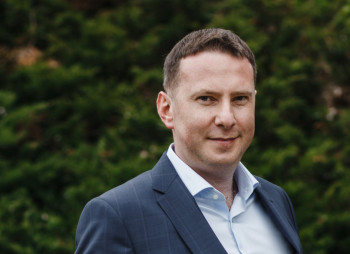
Ihor Mazepa, founder of investment company Concorde Capital, continues to actively invest in Ukraine despite the war, capital shortages and the difficulty of long-term forecasting. The main areas of his investment portfolio are energy, oil and gas services, construction materials manufacturing and real estate.
Mazepa and his partners have invested or committed €140 million in gas-fired generation and energy storage projects alone. The expected payback period for such projects is five to six years.
At the same time, Concorde Capital is developing a co-investment platform through which private investors will be able to invest in Ukrainian real assets.
This material is based on an interview with Ihor Mazepa for Forbes Ukraine and has been condensed to focus on investment-related topics.
Investment Activity in Ukraine
— Which sectors are currently in your investment focus?
— I invest a lot, and everything is exclusively in Ukraine. Our priorities are energy, oil and gas services, and construction materials.
Several years ago, we tried to forecast what would happen to different sectors of the Ukrainian economy during the war and after it ends. We identified the industries with the highest volatility index — those most sensitive to external factors.
These sectors are the first to decline during crises, but at the same time they recover faster than others. That is why we focus on energy, oil and gas services, construction materials and healthcare.
— Why do you specifically choose volatile sectors?
— High volatility creates not only risks but also opportunities. If you identify the right entry point, an investor can achieve significantly higher returns during the market recovery.
We are not simply looking for stable industries. We are interested in sectors where a crisis creates a shortage of capacity, capital or supply, which can later generate high returns on invested capital.
Why Energy Has Become the Main Focus
— How much have you already invested in the power sector?
— Initially, we planned to invest €120 million. To date, we have already invested or made commitments across several projects totaling approximately €140 million.
A significant share of the financing comes from our own capital and that of our partners. We also use bank debt and funds from private investors. Traditional project finance is virtually unavailable in Ukraine.
We have already built, or will soon complete, 35 MW of gas-fired generation and 500 MWh of energy storage systems. In addition, we plan to develop another approximately 500 MWh of battery storage capacity.
— Why do you consider energy attractive for private capital?
— Ukraine will remain an energy-deficit country for a long time. Billions of dollars in investment will be required to cover this deficit.
Large power plants remain vulnerable to attacks. Therefore, the future lies in a large number of small gas-fired power plants and electricity storage systems.
The state will not be able to deliver the required volume of projects on its own. Only the private sector can do this.
— What is the payback period for such investments?
— In our financial model, we conservatively assume a five- to six-year payback period. This corresponds to approximately 15–20% annual return on invested capital.
Investors who started implementing such projects earlier may earn more because they took on higher risk.
— What are the main risks for energy investors?
— One of the key bottlenecks is connecting new facilities to the power grid. Existing methodologies and bureaucratic procedures create artificial constraints for investors.
Another risk is the actions of state regulators. The energy business itself is relatively straightforward, but regulatory decisions are difficult to predict.
Attracting Private Investors
— How can a private investor participate in your energy projects?
— Initially, we set the minimum investment threshold at $300,000. We have already raised more than $15 million from several dozen private investors.
The high threshold was not related to project economics but to administrative capacity. We could not efficiently work with thousands of small investors at the same time.
We are now launching the Statok investment platform. Through automation, we plan to gradually reduce the minimum investment amount to approximately UAH 100,000.
— What does the investor actually invest in?
— We only offer projects in which we invest ourselves and which we believe in.
Before raising capital, we analyze the business model, conduct an audit and perform legal due diligence. The investor receives information about the asset, financial model and risks and then makes an independent investment decision.
Technically, the investor purchases a certificate of an investment fund. The fund, in turn, owns the assets of the respective project.
— What is the long-term goal of this business line?
— My goal is to help rebuild Ukraine’s capital market and create an opportunity for every Ukrainian to invest in the Ukrainian economy.
I hope that within several years Ukraine will develop a large co-investment market and, in the longer term, a liquid stock exchange.
There is no specific target for the amount of capital raised. The benchmark is billions of dollars.
Investments in Oil and Gas Services
— Why did Concorde Capital invest in drilling rigs?
— We see consistently strong demand for drilling. Our fleet consists of eight drilling rigs. The average cost of a complete heavy-duty rig with a lifting capacity of more than 300 tonnes exceeds $15 million.
This year, we plan to complete nine wells, and next year — 15.
Demand for heavy drilling rigs is particularly strong due to the start of deep drilling in western Ukraine. The region has significant oil and gas reserves, although geological conditions are challenging.
— Are you considering expanding into foreign markets?
— Yes, we are analyzing Romania and Türkiye. Rates there are significantly higher, although operating costs are also greater.
However, Ukraine also continues to offer strong prospects. The gas sector can remain profitable even at a gas price of around $200 per 1,000 cubic metres. At significantly higher market prices, project economics improve considerably.
Investments in Land
— How do you assess investments in Ukrainian agricultural land?
— There is strong demand among small private investors, while supply is limited. Ultimately, everything is regulated by price.
The main problem in the market is restricted access for foreign capital. Foreign investors could create additional demand and significantly affect land values.
The end of the war alone will not guarantee a sharp increase in land prices if market regulation remains unchanged. The main driver of growth can only be increased competition among buyers.
Restrictions on foreign investors effectively reduce the value of Ukrainian landowners’ assets. If there were more potential buyers, landowners could sell their land at significantly higher prices.
Why Concorde Capital Does Not Invest in MilTech or Banks
— MilTech is currently one of the most popular investment sectors. Why is it not part of your focus?
— MilTech is highly volatile and is currently at its peak. However, after the war ends, this sector may suffer the most.
That does not mean we completely ignore the industry. Concorde Capital structures M&A transactions and helps MilTech companies raise capital. However, as portfolio investors, we are cautious about assets whose value is heavily dependent on wartime demand.
— What about the banking sector?
— The banking sector has a very high share of state ownership, extensive regulation and significant political influence. It is also not always clear how an investor can significantly increase the value of a small bank.
Acquiring a bank makes sense when it creates synergies with the core business — for example, for large postal or financial groups. In other cases, banking services can often be obtained more cheaply through partners or outsourcing.
Concorde Capital’s Investment Principles
— How do you manage income generated by your investments?
— If portfolio companies generate excess cash, we do not withdraw it from the business; we reinvest it.
If we see a clearly understood risk and attractive potential returns, we are prepared to use leverage. For example, if a project can generate around a 30% return on invested capital, bank financing can be raised at 8–10% and the funds reinvested into scaling the business.
Naturally, potential returns come with investment risk.
— How does Concorde Capital make money from co-investments?
— We receive compensation only when the investor earns a return alongside us.
For example, this may amount to around 20% of the investor’s profit generated above a defined minimum return threshold. If the investment does not deliver a return, no success fee is charged.
This model aligns the interests of the management company and the private investor: we earn when our partner earns.
Investments in Construction Materials and Real Estate
One of the group’s largest industrial assets is Kryvyi Rih Cement. Concorde Capital is considering modernizing the plant and using alternative fuels for waste utilization.
The required investment is estimated at tens of millions of dollars, with the programme expected to be implemented over several years.
In real estate, the company has invested approximately $50 million in the O.Krasa residential project in Irpin. Another tourism and recreational project in the Zhytomyr region has an estimated budget of around $30 million, of which approximately $5 million has already been invested.
Further development of this project will depend on the final business model and the long-term demand outlook. One of the possible formats being considered is a medical and wellness specialization.