
Polish investment funds and Turkish companies have expressed interest in financing Ukraine’s first toll roads under public-private partnership (PPP) or concession mechanisms. This was reported by Serhii Sukhomlyn, Head of the State Agency for Restoration and Infrastructure Development of Ukraine, in an interview with Forbes Ukraine.
According to him, potential investors are most interested in two major infrastructure projects — the construction of a modern Lviv–Krakovets highway, which would connect Ukraine with the Polish border, and a new Odesa–Reni highway, which would become an important transport corridor in the south of the country. At the same time, the Lviv–Krakovets road could become the first project ready to be financed with private capital, including by Polish investment funds.
The second promising project is the construction of a new Odesa–Reni highway. The State Agency for Restoration is currently developing a feasibility study for the project together with the World Bank. According to Sukhomlyn, the project involves not the reconstruction of the existing road, but the construction of a new highway that would include a bridge across the Danube, significantly improving transport links with southwestern Ukraine and the countries of the European Union.
According to the head of the agency, foreign investors are ready to invest in Ukraine’s road infrastructure, but the main obstacle to implementing concession projects remains the lack of long-term state financial guarantees. The current state budget system does not provide the necessary predictability, as the budget is approved for only one year, while infrastructure investors expect guarantees of investment recovery over a period of 5–10 years.
Sukhomlyn believes that the State Road Fund, which was effectively liquidated in 2023, could serve as such a mechanism. In his view, the availability of a stable source of financing would allow the state to fulfill its obligations to concessionaires. Without the restoration of the road fund, PPP projects in the toll road sector risk remaining unrealized, he said. Although Ukraine adopted concession legislation back in 2019, no toll road has been built in the country so far.
At the same time, according to Sukhomlyn, the Ministry of Finance supports the idea of partially restoring the road fund as early as next year. He estimates that if all revenues from fuel excise duties were directed exclusively to the development of road infrastructure, the fund could accumulate around UAH 200 billion annually. However, at this stage, only a partial restoration of the financing mechanism is being discussed.
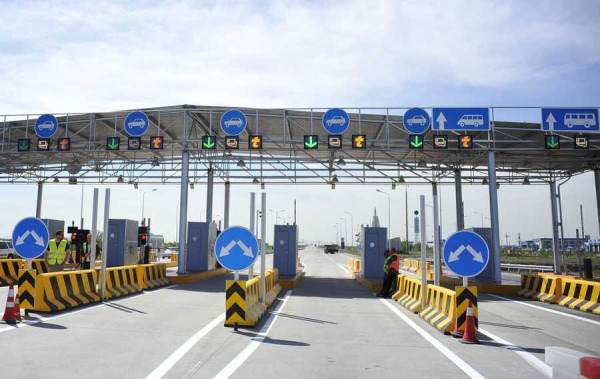
In parallel, the Ministry for Communities and Territories Development of Ukraine is developing a model for introducing a tolling system on Ukrainian roads. As Deputy Minister for Communities and Territories Development Aliona Shkrum previously stated, the new law on public-private partnerships allows such infrastructure projects to be implemented even under martial law.
The proposed model provides that passenger cars and passenger transport would be able to use such roads free of charge, while tolls would be charged to trucks, in particular vehicles weighing more than 12 tonnes. This approach would create a stable source of revenue for investors while preserving free access for most road users.