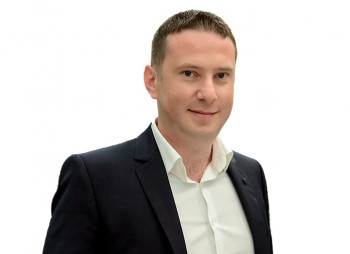
In July 2024, Dalgakiran Compressor Ukraine opened an energy equipment manufacturing plant in Kyiv region. The facility will focus, in particular, on producing cogeneration units, which are in strong demand. In this interview, Viacheslav Dinkov, CEO of Dalgakiran Compressor Ukraine LLC, discusses the new plant’s production capacity, exports and domestic market needs, cooperation with Oschadbank on financing for Ukrainian businesses, and efforts to address workforce shortages.
The company has built a new plant in Ukraine. How much was invested in the project? Was it financed entirely through foreign investment, or was some of the capital generated in Ukraine?
Yes, finally — and that is precisely the word I want to use — we have opened the plant here, near Kyiv, during a full-scale war. It is extraordinary. I am proud of my team and grateful to our Turkish partners. Construction began before 2022, and completing it now gives us grounds for optimism. Optimism about overcoming the energy crisis, because we manufacture generators that businesses and state-owned enterprises urgently need. UAH 400 million was invested in completing all the construction work.
What equipment will the plant manufacture?
We already manufacture specialised energy technology equipment at the plant, and we have our own engineering capabilities. We plan to increase production. We are currently paying particular attention to gas-fired cogeneration units and intend to expand their output, as this type of equipment is especially relevant today. Our equipment has already demonstrated its value in Ukraine on several occasions, including in the difficult conditions in Kharkiv region.
In what way specifically?
Our company delivered a turnkey backup power system for Kharkivvodokanal, the municipal water utility. We all know how difficult life has been for the people of Kharkiv. The aggressor bombed the city throughout 2022 and 2023, destroying as much generating capacity as it could, and continues to do so. In late February 2023, Dalgakiran Compressor Ukraine signed a contract with Kharkivvodokanal to supply equipment to support its water supply operations. By June 2023, we had completed all the work: developed the technical documentation, secured the customer’s approval and supplied everything required.
Within three months, we delivered and commissioned diesel generators, a packaged transformer substation and variable-frequency drives. For more than a year now, Kharkivvodokanal has been unaffected by scheduled and emergency power outages, allowing it to supply water to Kharkiv without interruption.
Will the plant have planned production volumes for gas generators, or will it manufacture exclusively against advance orders?
At present, yes, we are fulfilling advance orders. But, recognising the level of demand, we have made additional preparations and have the equipment needed to expand production. We plan to increase output to meet existing and growing demand.
How do you assess the size of Ukraine’s gas generator market?
The market is undoubtedly growing. Gas and diesel generators have become a lifeline for businesses — large and small, public and private. Demand will remain very strong because we are living on a powder keg: nobody knows what the aggressor will do next, or how much more generating capacity it will seek and be able to destroy. But the country must survive, and businesses must survive. To do that, they need to keep operating. Gas is clearly cheaper than diesel, making gas generators a more attractive option economically.
Do you plan to manufacture and sell products for export?
Yes, of course. We already export and intend to increase volumes. We worked on a major project for the Armenian Nuclear Power Plant, located near Armavir. Do you remember the accident at the Fukushima nuclear power plant following the tsunami in 2011? The world had never faced such problems in nuclear power after a natural disaster, so EU countries decided to assess the safety of their nuclear power plants. The EU also proposed similar measures in neighbouring countries, including Armenia, which, incidentally, has the region’s only nuclear power plant with VVER pressurised water reactors.
Following the stress tests, the decision was made to equip the plant with backup power sources. Dalgakiran Compressor Ukraine and ES Group Europe S.R.O. won the tender. We already had experience implementing a similar, so-called post-Fukushima programme for Ukrainian nuclear power plants, and our bid offered the best engineering solutions for an emergency power supply system. Dalgakiran manufactured and commissioned a set of mobile diesel generator units.
This cooperation, together with our post-Fukushima work at Ukrainian nuclear power plants, helped secure our selection in 2022, after the aggressor’s first attacks on energy infrastructure. When the US Department of Energy raised the issue of protecting Ukraine’s nuclear generating facilities, Dalgakiran was chosen to supply additional high-capacity mobile diesel generator units to each nuclear power plant. The US Department of Energy funded the project. As a result, Ukrainian nuclear power plants received mobile, containerised diesel power stations and will therefore have a reliable backup electricity supply. In this respect, there is no need to worry if the aggressor attempts to disable the equipment supporting the nuclear units rather than the units themselves.
But I would like to return to exports. To compete in export markets, you need to offer prospective customers advanced, distinctive technological solutions. And we have them. Without going into the details of our business, these include reciprocating gas compressors for oil and gas production, petrochemicals and food processing in countries where those industries operate. Despite all the difficulties our country has faced and continues to face, we have managed to preserve and improve our technologies, and they are in strong demand worldwide. So we are pursuing this opportunity.
We understand you have been negotiating special financing terms with Oschadbank for purchases of gas generators. Could you share the details?
Our negotiations resulted in a cooperation agreement. It provides favourable financing for our customers. Gas generators are expensive industrial equipment. Businesses understandably find it difficult to pay the full purchase price upfront, so we sought to help, with support from Oschadbank. The interest rate starts at 0.01%, with financing available for up to 10 years. I believe this is a very encouraging option for businesses seeking reliable energy supplies with minimal financing costs. The programme is already operating: the first loan for a gas generator was issued just a few days ago.
Are you experiencing workforce shortages amid mobilisation?
Yes, like everyone else, we face this problem, particularly when it comes to highly specialised professionals. We are classified as critical infrastructure and can secure mobilisation deferments for employees. But this still does not meet our staffing needs. We recently signed a memorandum with the regional authorities, who support us and work with us. It is a cooperation memorandum between Dalgakiran Ukraine, the state-run Vocational Lyceum of Ukrainka and the Kyiv Regional State Administration. The parties agreed to support employment and the development of professional, vocational and higher education. The lyceum trains precisely the specialists we need: fitters, machine operators, specialists in all types of welding and electromechanical technicians.
The training system will be improved to reflect the specific needs of our manufacturing operations. For our part, we will provide the conditions needed for internships and subsequent employment. Graduates will have good prospects: after receiving their lyceum diplomas, they can join us, and we will support their further studies at higher education institutions. Then, if they wish, they can return to us. We will do everything we can to make them want to. We aim to develop specialists specifically for our company and our production needs. These are promising opportunities, and we are ready to invest in the younger generation and its education.