Ukrainian ports have traditionally been viewed as transport infrastructure assets comprising berths, terminals, warehouses and rail approaches. However, the history of investment in Ukraine’s port sector shows that the largest volumes of capital have come not so much from conventional port operators as from cargo owners: agricultural holdings, grain traders, vegetable oil producers, metals groups and logistics companies.
For these investors, a port asset is primarily a means of controlling the export supply chain, securing access to transshipment capacity, reducing logistics costs and capturing additional margin on every tonne of cargo. Global operators, container shipping lines and infrastructure funds began entering the Ukrainian market more actively at a later stage, mainly through acquisitions of stakes in established terminals, concessions and joint projects with local partners.
As a result, several fundamentally different port investment models have emerged in Ukraine:
- construction of a terminal by a cargo owner;
- development of a port-and-industrial complex;
- acquisition of a stake in an operating terminal company;
- concession of state-owned port assets;
- establishment of a joint venture between international and Ukrainian companies;
- project finance involving international financial institutions;
- acquisition of distressed debt followed by obtaining control over the underlying asset;
- acquisition of port assets at discounted wartime valuations;
- investment in dry ports and inland logistics infrastructure.
Ukraine’s Port Sector in 2024–2026
In 2024, Ukrainian seaports handled 97.2 million tonnes of cargo, compared with 62 million tonnes a year earlier. In 2025, cargo turnover declined to 82.2 million tonnes, of which agricultural products accounted for 44.2 million tonnes, or 53.7%. At the same time, container throughput increased from 129,900 TEU in 2024 to 215,700 TEU in 2025.
In the first half of 2026, Ukrainian seaports handled 42.4 million tonnes of cargo. Agricultural products accounted for the largest share of the cargo flow at 23.6 million tonnes, 20% more than in the same period of 2025. At the same time, a sharp escalation in Russian attacks in July significantly worsened operating conditions. During the first two weeks of the month alone, 23 strikes on Ukrainian ports and 17 attacks on civilian vessels were recorded.
This defines the main feature of today’s port market: investors assess not only terminal capacity and potential cargo flows, but also physical security, the ability to diversify routes, rail access, war-risk insurance and the speed of recovery following damage.
Four Stages of Investment in Ukrainian Ports
1. Formation of the Private Stevedoring Business: The 1990s to the Early 2000s
The first stage was characterised by the emergence of Ukrainian business groups that leased port facilities, established private stevedoring companies and gradually developed their own terminal complexes.
One of the most notable examples was TIS, founded in 1994 within the waters of Pivdennyi Port. A group of specialised terminals for grain, fertilisers, coal, ore, containers and general cargo was subsequently developed on a single site. The capacity of the TIS grain terminal is estimated at up to 10 million tonnes per year, the fertiliser terminal at up to 3.5 million tonnes and the ore terminal at up to 7 million tonnes.
Another major player, NIBULON, was founded in 1991 and commissioned a transshipment terminal in Mykolaiv in 2003. The company later developed a network of river terminals, its own fleet and an integrated logistics system, effectively combining grain production, storage and exports.
In 2001, Germany’s HHLA began operating in Odesa Port through Container Terminal Odesa. This was one of the first large-scale entries by an international port operator into the Ukrainian market. Before the full-scale invasion, the terminal had become the country’s largest container facility and handled more than 390,000 TEU in 2019.
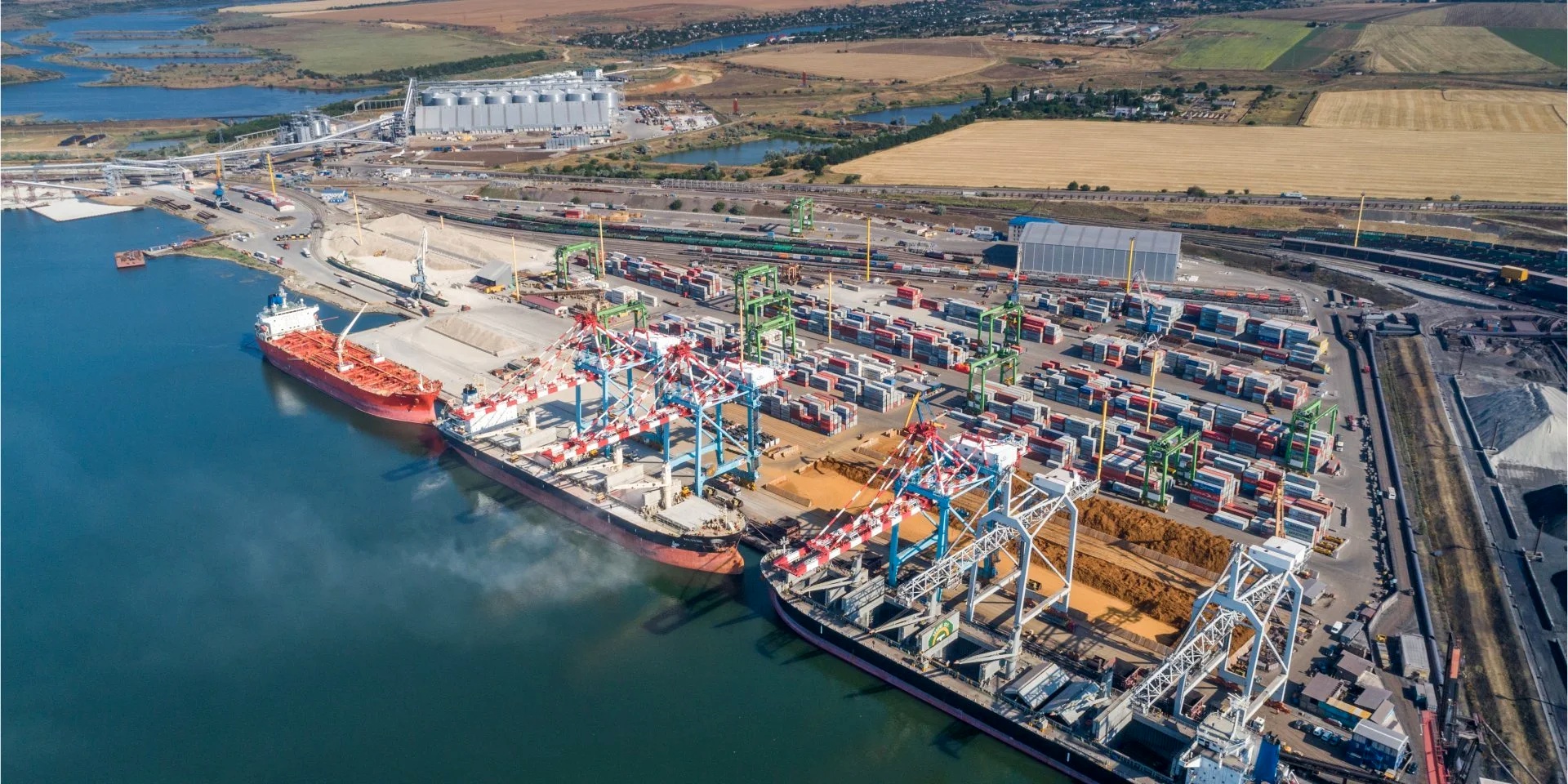
The TIS container terminal at Pivdennyi Seaport, Odesa region
2. Vertical Integration by Cargo Owners: 2003–2013
During this period, agricultural, commodities and financial-industrial groups became the main investors. Their objective was not only to generate income from handling third-party cargo, but primarily to control exports of their own products.
International company ADM developed vertically integrated agricultural infrastructure in Ukraine. The company operated the UkrElevatorProm port grain terminal in Odesa, with simultaneous storage capacity of approximately 210,000–213,000 tonnes and potential throughput of up to 3 million tonnes of grain per year. Following modernisation, the ADM Illichivsk oilseed crushing plant in Chornomorsk was able to process up to 1,500 tonnes of sunflower seeds per day. The company’s procurement and raw material accumulation network also included five inland elevators and one river silo.
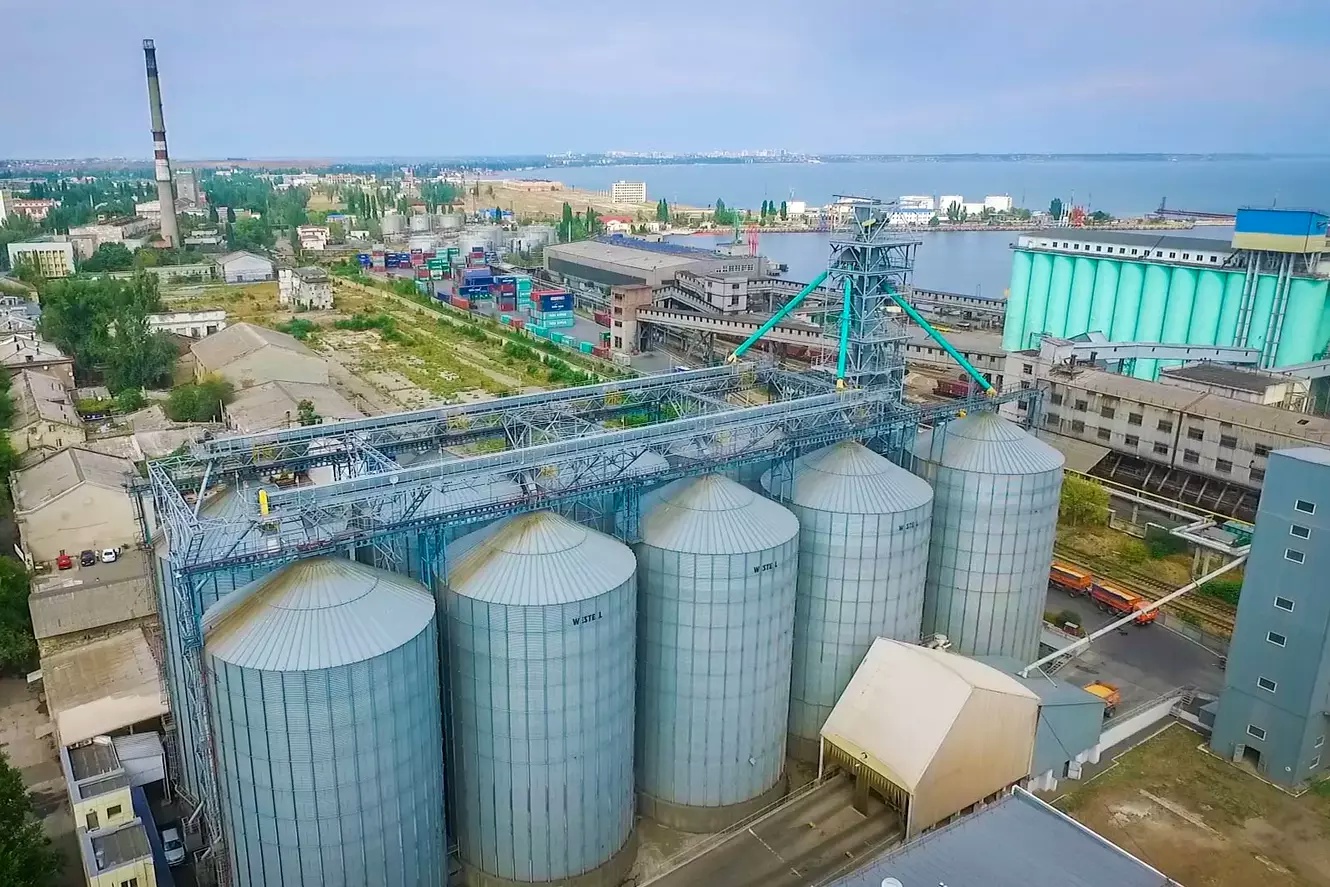
ADM’s UkrElevatorProm grain transshipment complex at Odesa Seaport
In 2011, Group DF acquired the Nika-Tera specialised seaport in Mykolaiv, initially viewing it as part of the export logistics chain for mineral fertilisers. The terminal was subsequently diversified and reoriented towards grain, oilseeds, liquid bulk and other dry bulk cargoes. Before the full-scale war, Nika-Tera had annual throughput capacity of approximately 9 million tonnes, eight berths, around 515,000 tonnes of simultaneous grain storage capacity and more than 63,000 tonnes of tank capacity for vegetable oils. In 2021, the port handled approximately 7.6 million tonnes of cargo, more than 60% of which consisted of agricultural products.
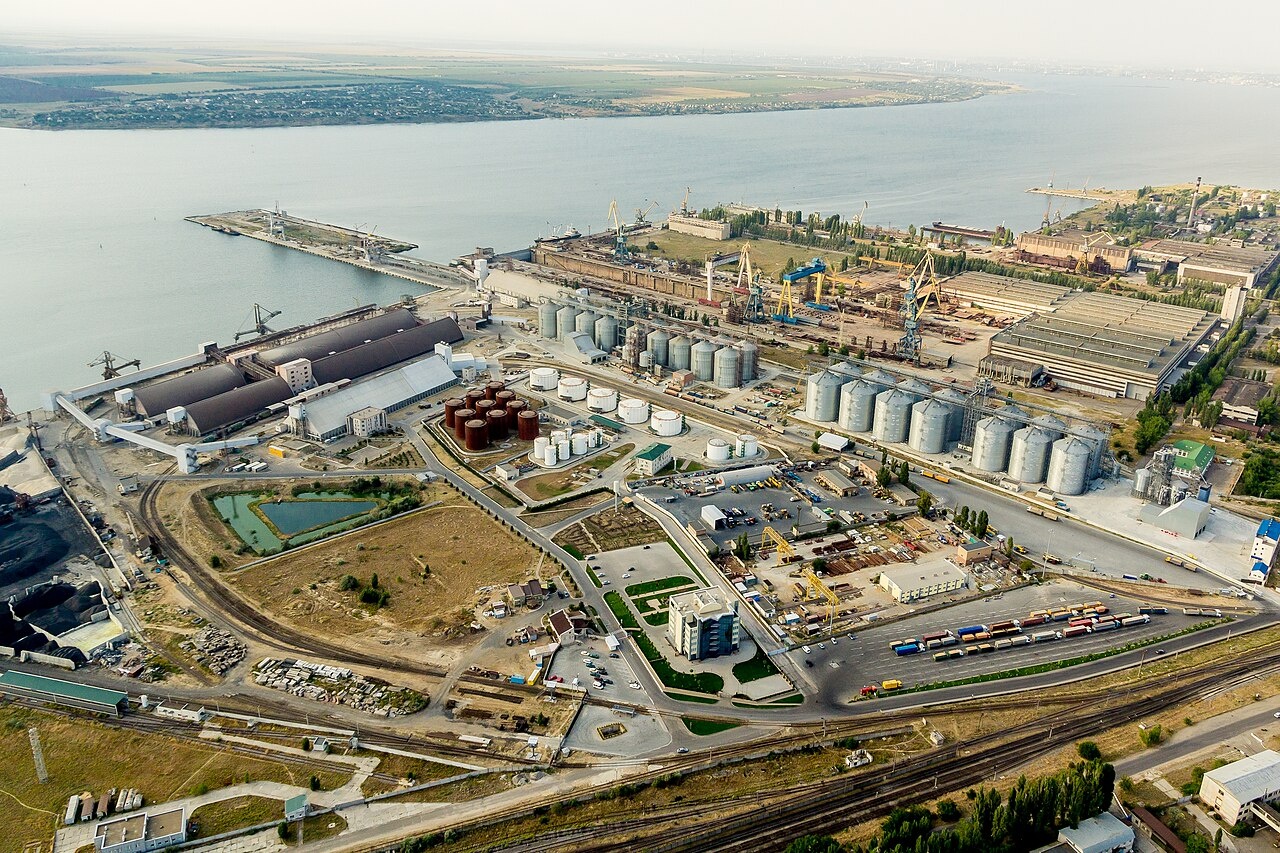
Nika-Tera specialised seaport in Mykolaiv
Metals and mining companies also invested in their own specialised port logistics. Portinvest, SCM’s port holding company, provided strategic management for the Avlita stevedoring company in Sevastopol, which handled steel products and grain. The terminal had two deep-water berths in the ice-free Sevastopol Bay and total annual throughput capacity of up to 5.5 million tonnes, including approximately 2 million tonnes of steel products and 3.5 million tonnes of grain. Its grain complex provided simultaneous storage capacity of up to 170,000 tonnes.
In Pivdennyi, investments by Ferrexpo and the TIS Group in the development of the specialised TIS-Ruda terminal created one of Ukraine’s largest export facilities for iron ore products, with capacity of up to 7 million tonnes per year. The modernisation of berth and handling infrastructure, together with the use of the specialised Iron Destiny vessel, made it possible to move from loading Panamax cargoes of approximately 120,000 tonnes to handling Capesize and Newcastlemax vessels with cargoes of up to 185,000 tonnes.
3. International Strategic Capital: 2014–2021
After 2014, a number of major greenfield projects involving global grain traders, food producers, international operators and financial institutions emerged in Ukrainian ports.
In 2015–2016, Bunge commissioned a complex worth approximately $180 million at Mykolaiv Port. The oilseed crushing plant could process up to 790,000 tonnes of oilseeds per year, while the grain terminal could support exports of up to 3 million tonnes annually. Storage capacity included 37,000 tonnes of seeds, 24,000 tonnes of meal and 12,500 tonnes of oil.
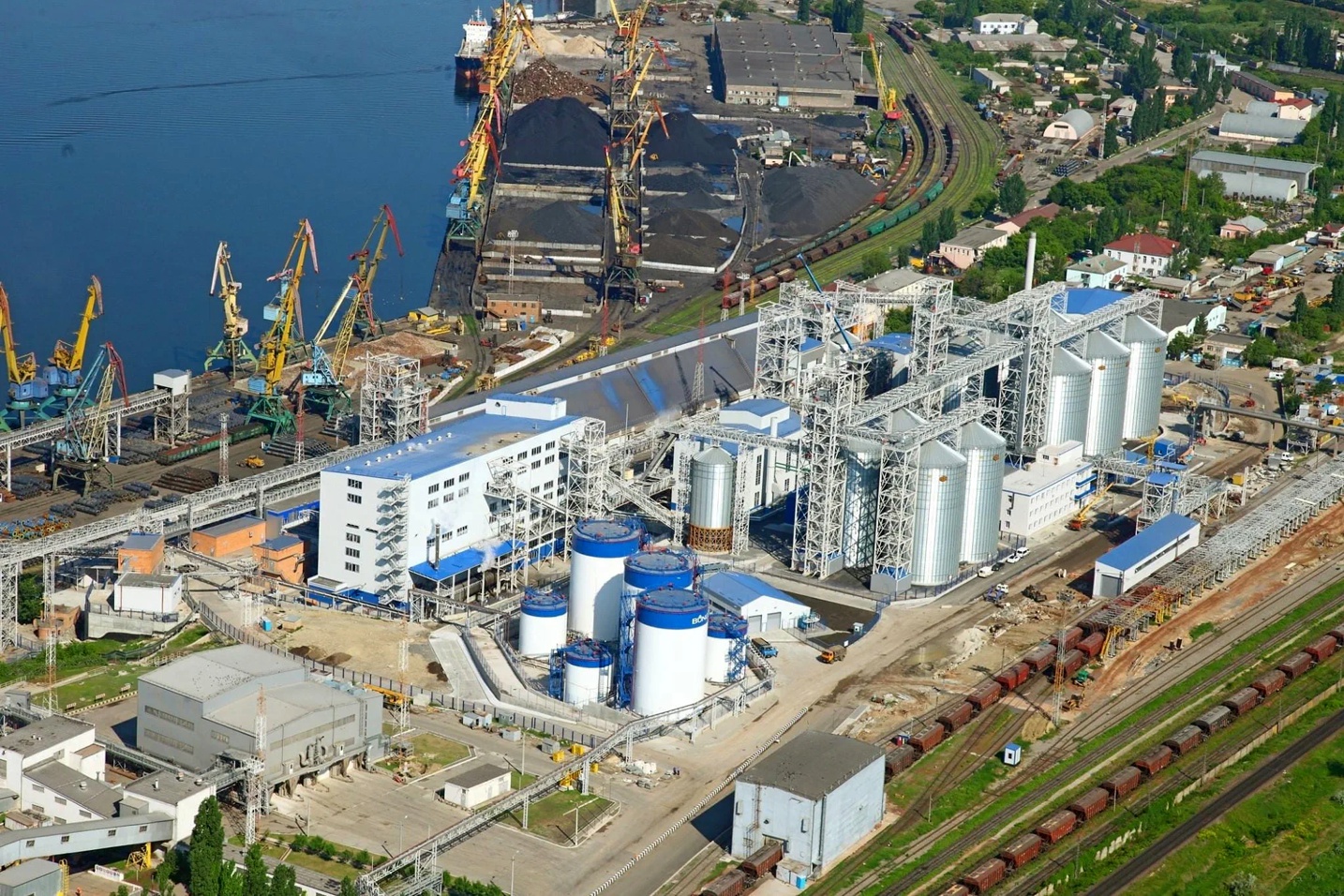
Bunge’s Grintur-Ex production and transshipment complex at Mykolaiv Seaport
In 2016, COFCO opened a grain terminal in Mykolaiv worth approximately $75 million. Its design capacity was around 2.5 million tonnes per year, with simultaneous storage capacity of approximately 136,000 tonnes.
Louis Dreyfus Company, together with Brooklyn-Kyiv, developed a grain terminal at Odesa Port. The EBRD considered providing up to $60 million in financing to expand the complex to potential annual capacity of approximately 4.5 million tonnes.
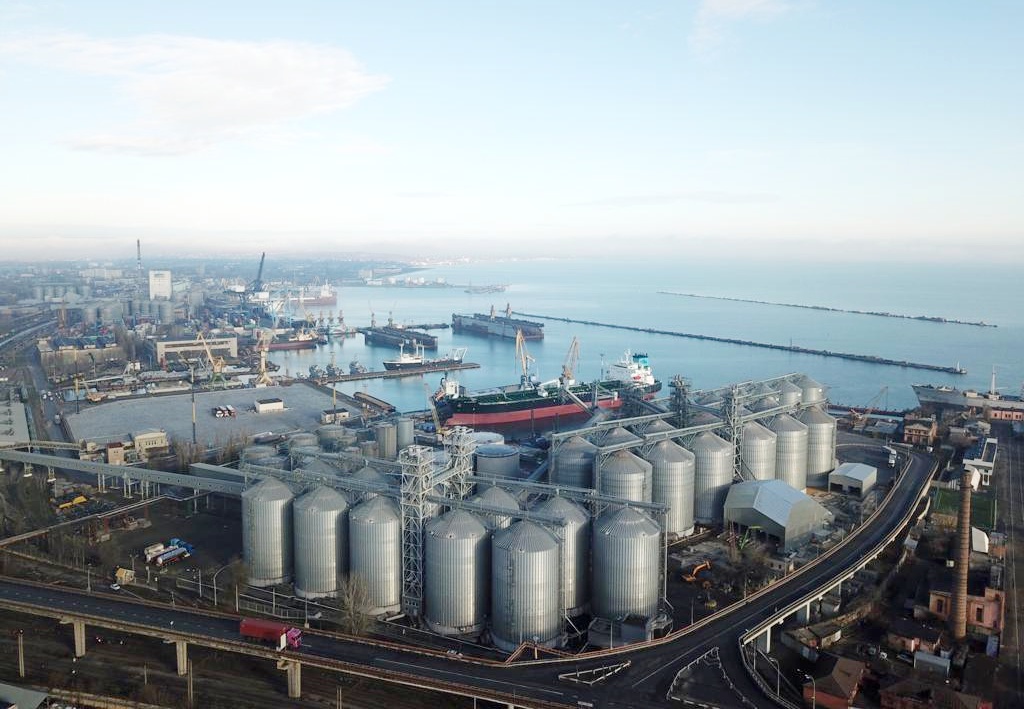
Brooklyn-Kyiv grain terminal at Odesa Seaport
The Neptune terminal was developed at Pivdennyi Port as a joint project between MV Cargo and Cargill. Total investment exceeded $150 million, while design capacity amounted to approximately 5 million tonnes of grain per year. Financing included loans from the EBRD and IFC totalling around $74 million. In 2021, Cargill increased its stake to 51%.
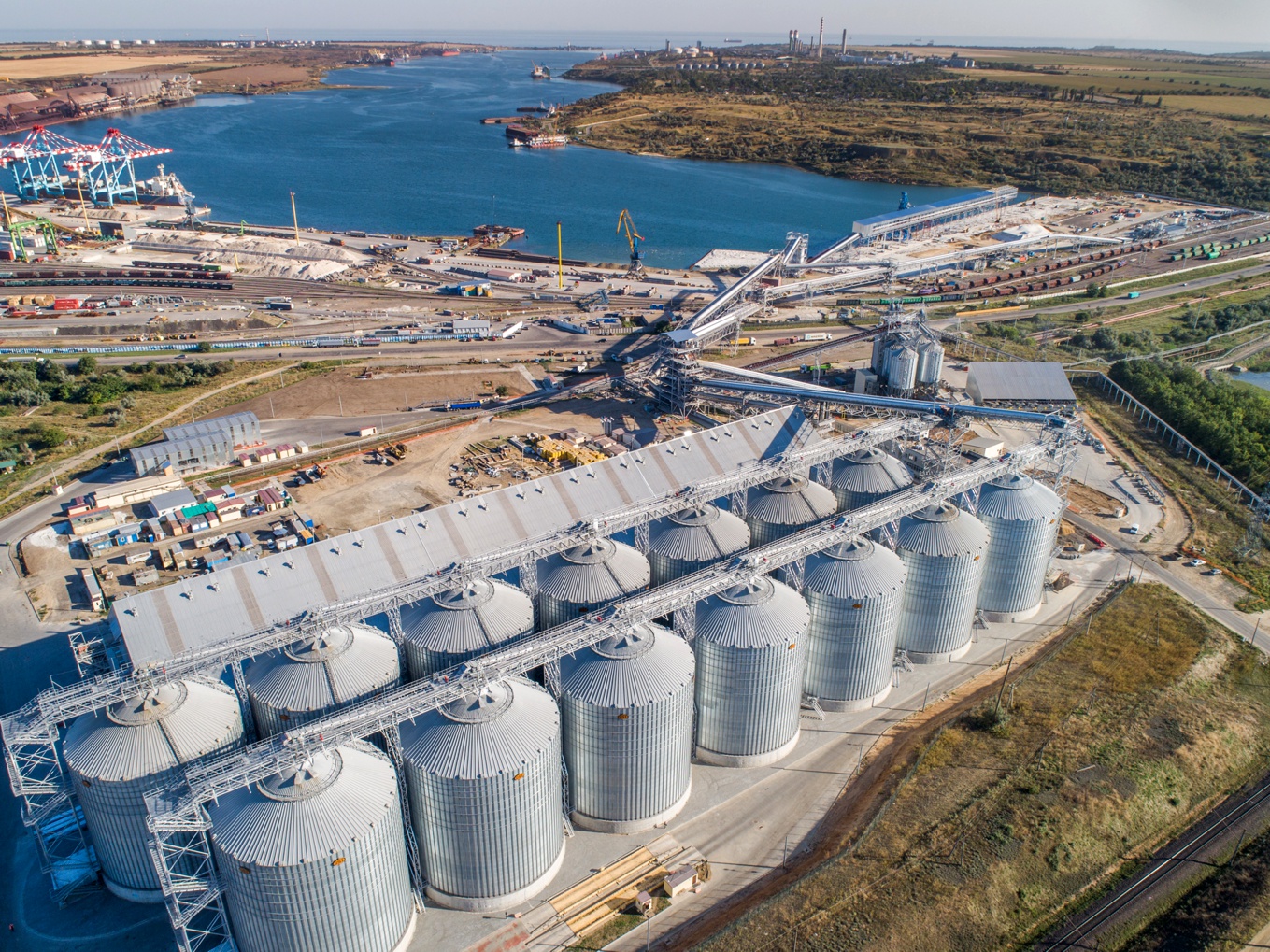
Neptune grain terminal at Pivdennyi Seaport, Odesa region
In 2019, POSCO International acquired a 75% stake in Orexim’s grain terminal in Mykolaiv, which had annual capacity of approximately 2.5 million tonnes. For the Korean group, the investment formed part of its strategy to control international food supplies and develop grain trading across Asia, the Middle East and North Africa.
In Pivdennyi, Allseeds developed a complex combining oilseed crushing capacity of 2,200 tonnes of sunflower seeds per day, a tank farm, meal storage facilities and a vegetable oil terminal. Investment in the initial stages of the plant and terminal was estimated at approximately $200 million. In 2018, Dutch development bank FMO and the DCP fund acquired a stake of around 16% in the company, providing capital for further expansion.
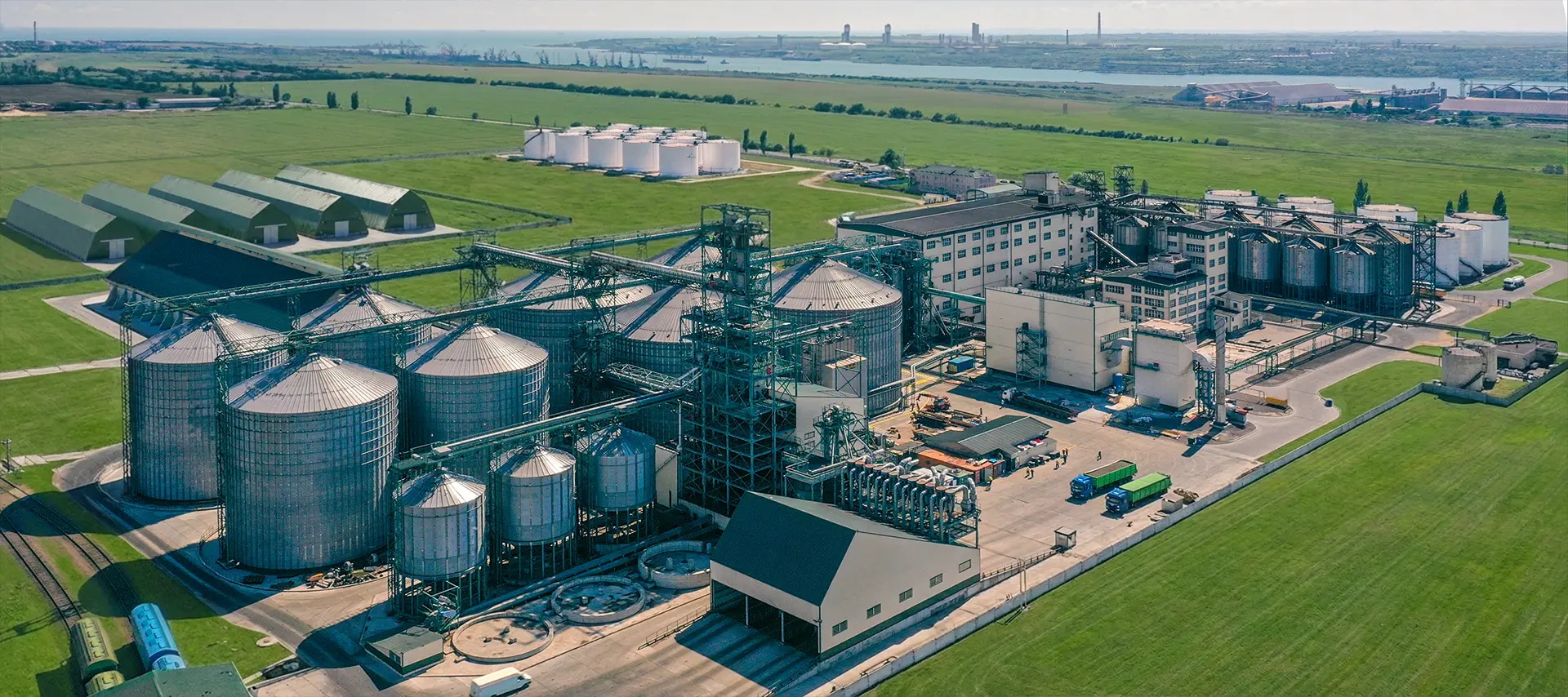
Allseeds Black Sea oilseed crushing plant at Pivdennyi Seaport, Odesa region
In 2020, DP World acquired a 51% stake in the TIS container terminal at Pivdennyi Port. The transaction was one of the most notable entries by a global port operator into Ukraine. In March 2026, DP World sold its stake back to its Ukrainian partners.
4. Wartime Restructuring of Logistics: 2022–2026
Following the blockade of Black Sea ports, investment shifted towards the Danube region, dry ports, border terminals and western railway crossings. According to the OECD, 23 new terminals were developed at Ukrainian Danube ports after the start of the full-scale war.
NIBULON built the Bessarabska terminal in Izmail. Investment was estimated at approximately $5.5 million, while throughput capacity reached up to 300,000 tonnes per month. By the end of 2023, the new complex had already handled more than 2 million tonnes of cargo.
In 2023, Kernel acquired a vegetable oil terminal at Chornomorsk Port for $19.4 million and a terminal in Reni for $24.75 million. The combined value of the two transactions amounted to approximately $44.15 million. At the same time, the company invested around $19 million in restoring the damaged TransBulkTerminal grain facility in Chornomorsk.
Logistics group Lemtrans, together with its partners, developed the Mostyska container terminal. Investment in the project exceeded $15 million. Lemtrans subsequently invested approximately $15 million in a container terminal in Vinnytsia with estimated annual capacity of 20,000 TEU.
In 2025, HHLA acquired a 60% stake in Eurobridge Intermodal Terminal in Batiovo, Zakarpattia region. The capacity of the first phase is estimated at approximately 100,000 TEU per year. The investment creates a logistics corridor for HHLA connecting Ukraine’s railway network, the European-gauge system and maritime terminals.
In 2026, control over the TIS container terminal changed once again. According to Ukrainian corporate registers and market sources, following DP World’s exit, a 51% stake in the asset was transferred to an entity linked to Mediterranean Shipping Company.
The Most Notable Port Deals and Projects in Ukraine
|
Період |
Інвестор або проєкт |
Формат інвестування |
Масштаб і значення |
|
Since 1994 |
TIS, Pivdennyi |
Private development of a port cluster |
Terminals for grain, ore, coal, fertilisers, containers and general cargo |
|
Since 2001 |
HHLA, Container Terminal Odesa |
Market entry by a global port operator |
Ukraine’s largest container terminal before the full-scale war |
|
Since 2003 |
NIBULON, Mykolaiv |
Vertical integration by an agricultural company |
Terminal, grain elevator network, river fleet and proprietary logistics system |
|
2011 |
Group DF — Nika-Tera |
Acquisition of an operating terminal |
Integration into a commodity export chain followed by diversification |
|
2015–2016 |
Bunge, Mykolaiv |
Greenfield port-industrial complex |
Approximately $180 million |
|
2016 |
COFCO, Mykolaiv |
Greenfield development / expansion by an international trader |
Approximately $75 million; capacity of 2.5 million tonnes |
|
2015–2019 |
Allseeds, Pivdennyi |
Processing facility combined with a terminal |
Approximately $200 million during the initial stages |
|
2016–2019 |
Cargill and MV Cargo, Neptune |
Joint venture and project finance |
More than $150 million; capacity of 5 million tonnes |
|
2019 |
POSCO International — Orexim |
Acquisition of a 75% stake in the terminal |
Control over food supply chains and international trading operations |
|
2020 |
DP World — TIS Container Terminal |
Acquisition of a 51% stake |
Market entry by a global port operator |
|
2020 |
Risoil-Kherson |
30-year concession |
Approximately UAH 300 million in investment commitments |
|
2020–2021 |
QTerminals — Olvia Port |
35-year concession |
Approximately UAH 3.4 billion in planned investment |
|
2021–2023 |
Risoil, Chornomorsk |
Private terminal and new pier |
Approximately UAH 1.5 billion |
|
2022–2023 |
NIBULON, Izmail |
Wartime greenfield development |
Approximately $15.5 million |
|
2023 |
Kernel, Chornomorsk and Reni |
Wartime M&A transactions |
Approximately $44.15 million in total |
|
2022–2025 |
Lemtrans, Mostyska and Vinnytsia |
Dry ports and intermodal terminals |
More than $30 million in total |
|
2025 |
HHLA — Eurobridge, Batiovo |
Acquisition of a 60% stake in an intermodal terminal |
Development of a western container corridor |
|
2026 |
MSC — TIS Container Terminal |
Acquisition of a 51% stake |
Vertical integration of a shipping line and terminal |
|
2025–2026 |
Chornomorsk Container Terminal Concession |
Long-term public-private partnership |
One of Ukraine’s largest planned port PPP projects |
Profile of Investors in Ukraine’s Port Infrastructure
1. Global Port Operators
The most prominent global operators that have already invested or considered investing in Ukraine include HHLA, DP World, QTerminals, Hutchison Ports, bidders for the Chornomorsk concession and international operators linked to major shipping lines.
A global operator is not interested in an individual warehouse or berth, but in a controlled cargo hub that can be integrated into an international network of terminals and transport corridors.
The principal criteria include: long-term operating rights; predictable cargo flows; sufficient berth depth; rail and road access; transparent tariff-setting; expansion potential; investment protection; a clear allocation of responsibility for dredging and other state-owned infrastructure.
The most common formats are the acquisition of a controlling stake in an operating terminal, a 30–40-year concession or a joint venture with a local owner or partner.
Ukraine’s experience shows that global operators are more likely to enter an established asset than independently implement a greenfield project. DP World acquired a stake in TIS, HHLA developed an existing site at Odesa Port, while QTerminals entered through the Olvia concession.
2. Agricultural Holdings and Large Agricultural Companies
This category may include Ukraine’s top 100 agricultural companies by land bank.
For an agricultural holding, a port terminal is an extension of its production business. Ownership of export infrastructure allows the company to: secure access to transshipment capacity during peak periods; reduce dependence on third-party operators; control shipment quality and timing; lower logistics costs; generate revenue from third-party clients; increase margins across the entire value chain; create additional collateral value for raising finance.
The most systematic examples are NIBULON and Kernel. The former developed its own river and maritime logistics network, while the latter consistently expanded its port asset portfolio in Chornomorsk and Reni.
Agricultural holdings most commonly use greenfield construction, acquisitions of existing terminals or long-term leases of port land. The key prerequisite is an internal cargo flow that provides a base level of asset utilisation. For agricultural companies, a terminal may remain profitable even if the stevedoring business itself generates below-market returns, as the economic benefit is realised across the vertically integrated group.
3. International Grain Traders
The largest international companies that have invested in Ukrainian port and near-port infrastructure include Cargill, Bunge, COFCO, Louis Dreyfus Company, ADM, POSCO International and other international traders and grain asset operators.
A grain trader is not simply acquiring terminal capacity. It seeks control over the physical commodity flow, from purchasing grain from producers to loading the vessel.
A terminal provides the trader with: a guaranteed loading slot; the ability to assemble large vessel cargoes; control over grain blending and quality; an information advantage in the local market; lower storage and transshipment costs; the ability to fulfil international contracts more quickly; protection against shortages of port capacity.
Cargill, Bunge, ADM and Louis Dreyfus primarily integrate terminals into their global trading networks. For COFCO and POSCO International, additional motivations include food security in Asian countries and control over long-term supply channels.
4. Metals and Mining Companies
Metals groups are interested in: specialised terminals for ore, coal and steel products; deep-water berths; the ability to load Panamax, Capesize or Newcastlemax vessels; high-capacity rail approaches; large open storage yards; predictable transshipment costs.
Ferrexpo used Pivdennyi Port to export iron ore pellets to Asia, the Middle East and North America. Metinvest and Portinvest developed their own port logistics for steel products and raw materials.
Unlike grain traders, metals companies do not always seek direct ownership of a port. They may be satisfied with: a stake in a specialised terminal; a long-term take-or-pay contract; priority access to a berth; a joint venture with a port operator; financing terminal upgrades against guaranteed cargo flows.
The key characteristic of this investor category is its high dependence on the condition of the metals industry, railway logistics and the availability of Black Sea routes.
5. Container Operators and Shipping Lines
Ukraine’s container segment has historically been shaped by HHLA, TIS, DP World, MSC and international shipping lines operating through the Odesa and Chornomorsk port clusters.
For a container line or operator, the most important factors are: concentration of container flows; a stable vessel-calling schedule; handling speed; direct rail access; the potential to develop intermodal routes; control over terminal-handling costs; coordination between maritime and inland transport legs.
MSC’s acquisition of a stake in TIS would be consistent with the global trend of shipping lines controlling not only vessels, but also terminals, warehouses, railway operators and dry ports.
For Ukraine, a particularly promising network is: seaport terminal — railway operator — dry port — border terminal — European hub. This logic is demonstrated by HHLA’s investments in the Odesa terminal and Eurobridge in Batiovo, as well as the development of terminals in Mostyska and Vinnytsia.
6. Energy Companies
Energy companies have so far played a smaller role in port investment than agricultural and logistics groups. Completed projects have mainly involved coal, petroleum products, chemical feedstocks and mineral fertilisers.
In the future, energy investors may shift their focus towards: LNG and LPG; bioethanol and biomethanol; sustainable aviation fuel; ammonia; hydrogen derivatives; port fuel-storage facilities; handling equipment for renewable energy projects and related segments.
However, such projects will require long-term contracts, substantial capital expenditure, specialised infrastructure and a clear national energy policy.
7. Logistics Holdings
Logistics companies view a port not as a standalone asset, but as part of a transport network. This category includes TIS, Lemtrans, Euroterminal, dry-port operators, railway and warehousing companies and multimodal logistics platforms.
Euroterminal began developing the Odesa Dry Port in 2005 as a complex combining container yards, customs infrastructure, road and railway logistics. Lemtrans is building a similar network model by investing in border and inland container terminals.
For this type of investor, revenue is generated not only through transshipment, but also through: rail transportation; storage; freight forwarding; customs clearance; container repair; last-mile logistics; operation of regular container trains.
This category has particularly strong potential because, since 2022, Ukraine’s port infrastructure has effectively ceased to be exclusively maritime. It increasingly encompasses border crossings, Danube ports, dry terminals and European railway corridors.
8. Industrial Developers
Ukraine still has very few conventional port-industrial developers that create large, serviced sites for independent manufacturing companies. In most cases, the industrial component has been developed by the producer that owns the cargo.
This is how the following complexes emerged: Bunge in Mykolaiv; Allseeds in Pivdennyi; Delta Wilmar in Pivdennyi; processing and warehousing clusters around grain terminals; logistics zones near dry ports.
Such projects combine manufacturing, storage, energy infrastructure, railway access and port transshipment. Their economics are considerably more resilient than those of a conventional warehouse or terminal because the investor captures income at several stages of the value-creation process.
During Ukraine’s reconstruction, industrial developers may be interested in: near-port industrial parks; build-to-suit warehousing and manufacturing complexes; cold-storage facilities; agricultural processing complexes; biofuel production; assembly of oversized equipment; logistics for metals and construction materials; service bases for the maritime and energy industries.
The key competitive advantage will be not merely proximity to a port, but access to a private railway branch, sufficient power capacity, water and gas connections and the ability to obtain construction approvals quickly.
9. Investment, Infrastructure and Other Funds
Before the full-scale war, financial investors generally did not acquire Ukrainian port assets independently. Their role mainly involved financing strategic operators.
The EBRD and IFC participated in financing or structuring the Neptune, NIBULON and Brooklyn-Kyiv projects, as well as the Kherson, Olvia and Chornomorsk concessions. Their involvement performed several functions: long-term debt financing; improvements in corporate governance standards; environmental and social oversight; concession structuring; mitigation of political risk; mobilisation of other lenders.
FMO and DCP used a different model by acquiring a minority stake in Allseeds. This is an example of growth equity, under which a financial investor provides expansion capital without assuming operational control.
Distressed investment represents a separate segment.
The case involving Argentem Creek Partners and Innovatus Capital Partners and the Olimpex terminal demonstrated that a foreign fund can enter Ukraine’s port infrastructure through the acquisition of credit claims and subsequently obtain control over the pledged asset.
For a conventional infrastructure fund, the main challenge remains the unpredictability of revenue during wartime. The most realistic model is therefore likely to involve joint investment with a specialised operator, the state and an international financial institution.
10. Speculative Investors, Business Owners and Financial-Industrial Groups
The term “speculative investor” in the port sector does not necessarily imply a short-term resale strategy. More often, it refers to acquiring an asset, land plot, corporate debt or business stake in anticipation of future value growth.
- Acquisition of distressed debt. The investor purchases claims against a terminal owner, restructures the debt or enforces the collateral.
- Acquisition of an asset during the war. Port infrastructure is purchased at a significant discount to replacement cost, based on expectations of a recovery in maritime trade and subsequent valuation growth.
- Land bank formation. The investor consolidates near-port land plots without necessarily commencing construction immediately.
- Development and sale to a strategic investor. A local entrepreneur develops a terminal, establishes a cargo flow and subsequently sells a controlling stake to a global operator or trader.
- Joint venture. The owner of land or a terminal brings in an international partner that provides capital, technology and a cargo base.
The return for this type of investor may be generated not only through operating profit, but also through: land revaluation; changes in the permitted use or legal status of the site; obtaining construction and operating permits; connecting the asset to railway and utility infrastructure; consolidating several assets; selling to a strategic investor; post-war value appreciation; restoring a distressed asset to operational status.
This is the highest-risk model, but it may also generate the highest returns when a quality asset is acquired at a price significantly below replacement cost.
One such asset is a 100-hectare deep-water port-and-rail logistics hub near Pivdennyi Port. The site has access to water, rail and road connections and can be developed as an integrated multimodal port cluster. The configuration of the land allows for the development of a railway hub station, dry port, grain, container or multipurpose terminal, as well as the phased development of the asset followed by the involvement of a strategic operator or a sale to an international investor.
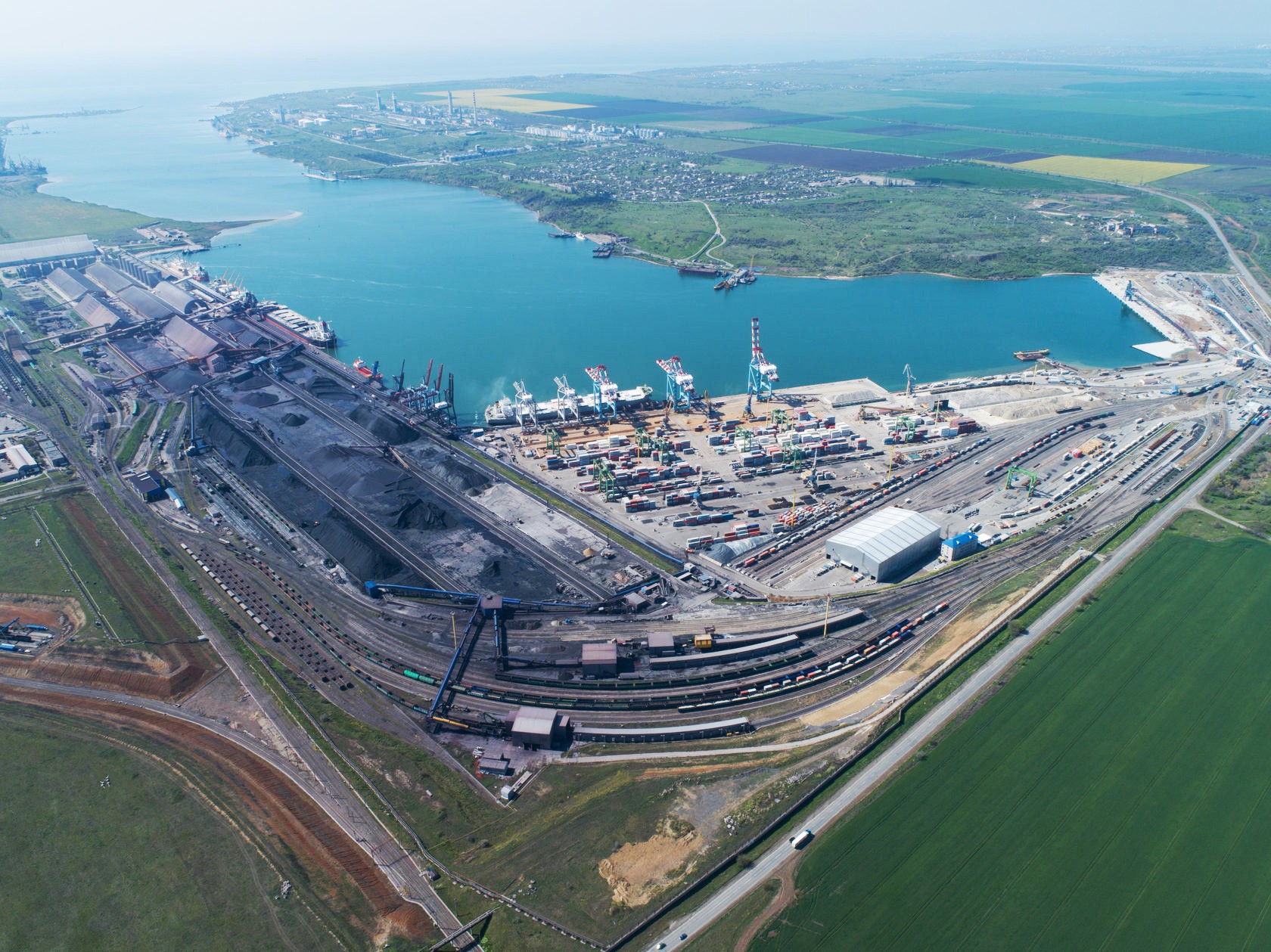
Investment opportunity: a 100-hectare land site near Pivdennyi Port as a platform for port development
Conclusions
Since Ukraine gained independence, its port infrastructure has attracted several types of capital. However, the largest volume of actual investment has been provided by cargo owners, including agricultural holdings, grain traders, vegetable oil producers, metals companies and industrial groups.
Global port operators entered the market selectively, mainly through acquisitions of stakes in established terminals or through concessions. Financial investors generally acted as lenders, minority partners or buyers of distressed debt.
The next stage of the sector’s development is likely to involve not the construction of isolated terminals, but the creation of integrated port-industrial and logistics platforms. These will combine a seaport, railway infrastructure, a dry terminal, warehouses, manufacturing facilities, energy infrastructure and international transport corridors.
Such integrated assets may become the most attractive opportunities for strategic investors, global operators and infrastructure capital during Ukraine’s post-war reconstruction.